

1 Peseta – Spain
Spain
Context
Years: 1893–1894
Issuer: Spain 
Ruler: Alfonso XIII
Currency:
(1868—2001)
Demonetization: 20 February 1939
Total mintage: 3,002,000
Material
References
KM: #Click to copy to clipboard702
Numista: #18167
Value
Exchange value: 1 ESP
Bullion value: $11.85
Obverse
Description:
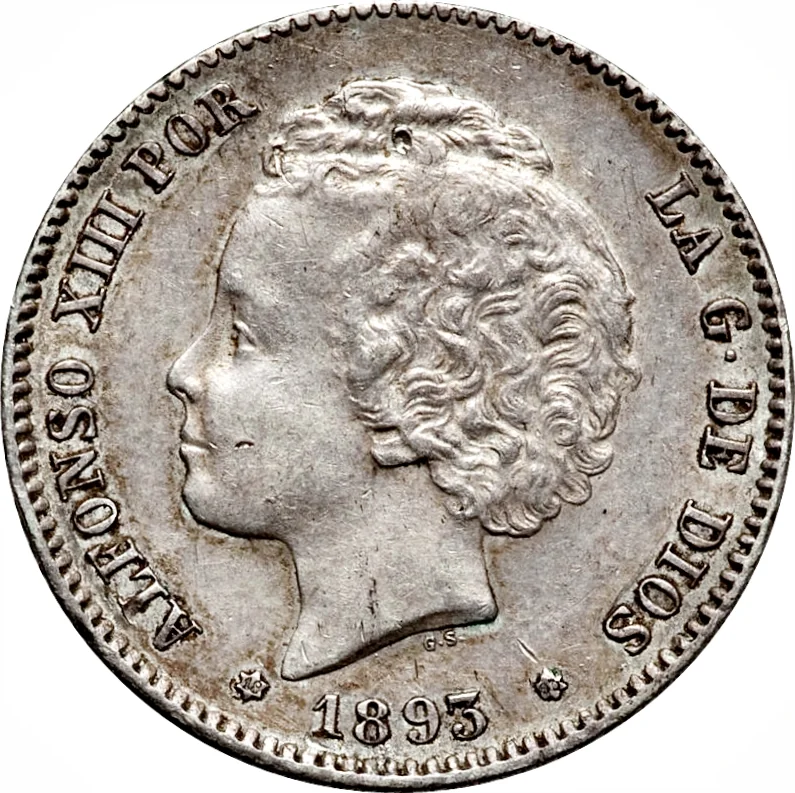
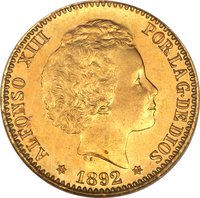
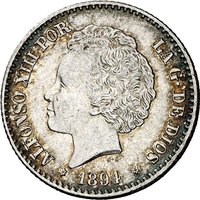
Young King Alfonso XIII facing left.
Inscription:
ALFONSO XIII POR LA G· DE DIOS
G· S·
🟌 1893 🟌
G· S·
🟌 1893 🟌
Translation:
ALFONSO XIII BY THE GRACE OF GOD
KING OF SPAIN
🟌 1893 🟌
KING OF SPAIN
🟌 1893 🟌
Script: Latin
Language: Spanish
Engraver: Gregorio Sellán y González
Reverse
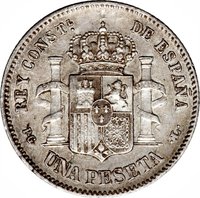
Description:
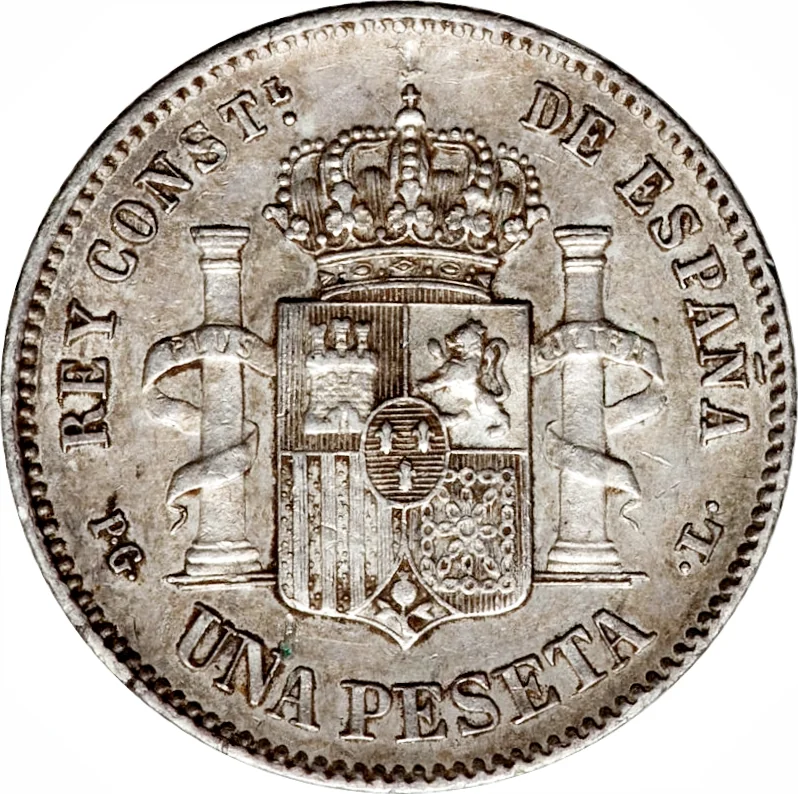
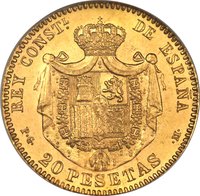
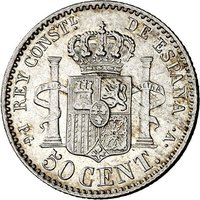
Spanish coat of arms with the Pillars of Hercules.
Inscription:
REY CONSTL.DE ESPAÑA
PLUS ULTRA
P·G· UNA PESETA ·L·
PLUS ULTRA
P·G· UNA PESETA ·L·
Translation:
KING CONSTITUTIONAL OF SPAIN
MORE BEYOND
P·G· ONE PESETA ·L·
MORE BEYOND
P·G· ONE PESETA ·L·
Script: Latin
Engraver: Gregorio Sellán y González
Edge
Reeded
Categories
| Symbols> Coat of Arms |
| Person> Monarch |
Mints
| Name | Mark |
|---|---|
| Royal Mint of Madrid | (🟌) |
Mintings
| Year | Mint Mark | Mintage | Quality | Collection |
|---|---|---|---|---|
| 1893 | 🟌 | 1,958,000 | ||
| 1894 | 🟌 | 1,044,000 |
Historical background
In 1893, Spain operated under the peseta, established as the sole national currency in 1868 following the Glorious Revolution, which aimed to modernize the nation's fragmented monetary system. The country was on a bimetallic standard (gold and silver), but this was under immense strain. The global phenomenon of the "silver crisis" was pivotal, as the discovery of vast silver deposits abroad caused the metal's market value to plummet relative to gold. This made Spain's silver-based coinage cheap to produce but undermined its international exchange value and threatened the gold reserves needed for foreign trade.
Domestically, the situation fueled inflation and fiscal instability. The government, led by Prime Minister Práxedes Mateo Sagasta, faced chronic budget deficits and a heavy debt burden, partly financed by the Bank of Spain. The cheap silver facilitated a surge in the minting of coins to cover public expenses, leading to a worrying expansion of the money supply. This period was characterized by a floating exchange rate for the peseta against gold-standard currencies like the British pound and French franc, resulting in significant depreciation and loss of confidence in Spain's financial stability abroad.
Consequently, 1893 represents a critical juncture in the long transition toward the gold standard. The pressures of that year intensified debates between metalistas (advocates for a strict metallic standard) and papelistas (those more accepting of fiduciary money). While the government would not formally suspend the free coinage of silver until 1895, the events of 1893 clearly exposed the unsustainable nature of bimetallism in a shifting global economy, pushing Spain closer to the monetary reforms that would eventually anchor the peseta to gold in the early 20th century.
Domestically, the situation fueled inflation and fiscal instability. The government, led by Prime Minister Práxedes Mateo Sagasta, faced chronic budget deficits and a heavy debt burden, partly financed by the Bank of Spain. The cheap silver facilitated a surge in the minting of coins to cover public expenses, leading to a worrying expansion of the money supply. This period was characterized by a floating exchange rate for the peseta against gold-standard currencies like the British pound and French franc, resulting in significant depreciation and loss of confidence in Spain's financial stability abroad.
Consequently, 1893 represents a critical juncture in the long transition toward the gold standard. The pressures of that year intensified debates between metalistas (advocates for a strict metallic standard) and papelistas (those more accepting of fiduciary money). While the government would not formally suspend the free coinage of silver until 1895, the events of 1893 clearly exposed the unsustainable nature of bimetallism in a shifting global economy, pushing Spain closer to the monetary reforms that would eventually anchor the peseta to gold in the early 20th century.
🌱 Fairly Common