

50 centimos – Spain
Add to wishlist
Spain
Context
Year: 1894
Issuer: Spain
Ruler: Alfonso XIII
Currency:
(1868—2001)
Demonetization: 20 February 1939
Total mintage: 1,109,205
Material
References
KM: #
Numista: #18486
Value
Exchange value: 0.50 ESP
Bullion value: $5.35
Obverse
Description:
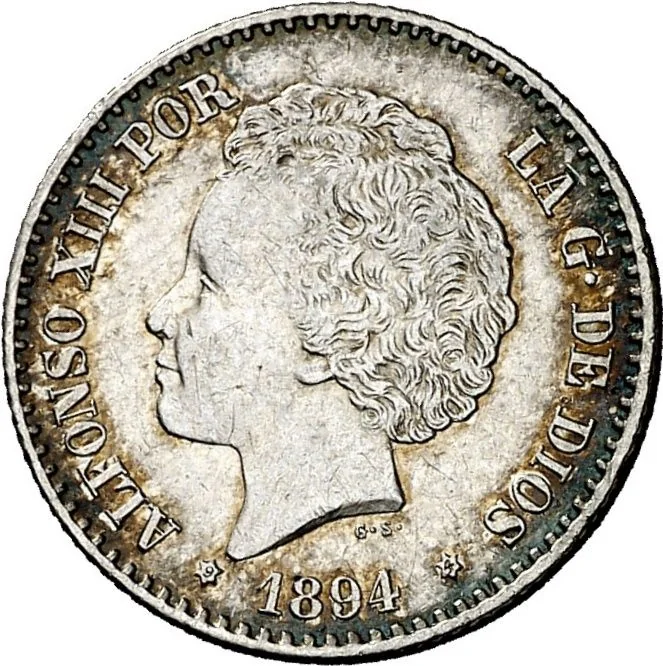
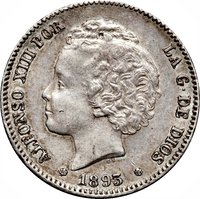
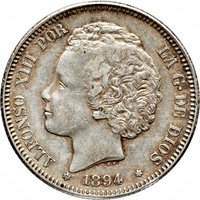
Young King Alfonso XIII facing left.
Inscription:
ALFONSO XIII POR LA G· DE DIOS
G· S·
🟌 1894 🟌
G· S·
🟌 1894 🟌
Translation:
By the grace of God, Alfonso XIII King of Spain and the Indies
1894
1894
Script: Latin
Language: Spanish
Engraver: Gregorio Sellán y González
Reverse
Description:
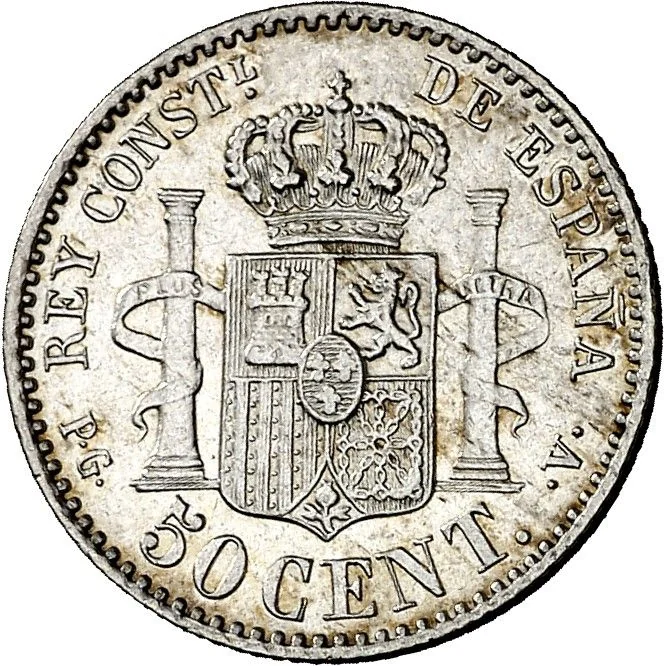
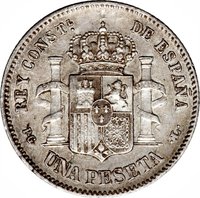
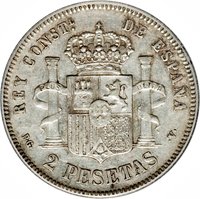
Spanish coat of arms with the Pillars of Hercules.
Inscription:
REY CONSTL. DE ESPAÑA
PLUS ULTRA
P·G· 50 CENT. ·V·
PLUS ULTRA
P·G· 50 CENT. ·V·
Translation:
KING CONSTITUTIONAL OF SPAIN
MORE BEYOND
P·G· 50 CENTS ·V·
MORE BEYOND
P·G· 50 CENTS ·V·
Script: Latin
Engraver: Gregorio Sellán y González
Edge
Reeded
Categories
| Person> Monarch |
| Symbols> Coat of Arms |
Mints
| Name | Mark |
|---|---|
| Royal Mint of Madrid | (🟌) |
Mintings
| Year | Mint Mark | Mintage | Quality | Collection |
|---|---|---|---|---|
| 1894 | 🟌 | 1,109,205 |
Historical background
In 1894, Spain's currency system was in a state of transition and strain, anchored by the peseta, which had been introduced in 1868 to replace the complex regional currencies of the old regime. The nation operated under a de facto silver standard, but this was undermined by the global phenomenon of the "limping standard" (patrón cojo). While silver was the official basis, the widespread use and hoarding of gold coins in practice created a bimetallic system that was unstable, especially as the international price of silver had been in sharp decline since the 1870s. This depreciation made Spanish silver pesos cheaper relative to gold-based currencies like the British pound or French franc, leading to persistent trade imbalances and a worrying outflow of gold reserves.
The economic context exacerbated the currency's fragility. Spain was grappling with the aftermath of losing its last major colonies (Cuba, Puerto Rico, and the Philippines were on the brink of rebellion, leading to war in 1898), which drained the treasury and damaged investor confidence. Chronic government budget deficits were financed by borrowing from the Bank of Spain, which increased the money supply and fueled inflation. This period was marked by monetary confusion, with a public distrustful of paper banknotes and a preference for metallic coin, yet also facing a shortage of small-denomination currency in daily circulation, which hampered commerce.
Consequently, 1894 fell within a prolonged period of debate and pressure for reform. Advocates for moving to a stable gold standard, like other major European powers, argued it was essential for international credibility and economic modernization. However, the Spanish state lacked the substantial gold reserves required for such a transition. Therefore, the currency situation was one of precarious limbo—clinging to a discredited silver standard while unable to adopt a gold standard, all set against a backdrop of fiscal crisis and impending colonial disaster, which would soon culminate in the "Disaster of '98" and force a major monetary restructuring in the early 20th century.
The economic context exacerbated the currency's fragility. Spain was grappling with the aftermath of losing its last major colonies (Cuba, Puerto Rico, and the Philippines were on the brink of rebellion, leading to war in 1898), which drained the treasury and damaged investor confidence. Chronic government budget deficits were financed by borrowing from the Bank of Spain, which increased the money supply and fueled inflation. This period was marked by monetary confusion, with a public distrustful of paper banknotes and a preference for metallic coin, yet also facing a shortage of small-denomination currency in daily circulation, which hampered commerce.
Consequently, 1894 fell within a prolonged period of debate and pressure for reform. Advocates for moving to a stable gold standard, like other major European powers, argued it was essential for international credibility and economic modernization. However, the Spanish state lacked the substantial gold reserves required for such a transition. Therefore, the currency situation was one of precarious limbo—clinging to a discredited silver standard while unable to adopt a gold standard, all set against a backdrop of fiscal crisis and impending colonial disaster, which would soon culminate in the "Disaster of '98" and force a major monetary restructuring in the early 20th century.
🌱 Fairly Common