

2 kroner (Royal Couple) – Denmark
Add to wishlist
Circulating commemorative coins
Commemoration: Golden Wedding Anniversary of the Royal Couple
Denmark
Obverse
Description:
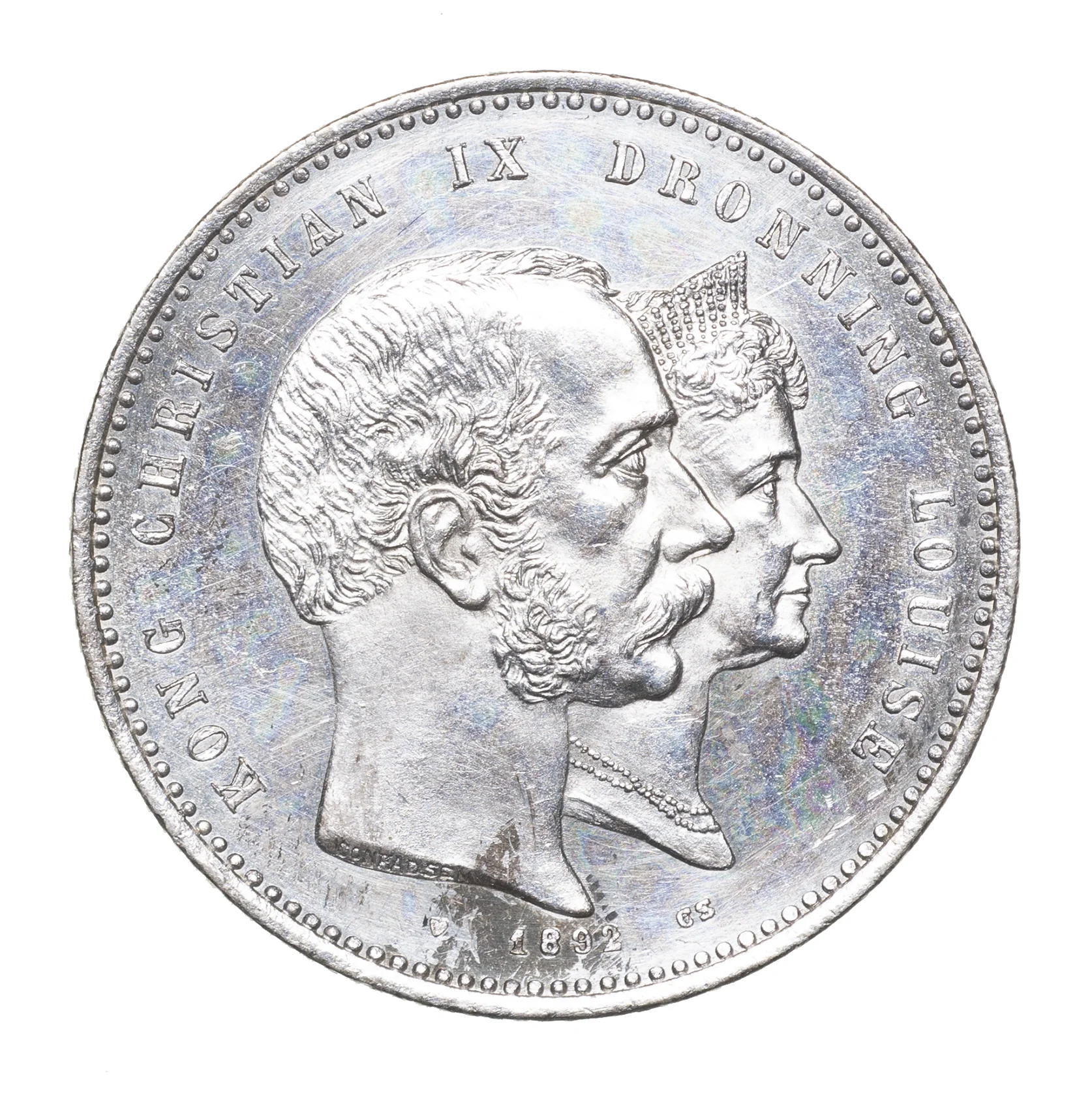
Conjoined right-facing portraits of King Christian IX and Queen Louise, surrounded by legend. Date below with heart mintmark left, Mint Master initials right.
Inscription:
KONG CHRISTIAN IX DRONNING LOUISE
CONRADSEN
♥ 1892 CS
CONRADSEN
♥ 1892 CS
Translation:
King Christian IX Queen Louise
Conradsen
♥ 1892 CS
Conradsen
♥ 1892 CS
Script: Latin
Language: Danish
Engraver: Harald Conradsen
Reverse
Description:
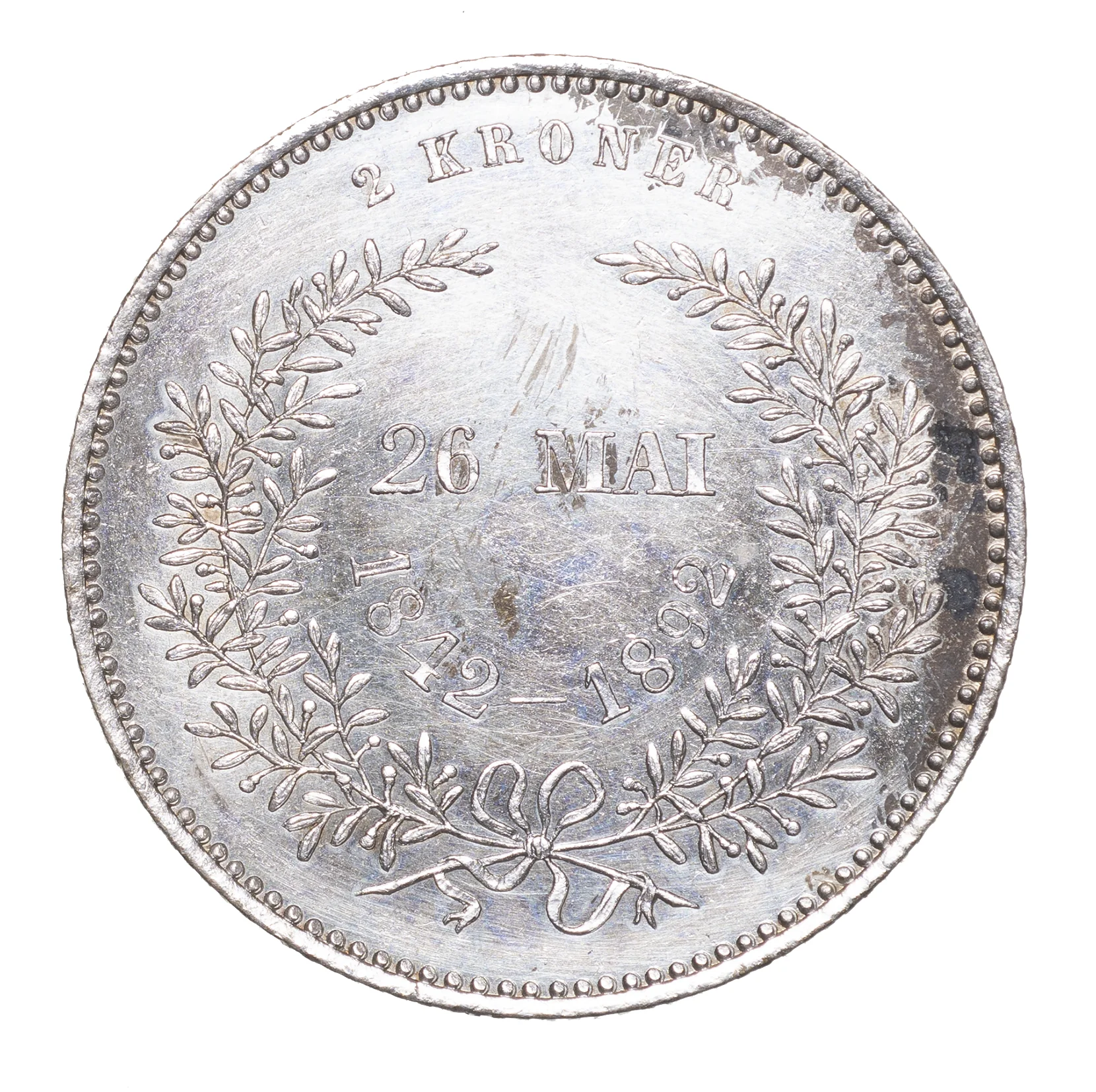
Anniversary date inside a laurel wreath. Denomination above.
Inscription:
2 KRONER
26 MAI
1842-1892
26 MAI
1842-1892
Script: Latin
Engraver: Harald Conradsen
Edge
Reeded
Categories
| Marriage |
Mints
| Name | Mark |
|---|---|
| Royal Danish Mint | ♥ |
Mintings
| Year | Mint Mark | Mintage | Quality | Collection |
|---|---|---|---|---|
| 1892 | CS | 101,000 |
Historical background
In 1892, Denmark found itself at a critical juncture in its monetary history, deeply entangled in the Scandinavian Monetary Union (SMU) formed with Sweden in 1873 and joined by Norway in 1875. This union established a gold standard with the krone/krona as a shared unit of account, allowing the member countries' coins to circulate freely across borders. While successful in facilitating trade, the system created vulnerabilities, as Denmark's economy, heavily reliant on agricultural exports, was particularly sensitive to the global collapse in grain prices during the late 1880s.
The core crisis stemmed from a significant outflow of gold reserves. As Denmark ran persistent trade deficits, gold coins—the foundation of the currency—were physically shipped to Sweden and other creditor nations to settle accounts. This drain was exacerbated by a loss of confidence; both domestic and foreign holders of Danish banknotes began to exercise their legal right to redeem them for gold, further depleting the central bank's reserves. By 1892, the situation was acute, threatening Denmark's ability to maintain the gold convertibility required by the Union.
Consequently, the Danish government and the Nationalbank were forced to take drastic action. In 1892, they proposed emergency legislation to suspend the right to redeem banknotes for gold, a move that effectively took Denmark off the gold standard in practice, though it remained nominally in the Union. This suspension, passed in 1893, was a defensive measure to halt the gold hemorrhage and protect the remaining reserves. It marked a pivotal shift toward a managed currency, setting the stage for future monetary policy independence and highlighting the strains within the SMU that would ultimately lead to its dissolution decades later.
The core crisis stemmed from a significant outflow of gold reserves. As Denmark ran persistent trade deficits, gold coins—the foundation of the currency—were physically shipped to Sweden and other creditor nations to settle accounts. This drain was exacerbated by a loss of confidence; both domestic and foreign holders of Danish banknotes began to exercise their legal right to redeem them for gold, further depleting the central bank's reserves. By 1892, the situation was acute, threatening Denmark's ability to maintain the gold convertibility required by the Union.
Consequently, the Danish government and the Nationalbank were forced to take drastic action. In 1892, they proposed emergency legislation to suspend the right to redeem banknotes for gold, a move that effectively took Denmark off the gold standard in practice, though it remained nominally in the Union. This suspension, passed in 1893, was a defensive measure to halt the gold hemorrhage and protect the remaining reserves. It marked a pivotal shift toward a managed currency, setting the stage for future monetary policy independence and highlighting the strains within the SMU that would ultimately lead to its dissolution decades later.
🌱 Fairly Common