

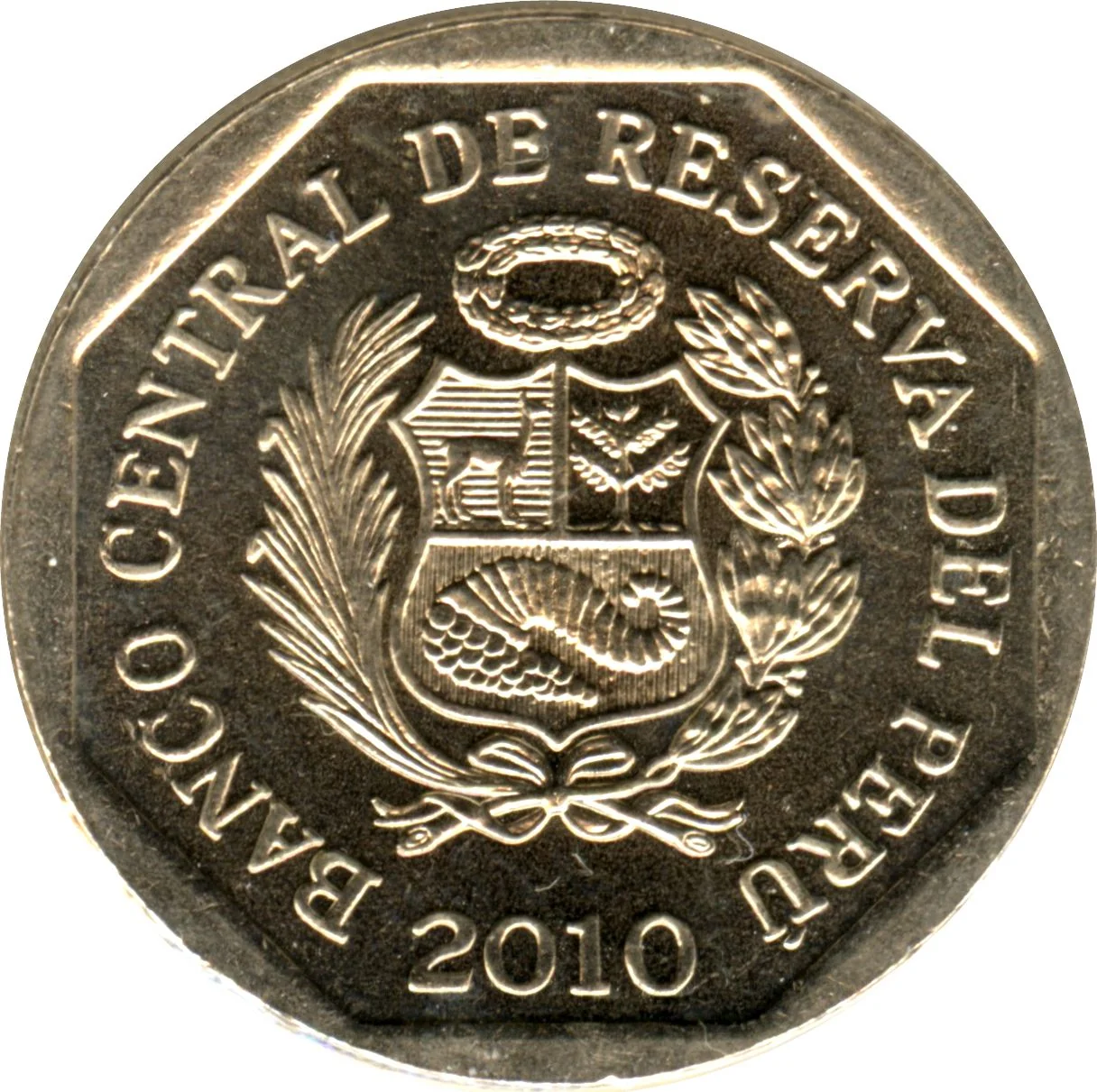
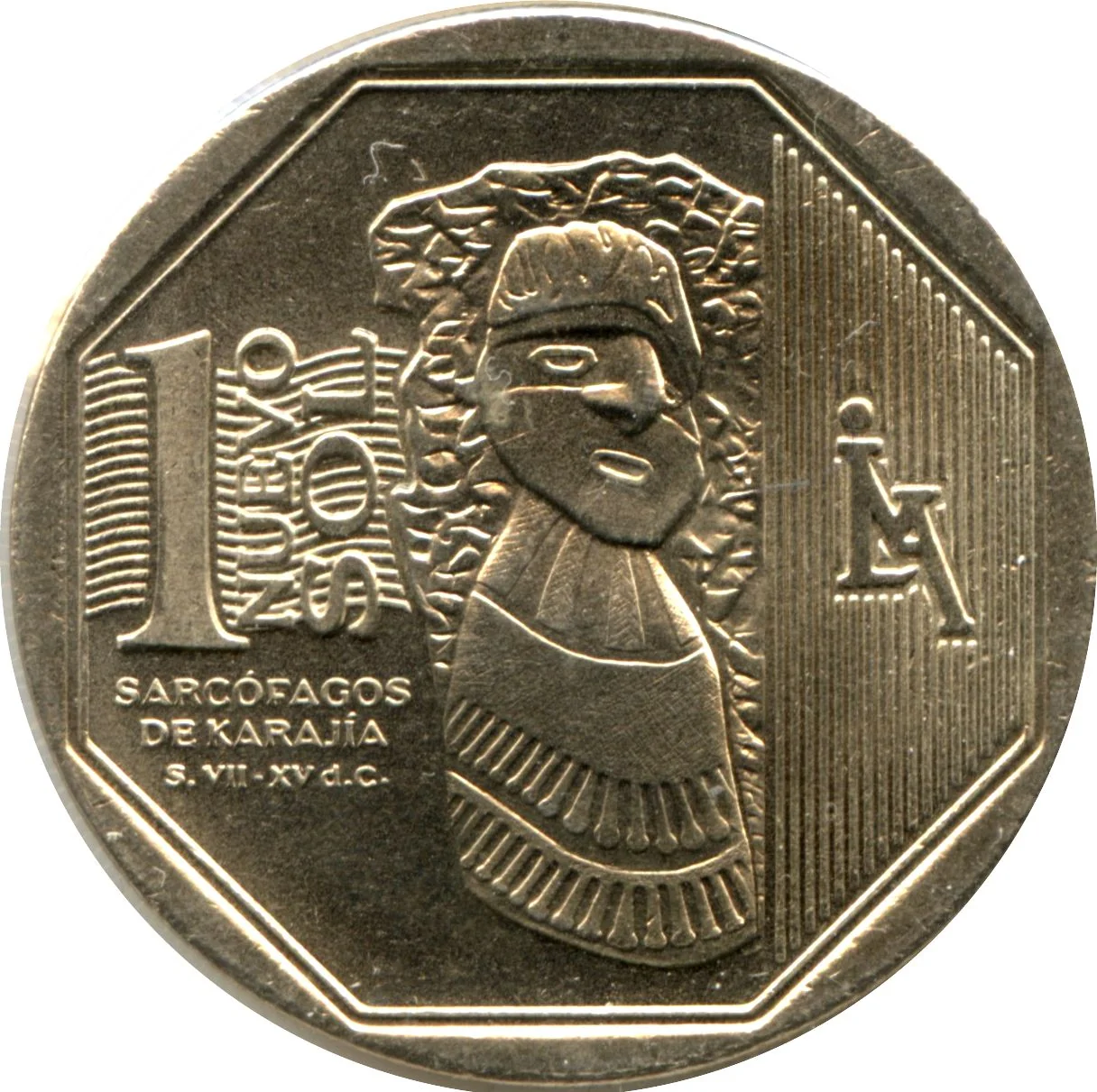
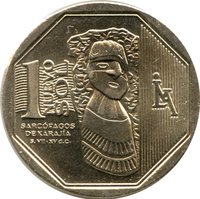
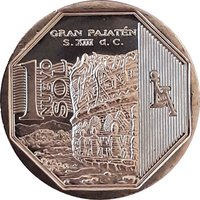
1 Sol – Peru
Circulating commemorative coins
Commemoration: Sarcophagus of Karajia
Series: Wealth and Pride of Peru Series
Peru
Material
Diameter: 25.5 mm
Weight: 7.32 g
Thickness: 1.9 mm
Shape: Round
Composition: Nickel brass
Magnetic: No
Technique: Milled
Alignment: Coin alignment
flip
References
KM: #Click to copy to clipboard341
Numista: #18124
Value
Exchange value: 1 PEN
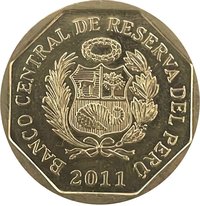
Obverse
Reverse
Edge
Reeded
Mints
| Name | Mark |
|---|---|
| Lima | LIMA |
Mintings
| Year | Mint Mark | Mintage | Quality | Collection |
|---|---|---|---|---|
| 2010 | LIMA | 10,000,000 |
Historical background
In 2010, Peru's currency, the nuevo sol (PEN), was characterized by significant appreciation pressure and robust stability, continuing a trend from the mid-2000s. The primary driver was a sustained commodity boom, particularly in copper, gold, and silver exports, which attracted substantial foreign direct investment and generated large dollar inflows into the economy. This, combined with strong economic growth (GDP expanded by 8.3% that year) and sound fiscal management, bolstered confidence in the sol. Consequently, the currency appreciated approximately 7% against the US dollar over the course of the year, raising concerns among exporters about lost competitiveness.
The Peruvian Central Bank (BCRP) actively intervened in the foreign exchange market to temper this appreciation and accumulate international reserves, which reached record levels exceeding $44 billion by year's end. Its strategy involved purchasing dollars to increase liquidity in soles, which it then sterilized by issuing certificates of deposit to prevent inflationary spikes. Despite these interventions, inflation remained within the target range, ending the year at 2.1%, near the lower bound of the BCRP's 1-3% target. This delicate balancing act aimed to prevent excessive volatility without halting the appreciation trend entirely.
The strong sol reflected Peru's macroeconomic success but also presented policy challenges. While it helped keep inflation low and made imports cheaper, exporters and some manufacturers argued it eroded their profit margins in international markets. The government, led by President Alan García, maintained a broadly liberal economic stance, favoring market-determined exchange rates with managed intervention. Overall, 2010 represented a period of currency strength born from economic resilience, positioning the sol as one of the most stable and well-regarded currencies in the Latin American region at the time.
The Peruvian Central Bank (BCRP) actively intervened in the foreign exchange market to temper this appreciation and accumulate international reserves, which reached record levels exceeding $44 billion by year's end. Its strategy involved purchasing dollars to increase liquidity in soles, which it then sterilized by issuing certificates of deposit to prevent inflationary spikes. Despite these interventions, inflation remained within the target range, ending the year at 2.1%, near the lower bound of the BCRP's 1-3% target. This delicate balancing act aimed to prevent excessive volatility without halting the appreciation trend entirely.
The strong sol reflected Peru's macroeconomic success but also presented policy challenges. While it helped keep inflation low and made imports cheaper, exporters and some manufacturers argued it eroded their profit margins in international markets. The government, led by President Alan García, maintained a broadly liberal economic stance, favoring market-determined exchange rates with managed intervention. Overall, 2010 represented a period of currency strength born from economic resilience, positioning the sol as one of the most stable and well-regarded currencies in the Latin American region at the time.
Series: Wealth and Pride of Peru Series
🌱 Common