

100 francs cfa – Central African States
Add to wishlist
Context
Years: 1992–2003
Issuer: Central African States
Issuing organization: Bank of Central African States
Currency:
(since 1973)
Total mintage: 33,300,000
Material
References
KM: #
Numista: #1805
Value
Exchange value: 100 XAF
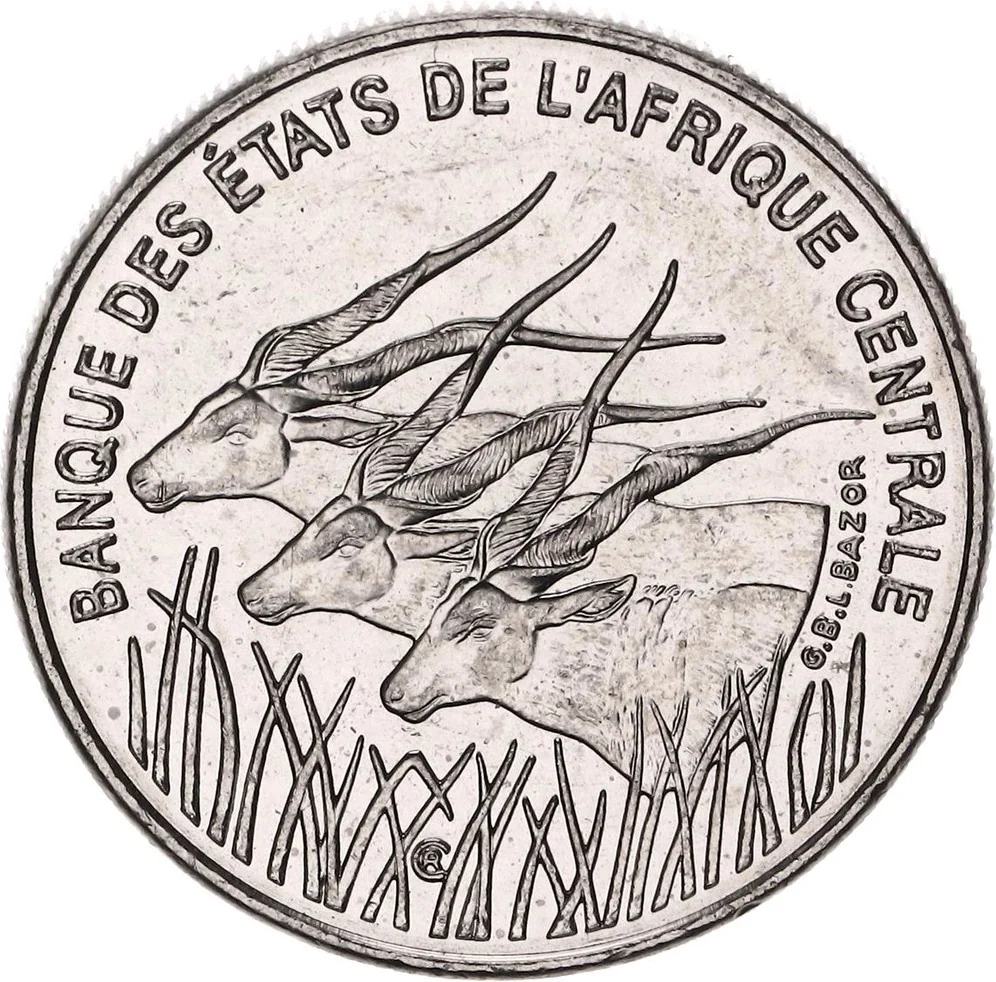
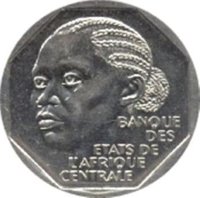
Obverse
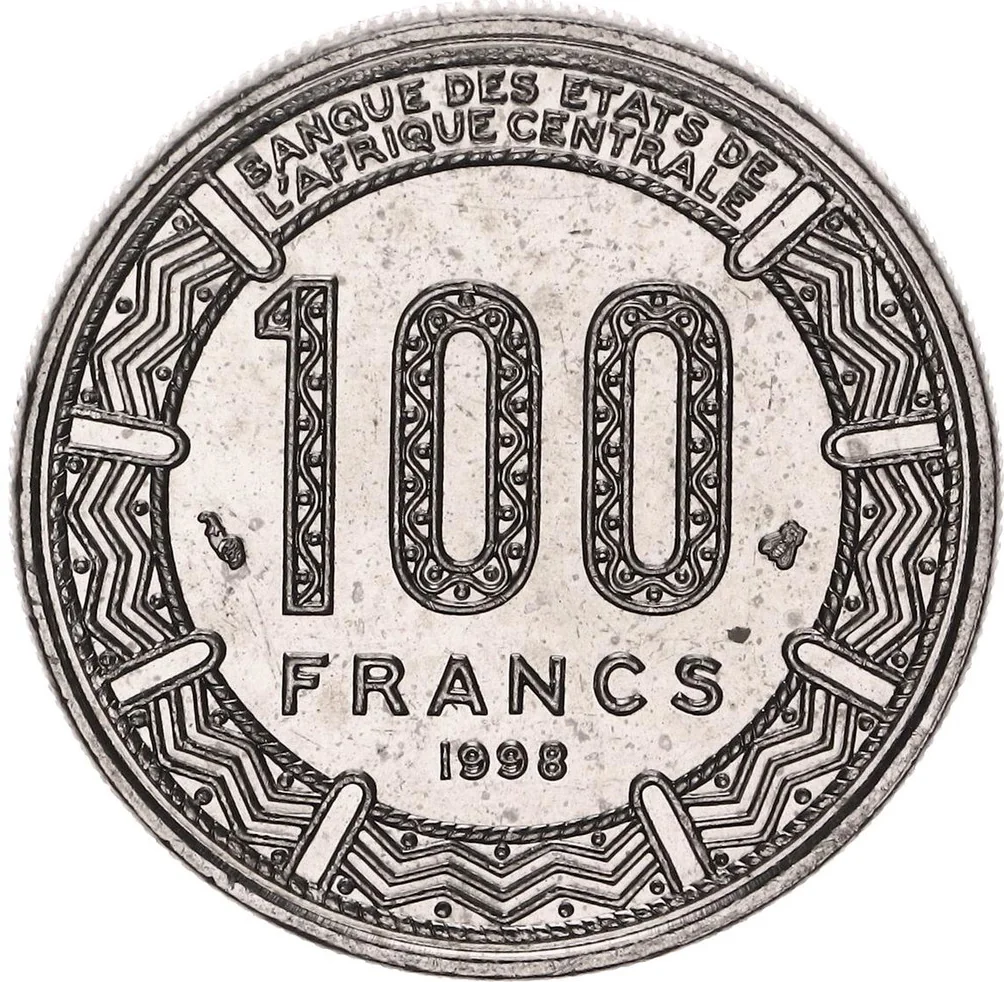
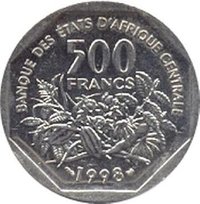
Reverse
Description:
Denomination
Inscription:
BANQUE DES ETATS DE
L'AFRIQUE CENTRALE
100
FRANCS
1998
L'AFRIQUE CENTRALE
100
FRANCS
1998
Translation:
BANK OF THE CENTRAL AFRICAN STATES
100
FRANCS
1998
100
FRANCS
1998
Script: Latin
Language: French
Engraver: Robert Cochet
Edge
Reeded
Mints
| Name | Mark |
|---|---|
| Monnaie de Paris | — |
Mintings
| Year | Mint Mark | Mintage | Quality | Collection |
|---|---|---|---|---|
| 1992 | — | 1,500,000 | ||
| 1996 | — | 4,800,000 | ||
| 1998 | — | 18,500,000 | ||
| 2003 | — | 8,500,000 |
Historical background
In 1992, the currency situation in the Central African States was defined by the shared use of the CFA franc (XAF), specifically the Coopération Financière en Afrique Centrale franc issued by the Bank of the Central African States (BEAC). This currency was used by the six members of the Central African Economic and Monetary Community (CEMAC): Cameroon, Central African Republic, Chad, Republic of the Congo, Equatorial Guinea, and Gabon. The currency's stability was anchored by its fixed peg to the French franc at a guaranteed exchange rate of 100 CFA francs = 1 French franc, a colonial-era arrangement that provided monetary stability but also tied the region's economic policy closely to France.
The year fell within a period of significant economic strain for the region, marked by the aftermath of the 1980s oil price collapse and the early 1990s global recession. While the fixed peg shielded the countries from hyperinflation and currency volatility, it also imposed a rigid monetary framework that limited the BEAC's ability to devalue the currency to boost competitiveness—a tool that would be controversially employed two years later in 1994. Economies in the region, particularly those dependent on commodity exports like oil and timber, faced falling revenues, mounting public debt, and pressure from international financial institutions to implement structural adjustment programs.
Politically, 1992 was a turbulent year, with several member states undergoing democratic transitions or civil unrest, which further strained public finances. The currency zone itself remained intact, but the underlying economic disparities between richer members (like Gabon and Cameroon) and poorer, often unstable ones (like the Central African Republic and Chad) tested its cohesion. Thus, the currency situation in 1992 was one of superficial stability provided by the fixed peg, masking deep-seated fiscal crises and growing pressures that would soon culminate in the major devaluation of the CFA franc in January 1994.
The year fell within a period of significant economic strain for the region, marked by the aftermath of the 1980s oil price collapse and the early 1990s global recession. While the fixed peg shielded the countries from hyperinflation and currency volatility, it also imposed a rigid monetary framework that limited the BEAC's ability to devalue the currency to boost competitiveness—a tool that would be controversially employed two years later in 1994. Economies in the region, particularly those dependent on commodity exports like oil and timber, faced falling revenues, mounting public debt, and pressure from international financial institutions to implement structural adjustment programs.
Politically, 1992 was a turbulent year, with several member states undergoing democratic transitions or civil unrest, which further strained public finances. The currency zone itself remained intact, but the underlying economic disparities between richer members (like Gabon and Cameroon) and poorer, often unstable ones (like the Central African Republic and Chad) tested its cohesion. Thus, the currency situation in 1992 was one of superficial stability provided by the fixed peg, masking deep-seated fiscal crises and growing pressures that would soon culminate in the major devaluation of the CFA franc in January 1994.
🌱 Very Common