

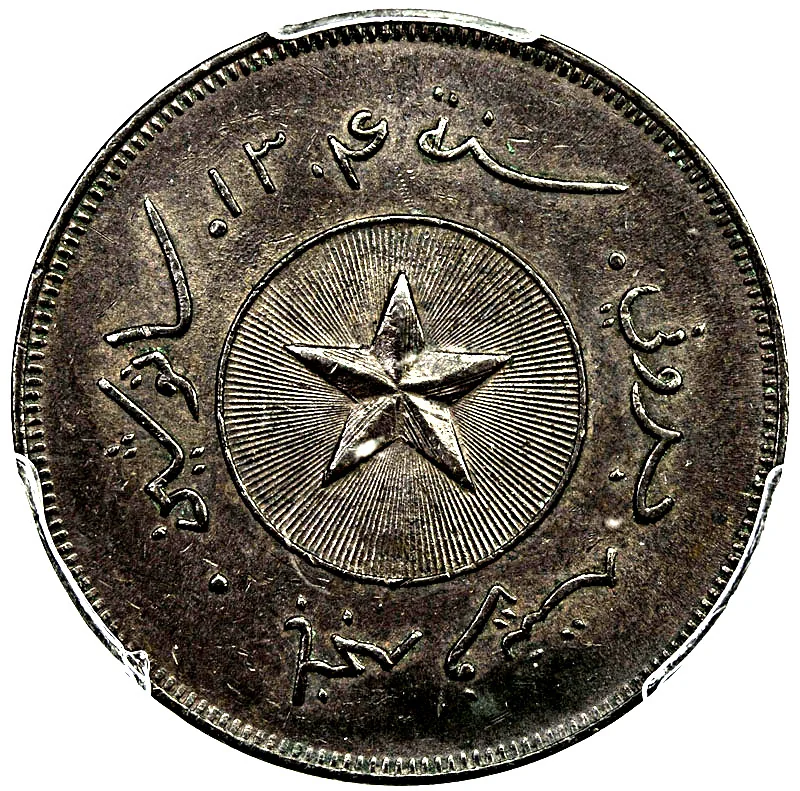
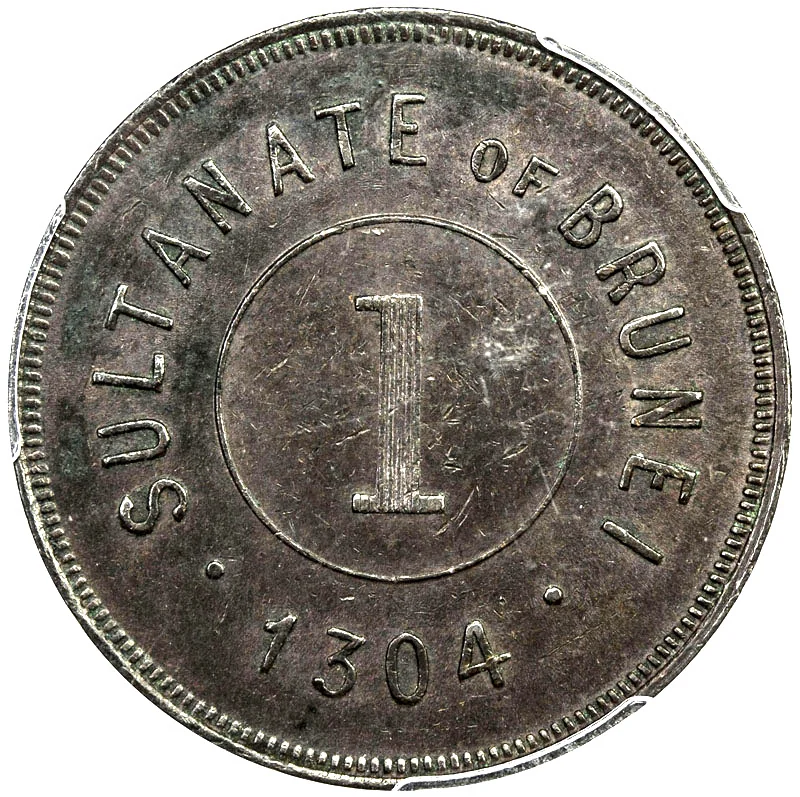
1 Cent – Brunei
Brunei
Context
Year: 1887
Islamic (Hijri) Year: 1304
Issuer: Brunei 
Currency:
(1887—1906)
Demonetized: Yes
Total mintage: 1,000,000
Material
References
KM: #Click to copy to clipboard3
Numista: #17848
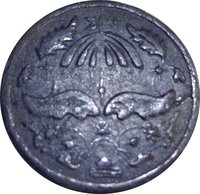
Obverse
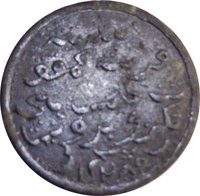
Reverse
Edge
Plain
Mints
| Name | Mark |
|---|---|
| Heaton and Sons / The Mint Birmingham | — |
Mintings
| Year | Mint Mark | Mintage | Quality | Collection |
|---|---|---|---|---|
| 1887 | — | 1,000,000 | ||
| 1887 | — | — | Proof |
Historical background
In 1887, Brunei was a sultanate in severe decline, its territory rapidly being eroded by the expanding Brooke regime in Sarawak and the British North Borneo Chartered Company in Sabah. The internal economy was fragmented, and there was no unified national currency system. Instead, circulation was a complex mixture of foreign coins, including Spanish and Mexican silver dollars (and their fractional parts), British Straits Settlements coins, and the copper coinage of the neighbouring Brooke and Chartered Company administrations. Barter trade also remained significant in many areas, reflecting the limited monetization of the inland economy.
The monetary situation was directly managed by the British, following the establishment of a British Residency in 1887 after Sultan Hashim Jalilul Alam Aqamaddin signed a Supplementary Agreement to the 1885 Protectorate treaty. This gave Britain control over Brunei's foreign affairs and effectively its financial policy. The primary objective was to standardize the currency with that of the Straits Settlements (based in Singapore), aiming to stabilize trade and simplify administration. Consequently, the Straits dollar became the official standard, although the older mixed currency remained in practical use for some time.
Thus, 1887 represents a pivotal transitional year. It marked the moment when Brunei’s chaotic pre-colonial currency system was formally brought under British imperial oversight and set on a path toward integration with the wider Straits Settlements monetary area. This shift was less about Brunei's independent economic development and more a facet of colonial consolidation, intended to facilitate British commercial interests and administrative control over the beleaguered sultanate.
The monetary situation was directly managed by the British, following the establishment of a British Residency in 1887 after Sultan Hashim Jalilul Alam Aqamaddin signed a Supplementary Agreement to the 1885 Protectorate treaty. This gave Britain control over Brunei's foreign affairs and effectively its financial policy. The primary objective was to standardize the currency with that of the Straits Settlements (based in Singapore), aiming to stabilize trade and simplify administration. Consequently, the Straits dollar became the official standard, although the older mixed currency remained in practical use for some time.
Thus, 1887 represents a pivotal transitional year. It marked the moment when Brunei’s chaotic pre-colonial currency system was formally brought under British imperial oversight and set on a path toward integration with the wider Straits Settlements monetary area. This shift was less about Brunei's independent economic development and more a facet of colonial consolidation, intended to facilitate British commercial interests and administrative control over the beleaguered sultanate.
🌱 Fairly Common