


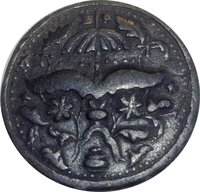
Obverse
Description:
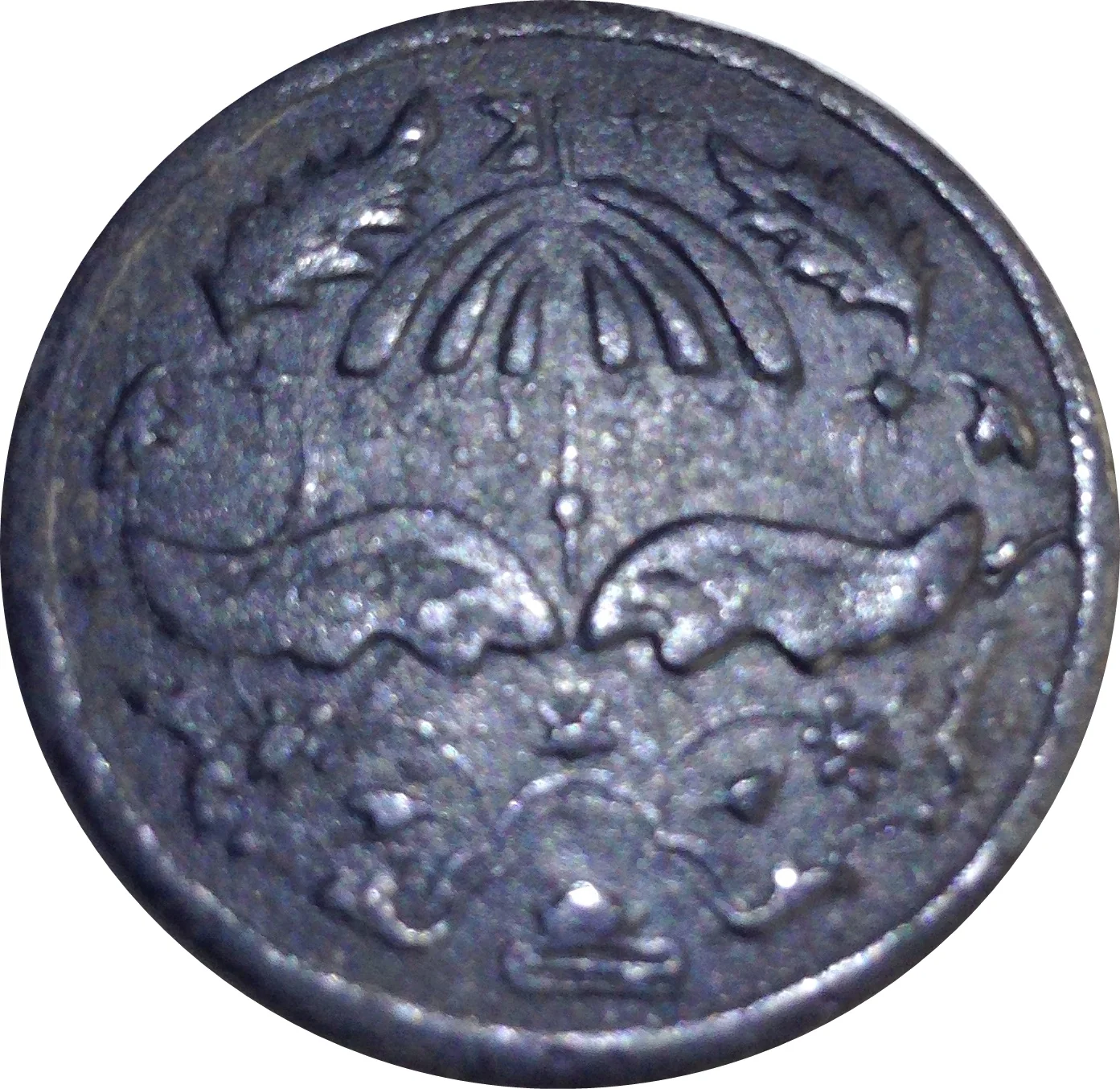
State Umbrella insignia with Sultan's flag and wings.
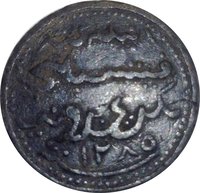
Reverse
Description:
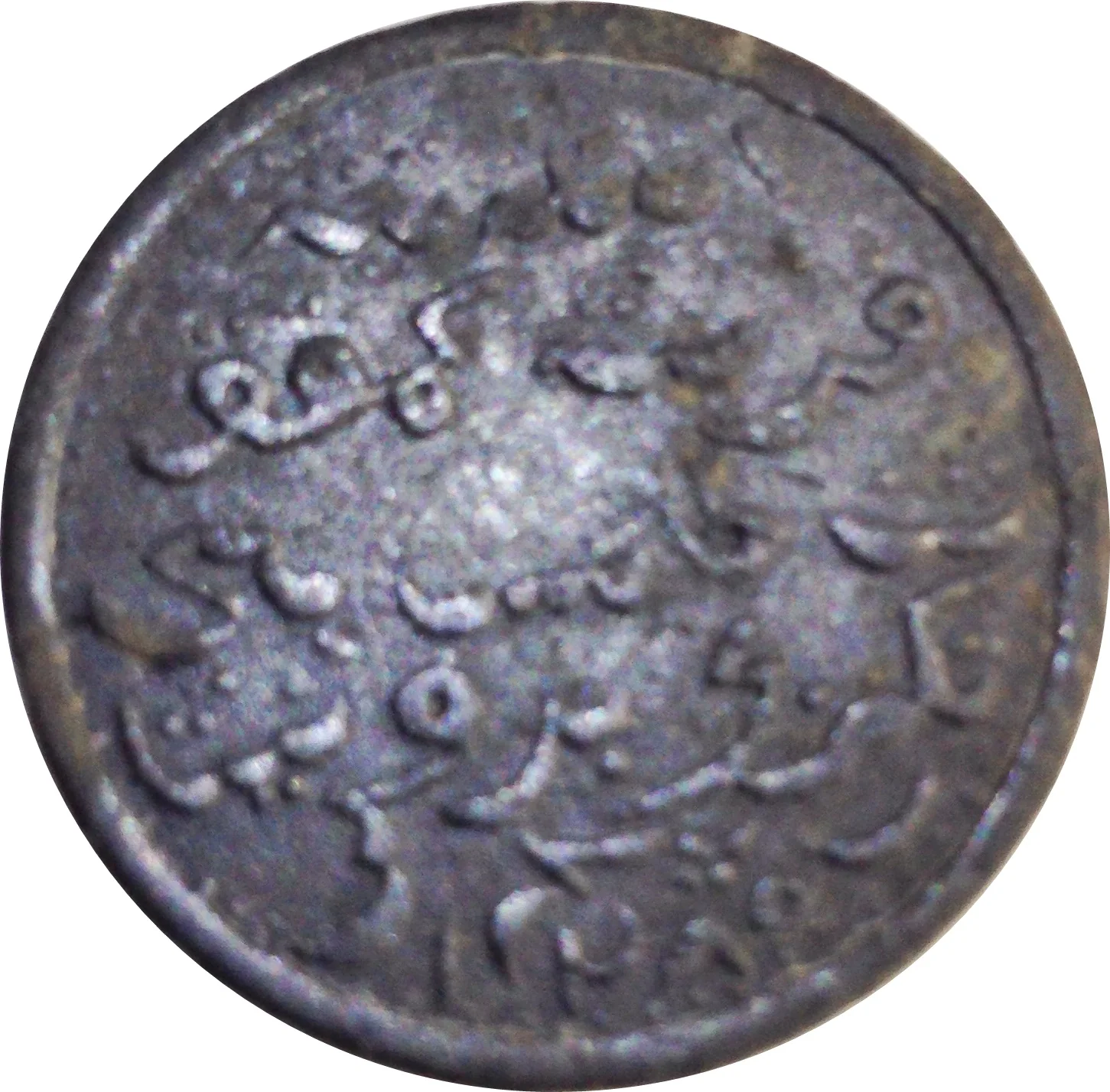
Brunei's Pitis coin, 1285 AH (1868 CE).
Inscription:
In Arabic - "Inilah Titah Pitis Kemuafakatan Keatas Belanja Negeri Brunei - 1285)
Edge
Plain
Mintings
| Year | Mint Mark | Mintage | Quality | Collection |
|---|---|---|---|---|
| 1869 | — | — |
Historical background
In 1869, Brunei's currency situation was a complex reflection of its political decline and the growing influence of European colonial powers in Southeast Asia. The Sultanate, once a powerful empire controlling much of Borneo, had been significantly weakened by internal strife, piracy, and ceding territories like Sarawak to James Brooke. The state treasury was depleted, and there was no unified, modern coinage system issued by the Brunei government itself. Instead, the economy operated on a heterogeneous mix of foreign silver coins that entered through trade, including Spanish and Mexican dollars, Dutch guilders, and Indian rupees, alongside traditional commodity monies like brassware (e.g., gantang and tampang) and, in some interior trade, items like camphor and beeswax.
The lack of a sovereign coinage was a symptom of Brunei's diminished administrative capacity and economic fragmentation. Transactions were often conducted via barter or the weighing and cutting of these foreign silver coins, as their value was determined by weight and purity rather than face value. This practice was cumbersome and inhibited larger-scale commerce. The most significant monetary development of the period was not initiated by Brunei but by its neighbour, the British North Borneo Company, which would soon begin issuing its own currency, further drawing the region's economic activity away from Brunei's control.
Thus, the monetary landscape in 1869 was one of dependency and transition. Brunei’s currency system was not actively managed but was rather a passive receptacle for the coins of foreign traders and neighbouring realms. This ad-hoc situation underscored the Sultanate's precarious position, caught between its illustrious past and a future where its economic sovereignty would be increasingly challenged, setting the stage for the eventual establishment of a formal protectorate under Britain in 1888.
The lack of a sovereign coinage was a symptom of Brunei's diminished administrative capacity and economic fragmentation. Transactions were often conducted via barter or the weighing and cutting of these foreign silver coins, as their value was determined by weight and purity rather than face value. This practice was cumbersome and inhibited larger-scale commerce. The most significant monetary development of the period was not initiated by Brunei but by its neighbour, the British North Borneo Company, which would soon begin issuing its own currency, further drawing the region's economic activity away from Brunei's control.
Thus, the monetary landscape in 1869 was one of dependency and transition. Brunei’s currency system was not actively managed but was rather a passive receptacle for the coins of foreign traders and neighbouring realms. This ad-hoc situation underscored the Sultanate's precarious position, caught between its illustrious past and a future where its economic sovereignty would be increasingly challenged, setting the stage for the eventual establishment of a formal protectorate under Britain in 1888.
✨ Legendary