

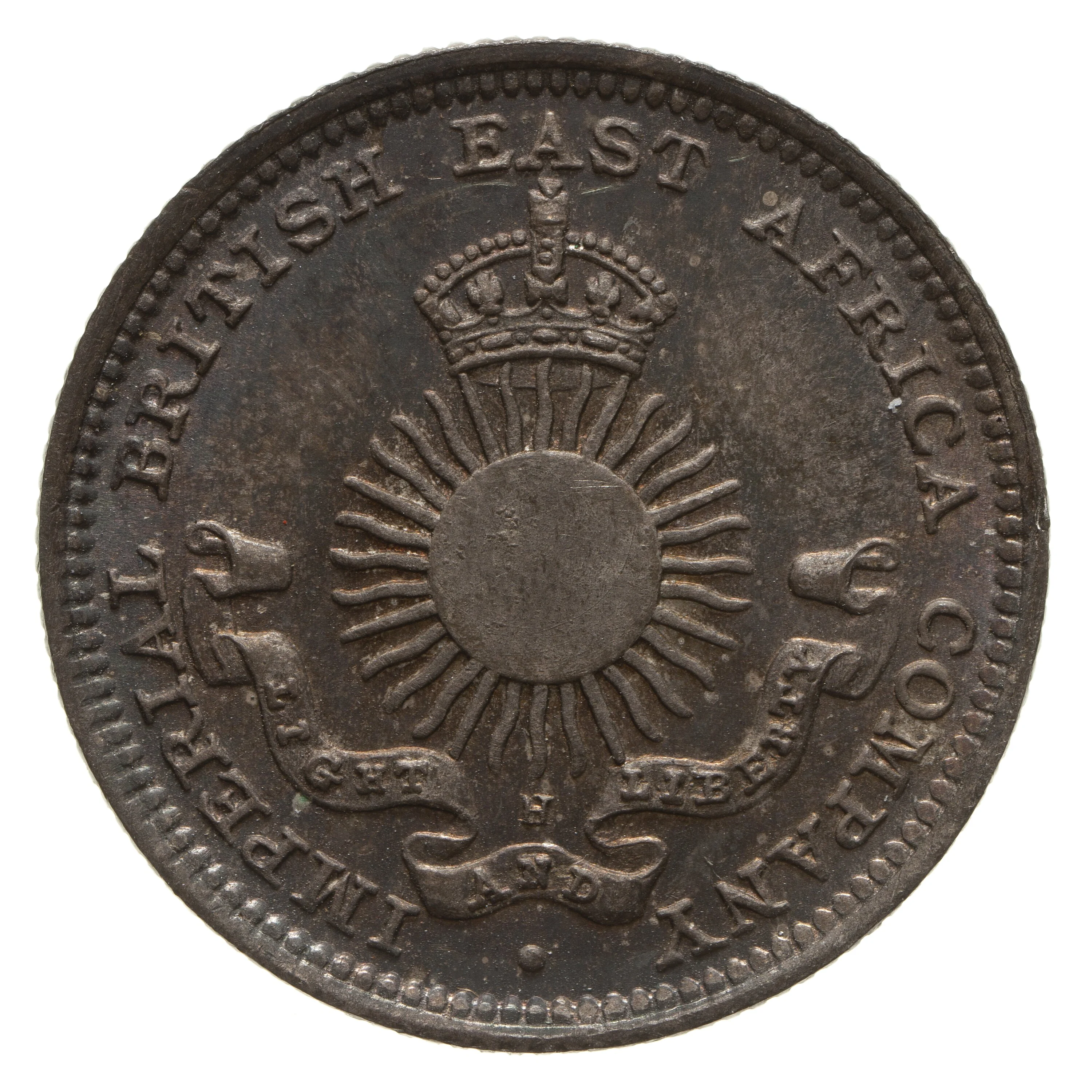
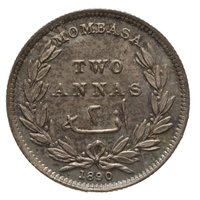
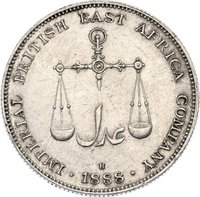
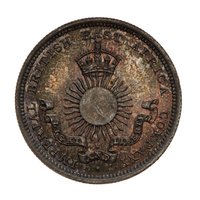
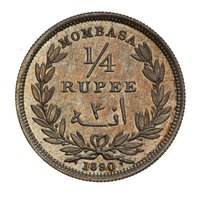
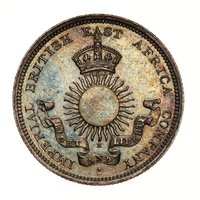
Obverse
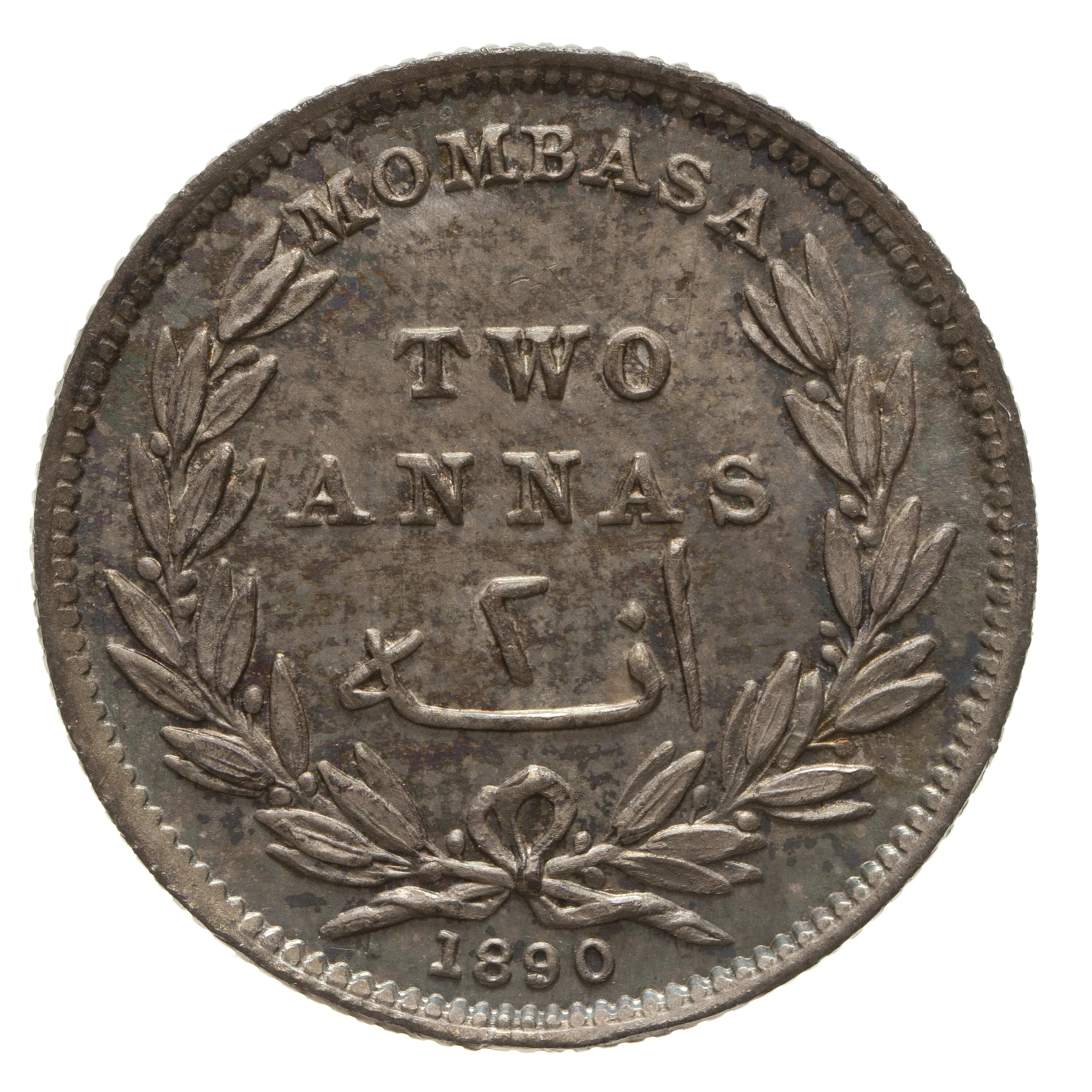
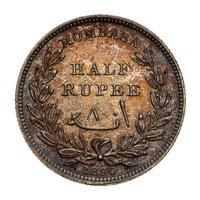
Reverse
Edge
Milled
Mints
| Name | Mark |
|---|---|
| Heaton and Sons / The Mint Birmingham | H |
Historical background
In 1890, Mombasa was a key port city within the sphere of influence of the British Imperial British East Africa Company (IBEAC), which administered the region under a royal charter. The currency situation was complex and transitional, reflecting both its deep-rooted Indian Ocean trade history and the new pressures of colonial commerce. The most dominant and trusted currency was the Indian Rupee, particularly the Maria Theresa Thaler and other silver coins, which had circulated for centuries due to extensive trade links with Arabia, India, and the Swahili coast. Alongside these, barter and trade goods like cloth, beads, and wire (used as manillas) remained essential for interior trade.
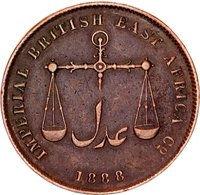
The IBEAC, facing financial difficulties and needing to formalize the economy, officially introduced the Rupee as the standard currency in 1888, dividing it into 100 cents. However, this attempt at standardization was only partially successful. The Company issued its own copper and bronze pice and cent coins to facilitate smaller transactions, but these were often met with public suspicion and reluctance. The older, familiar silver coins continued to hold greater prestige and trust among the local Swahili, Arab, and Indian merchant communities, creating a dual system.
Consequently, the monetary landscape was one of coexistence and confusion. The Company's coinage circulated unevenly, while traditional currencies and barter persisted, especially outside the immediate port area. This period set the stage for the formal declaration of the British East Africa Protectorate in 1895, after which the currency issue would be systematically addressed by the Crown, eventually leading to the establishment of the East African Currency Board and the shilling in the early 20th century.
The IBEAC, facing financial difficulties and needing to formalize the economy, officially introduced the Rupee as the standard currency in 1888, dividing it into 100 cents. However, this attempt at standardization was only partially successful. The Company issued its own copper and bronze pice and cent coins to facilitate smaller transactions, but these were often met with public suspicion and reluctance. The older, familiar silver coins continued to hold greater prestige and trust among the local Swahili, Arab, and Indian merchant communities, creating a dual system.
Consequently, the monetary landscape was one of coexistence and confusion. The Company's coinage circulated unevenly, while traditional currencies and barter persisted, especially outside the immediate port area. This period set the stage for the formal declaration of the British East Africa Protectorate in 1895, after which the currency issue would be systematically addressed by the Crown, eventually leading to the establishment of the East African Currency Board and the shilling in the early 20th century.
💎 Very Rare