

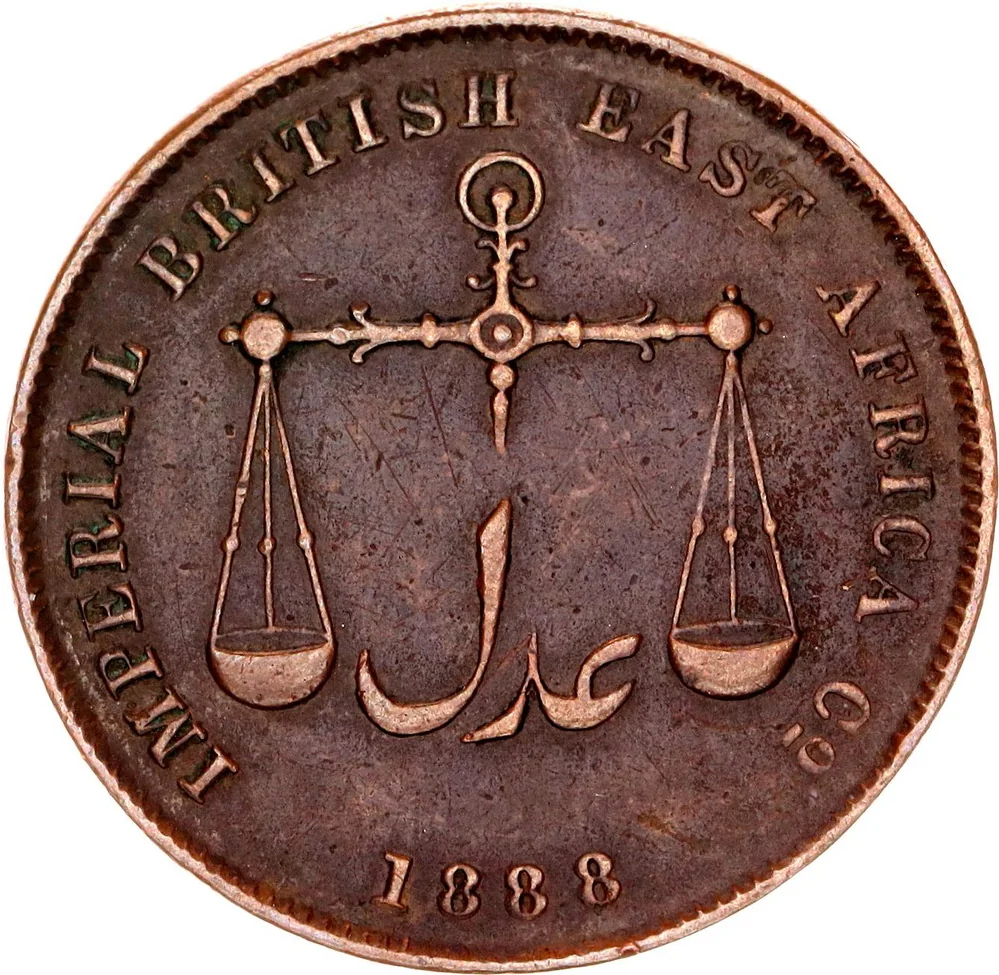
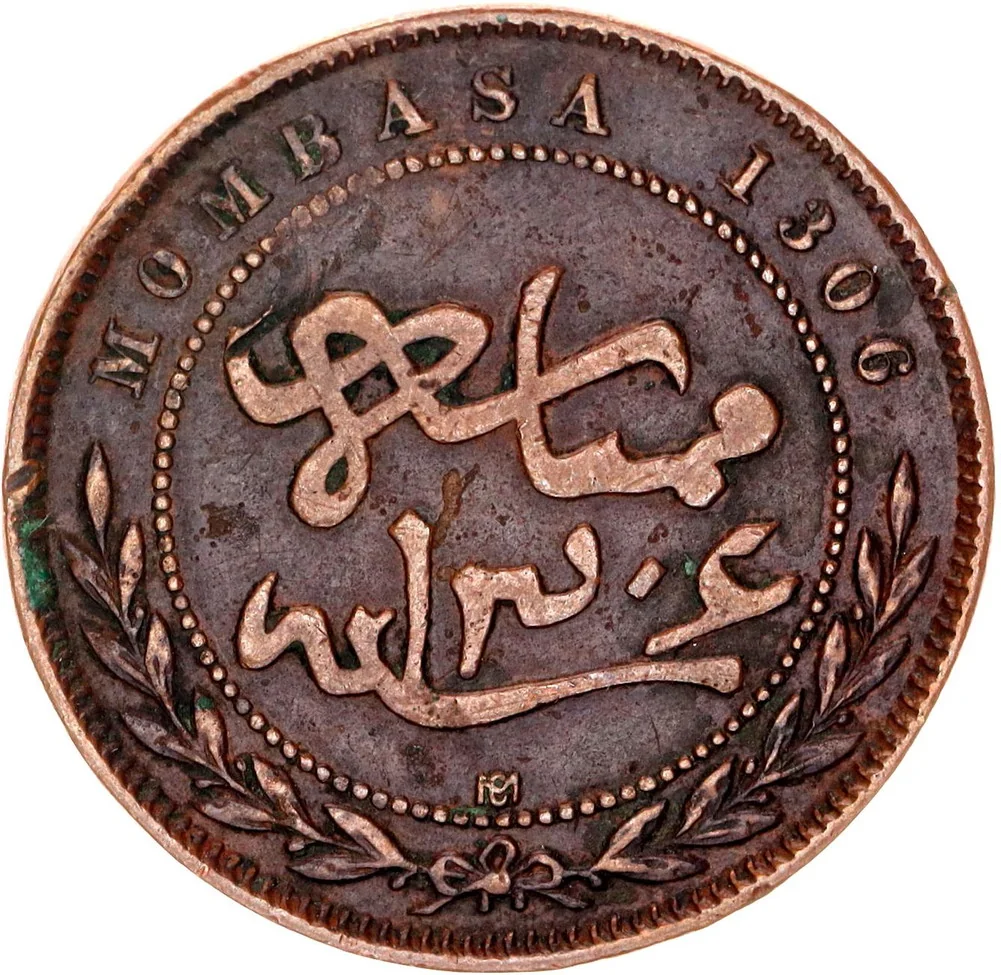
1 Paisa – Mombasa
Kenya
Context
Years: 1888–1889
Islamic (Hijri) Year: 1306
Country: Kenya 
Issuer: Mombasa
Period:
(1887—1895)
Currency:
(1888—1895)
Demonetized: Yes
Material
References
KM: #Click to copy to clipboard1.1-1.5
Numista: #8981
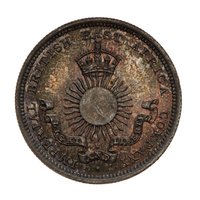
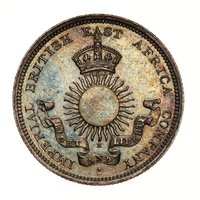
Obverse
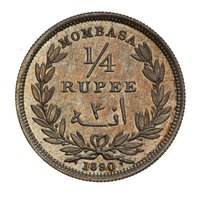
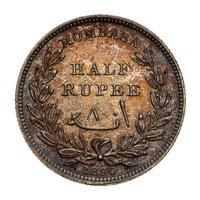
Reverse
Edge
Plain
Mintings
| Year | Mint Mark | Mintage | Quality | Collection |
|---|---|---|---|---|
| 1888 | — | — | Proof | |
| 1888 | — | — | ||
| 1889 | — | — |
Historical background
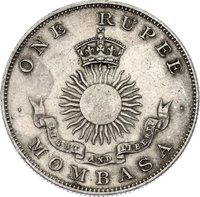
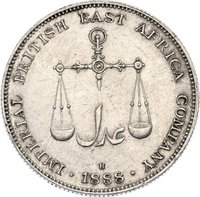
In 1888, Mombasa was at a pivotal moment of economic transition, caught between indigenous systems, regional trade networks, and the encroaching influence of British imperial finance. The local currency ecosystem was complex and pluralistic. The most widely recognized and trusted medium of exchange was the Maria Theresa thaler, a large silver coin minted in Austria but which circulated throughout the Red Sea and Western Indian Ocean. Alongside this, the Indian rupee was gaining ground due to the significant presence of Indian merchants (the "dukawallas") who formed the commercial backbone of the East African coast. At the same time, traditional currencies like cowrie shells and trade goods (particularly cloth and wire) remained in use for local and smaller-scale transactions, especially in the hinterlands.
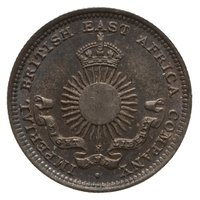
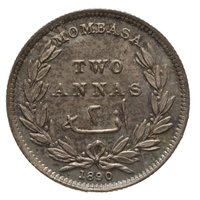
This monetary plurality was directly challenged by the political events of 1888. In May of that year, the Imperial British East Africa Company (IBEAC), under William Mackinnon, received its royal charter and took administrative control of the coastal strip leased from the Sultan of Zanzibar. The Company immediately sought to impose financial order and assert sovereignty by introducing its own currency: the East Africa rupee, divided into 100 cents. This move was a deliberate attempt to displace the Maria Theresa thaler and Indian rupee, thereby centralizing economic control and simplifying tax collection. However, the IBEAC rupee faced significant public distrust and reluctance, as the established merchants and population were skeptical of the Company's paper notes and the stability of its coinage.
Consequently, the currency situation in 1888 Mombasa was one of friction and coexistence. The IBEAC's official rupee existed in an uneasy competition with the entrenched silver thaler and the merchant-preferred Indian rupee, while non-metallic traditional currencies persisted. This monetary confusion reflected the broader tensions of the early colonial period—a struggle between the Company's desire for a unified, governable economy and the practical realities of a cosmopolitan trading port deeply integrated into long-standing Indian Ocean networks. The success of the Company's currency would remain uncertain for years, emblematic of the fragile and contested nature of early colonial rule.
This monetary plurality was directly challenged by the political events of 1888. In May of that year, the Imperial British East Africa Company (IBEAC), under William Mackinnon, received its royal charter and took administrative control of the coastal strip leased from the Sultan of Zanzibar. The Company immediately sought to impose financial order and assert sovereignty by introducing its own currency: the East Africa rupee, divided into 100 cents. This move was a deliberate attempt to displace the Maria Theresa thaler and Indian rupee, thereby centralizing economic control and simplifying tax collection. However, the IBEAC rupee faced significant public distrust and reluctance, as the established merchants and population were skeptical of the Company's paper notes and the stability of its coinage.
Consequently, the currency situation in 1888 Mombasa was one of friction and coexistence. The IBEAC's official rupee existed in an uneasy competition with the entrenched silver thaler and the merchant-preferred Indian rupee, while non-metallic traditional currencies persisted. This monetary confusion reflected the broader tensions of the early colonial period—a struggle between the Company's desire for a unified, governable economy and the practical realities of a cosmopolitan trading port deeply integrated into long-standing Indian Ocean networks. The success of the Company's currency would remain uncertain for years, emblematic of the fragile and contested nature of early colonial rule.
🌱 Common