

1 Yuan – Hupeh Province
China
Context
Years: 1909–1911
Country: China 
Issuer: Hupeh Province
Ruler: Xuantong
Currency:
(1895—1949)
Demonetized: Yes
Material
References
Y: #Click to copy to clipboard131
Numista: #17762
Value
Bullion value: $68.29
Obverse
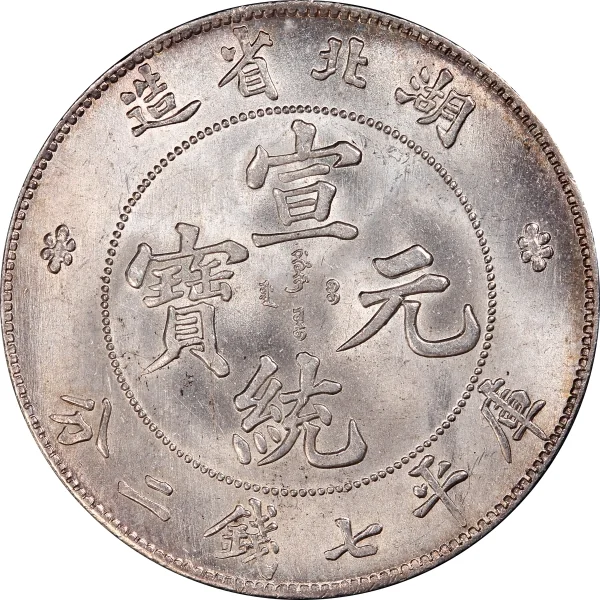
Description:
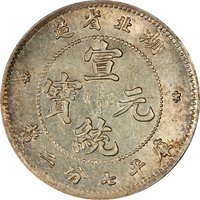
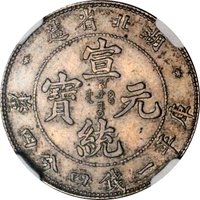
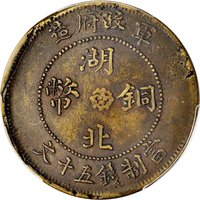
Chinese ideograms top to bottom, right to left, with central Manchu text, all encircled by more Chinese characters.
Inscription:
造省北湖
宣
ᡤᡝᡥᡠᠩᡤᡝ
寶 ᠶᡠᠸᠠᠨ ᠪᠣᠣ 元
ᠶᠣᠰᠣ
統
分二錢七平庫
宣
ᡤᡝᡥᡠᠩᡤᡝ
寶 ᠶᡠᠸᠠᠨ ᠪᠣᠣ 元
ᠶᠣᠰᠣ
統
分二錢七平庫
Translation:
Made at the North Lake Bureau of the Ministry of Works.
Xuan
Gehungge
Yuan Bao
Yoso
System
2 Fen and 7 Candareens, Treasury Standard.
Xuan
Gehungge
Yuan Bao
Yoso
System
2 Fen and 7 Candareens, Treasury Standard.
Scripts: Chinese, Mongolian / Manchu
Reverse
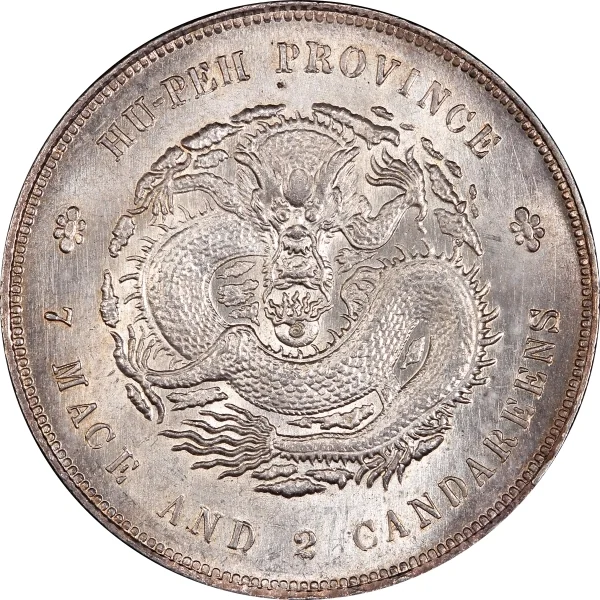
Description:
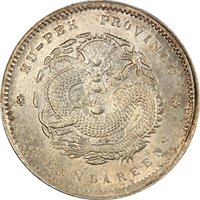
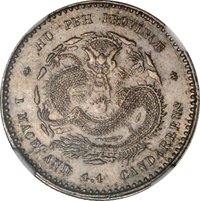
Dragon encircling a pearl, surrounded by English text.
Inscription:
HU-PEH PROVINCE
7 MACE AND 2 CANDAREENS
7 MACE AND 2 CANDAREENS
Script: Latin
Edge
Reeded.
Categories
| Mythology> Fantastic animal |
Mintings
| Year | Mint Mark | Mintage | Quality | Collection |
|---|---|---|---|---|
| — | — | — |
Historical background
In 1909, Hupeh (Hubei) Province was at the forefront of a severe and complex monetary crisis that reflected the wider disintegration of China's traditional financial system in the late Qing dynasty. The province, a major commercial hub centered on Wuhan, was saturated with a chaotic mix of currencies. These included imperial silver sycee (measured in taels), foreign-minted silver dollars (like the Mexican Eagle), Chinese silver dragon dollars, and a vast, unstable quantity of copper cash coins. The critical problem was the wildly fluctuating exchange rate between silver and copper, which devastated the peasantry who earned in copper but paid taxes assessed in silver. As the price of silver soared relative to copper, real tax burdens doubled, fueling widespread social discontent.
Provincial authorities, under the reformist Viceroy Chen Kuilong, attempted to impose order by promoting the official Hupeh silver dollar minted at the Wuchang Mint and establishing official exchange shops to set a stable copper-to-silver rate. However, these measures were largely ineffective. The provincial treasury was depleted, and the new currency could not displace the myriad of older coins in circulation. Furthermore, the proliferation of privately issued banknotes (qianpiao) from local banks and merchant guilds, often issued without sufficient reserves, led to frequent failures and note repudiations, eroding public trust in any paper money.
This monetary disorder in Hupeh was more than a local issue; it was a microcosm of the Qing state's inability to assert sovereign monetary control. The crisis crippled local commerce, exacerbated fiscal shortfalls for the provincial government, and became a potent source of anti-Qing resentment. Within two years, this economic instability in the province's major cities would provide a receptive environment for revolutionary ideas, contributing directly to the outbreak of the Wuchang Uprising in 1911, which began in Hupeh's capital and ignited the Xinhai Revolution.
Provincial authorities, under the reformist Viceroy Chen Kuilong, attempted to impose order by promoting the official Hupeh silver dollar minted at the Wuchang Mint and establishing official exchange shops to set a stable copper-to-silver rate. However, these measures were largely ineffective. The provincial treasury was depleted, and the new currency could not displace the myriad of older coins in circulation. Furthermore, the proliferation of privately issued banknotes (qianpiao) from local banks and merchant guilds, often issued without sufficient reserves, led to frequent failures and note repudiations, eroding public trust in any paper money.
This monetary disorder in Hupeh was more than a local issue; it was a microcosm of the Qing state's inability to assert sovereign monetary control. The crisis crippled local commerce, exacerbated fiscal shortfalls for the provincial government, and became a potent source of anti-Qing resentment. Within two years, this economic instability in the province's major cities would provide a receptive environment for revolutionary ideas, contributing directly to the outbreak of the Wuchang Uprising in 1911, which began in Hupeh's capital and ignited the Xinhai Revolution.
⭐ Rare