

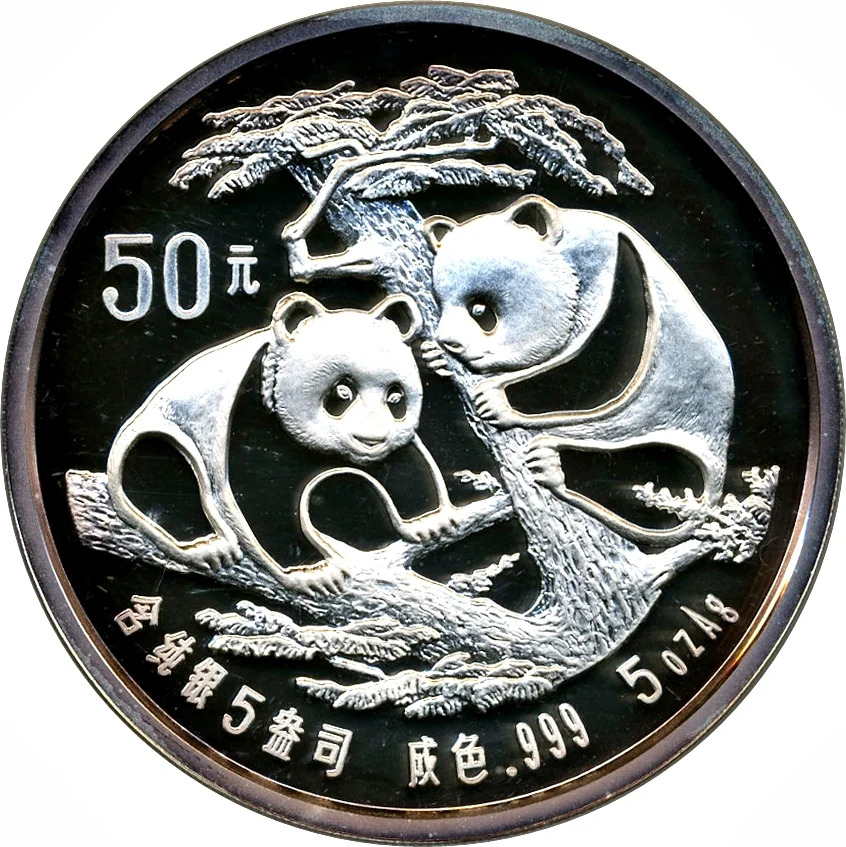
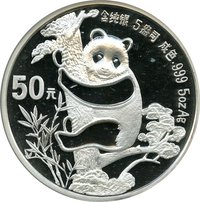
50 yuan – People's Republic of China
Add to wishlist
Non-circulating coins
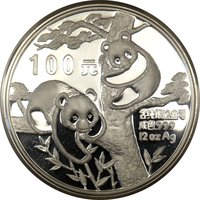
Series: Panda Bullion
China
Context
Year: 1988
Country: China
Issuer: People's Republic of China
Period:
(since 1949)
Currency:
(since 1955)
Total mintage: 11,000
Material
Diameter: 70 mm
Weight: 155.52 g
Silver Weight:: 155.36 g
Shape: Round
Composition: 99.9% Silver
Standard: Silver 5 ounces
Magnetic: No
Technique: Milled
Alignment: Medal alignment
flip
References
KM: #
Numista: #17613
Value
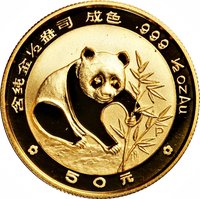
Exchange value: 50 CNY
Bullion value: $389.31
Inflation-adjusted value: 235.90 CNY
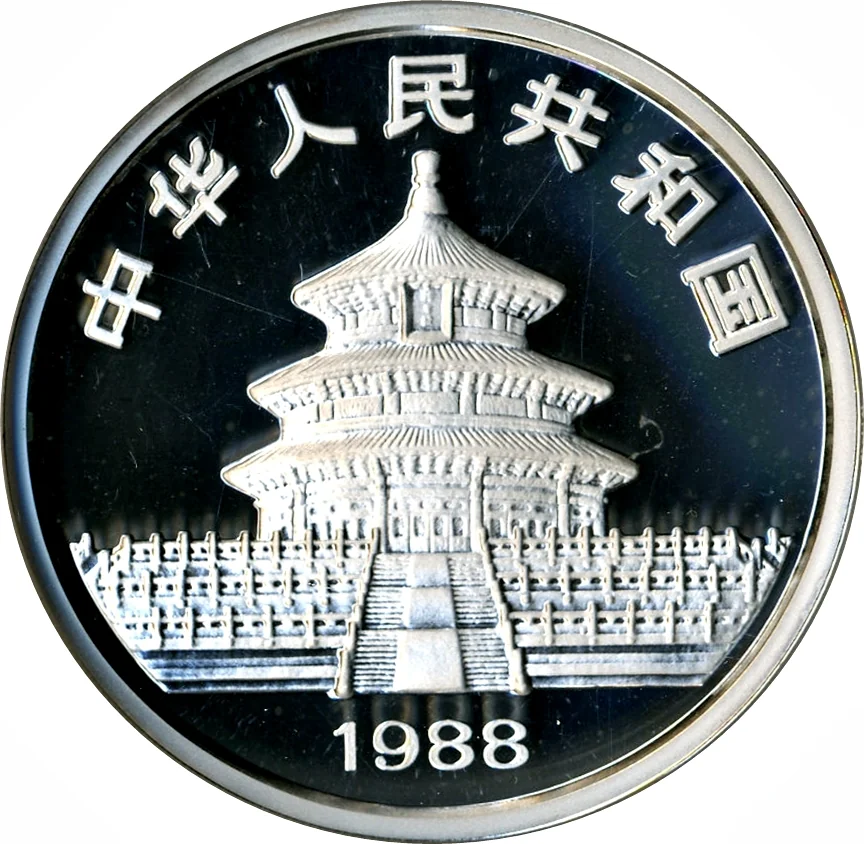
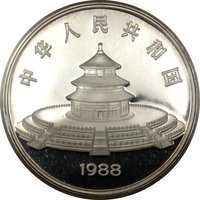
Obverse
Description:
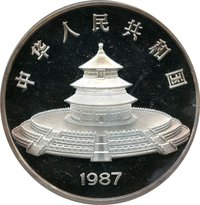
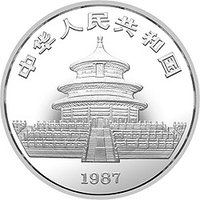
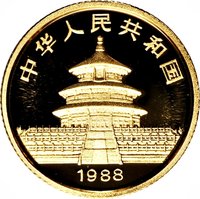
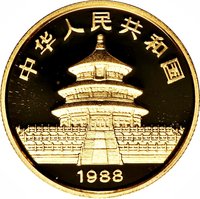
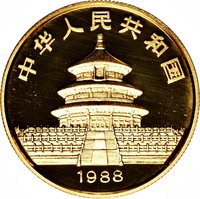
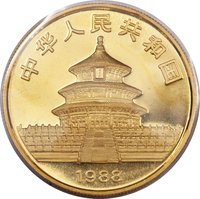
Altar of Heaven
Script: Chinese
Edge
Mintings
| Year | Mint Mark | Mintage | Quality | Collection |
|---|---|---|---|---|
| 1988 | — | 11,000 | Proof |
Historical background
In 1988, the People's Republic of China was grappling with severe inflationary pressures and currency instability, a direct consequence of the ambitious yet tumultuous price reform policies of the mid-1980s. As part of the broader "Reform and Opening-Up," the state had begun to relax control over prices for many goods, aiming for a transition from a planned to a "socialist market economy." However, this deregulation, combined with excessive investment and loose credit from state banks, led to overheated economic growth and a rapid increase in the money supply. The result was soaring inflation, officially reported at 18.8% for the year but perceived by the public as even higher, which severely eroded the purchasing power of the renminbi (RMB).
The currency situation manifested in a crisis of public confidence. Fearing further devaluation of their savings, citizens across major cities engaged in panic buying in the summer and autumn of 1988, rushing to convert their cash into durable goods like appliances, furniture, and even daily necessities. This bank run on commodities emptied shelves and exacerbated shortages, creating a vicious cycle that further fueled inflationary expectations. The dual-track price system also bred corruption and speculation, as goods could be procured at low state-planned prices and resold at much higher market prices, undermining the currency's stability and public trust in the economic system.
The government's response was a sharp reversal. By late 1988, under the leadership of Premier Li Peng, Beijing abruptly halted the price reform experiment and implemented a stringent austerity program known as the "rectification and improvement" campaign. This involved slashing government investment, tightening credit, re-imposing administrative controls on prices, and curbing wage growth. While these measures eventually succeeded in cooling inflation by the early 1990s, they came at a significant cost: a sharp economic slowdown, increased unemployment, and a temporary setback in market-oriented reforms. The 1988 episode thus stands as a pivotal moment, highlighting the profound challenges of managing monetary policy and public confidence during China's complex economic transition.
The currency situation manifested in a crisis of public confidence. Fearing further devaluation of their savings, citizens across major cities engaged in panic buying in the summer and autumn of 1988, rushing to convert their cash into durable goods like appliances, furniture, and even daily necessities. This bank run on commodities emptied shelves and exacerbated shortages, creating a vicious cycle that further fueled inflationary expectations. The dual-track price system also bred corruption and speculation, as goods could be procured at low state-planned prices and resold at much higher market prices, undermining the currency's stability and public trust in the economic system.
The government's response was a sharp reversal. By late 1988, under the leadership of Premier Li Peng, Beijing abruptly halted the price reform experiment and implemented a stringent austerity program known as the "rectification and improvement" campaign. This involved slashing government investment, tightening credit, re-imposing administrative controls on prices, and curbing wage growth. While these measures eventually succeeded in cooling inflation by the early 1990s, they came at a significant cost: a sharp economic slowdown, increased unemployment, and a temporary setback in market-oriented reforms. The 1988 episode thus stands as a pivotal moment, highlighting the profound challenges of managing monetary policy and public confidence during China's complex economic transition.
Series: Panda Bullion
✨ Legendary