

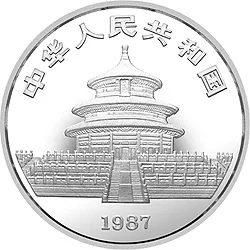
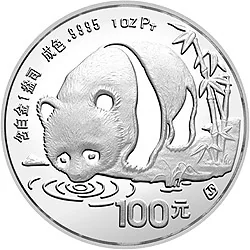
100 yuan – People's Republic of China
Add to wishlist
Non-circulating coins
Series: Panda Bullion
China
Context
Year: 1987
Country: China
Issuer: People's Republic of China
Period:
(since 1949)
Currency:
(since 1955)
Total mintage: 2,000
Material
Diameter: 32 mm
Weight: 31.1 g
Platinum Weight:: 31.08 g
Shape: Round
Composition: 99.95% Platinum
Standard: Silver ounce
Technique: Milled
Alignment: Medal alignment
flip
References
KM: #
Numista: #164278
Value
Exchange value: 100 CNY
Bullion value: $2107.71
Inflation-adjusted value: 505.91 CNY
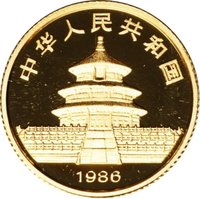
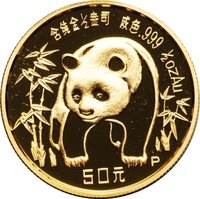
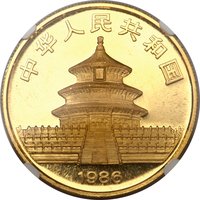
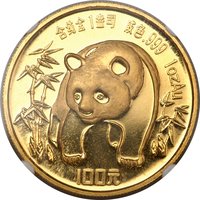
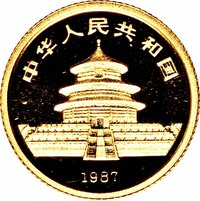
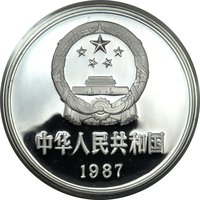
Obverse
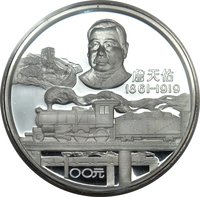
Reverse
Edge
Reeded
Mintings
| Year | Mint Mark | Mintage | Quality | Collection |
|---|---|---|---|---|
| 1987 | S | 2,000 | Proof |
Historical background
In 1987, the People's Republic of China was navigating a critical phase of its economic reform program under Deng Xiaoping. The currency, the Renminbi (RMB), operated under a complex dual-track system. Officially, it maintained a fixed, overvalued exchange rate set by the state for planned economy transactions and essential imports. Alongside this, a secondary "swap centre" rate existed, which was significantly more depreciated and reflected market forces more closely for foreign-invested enterprises and special economic zones. This created distortions, encouraged arbitrage, and was a source of inefficiency as the country sought greater integration with the global economy.
Domestically, the currency faced pressures from price liberalization reforms. The mid-1980s saw bouts of inflation as controls on certain goods were relaxed, leading to a loss of public confidence in the RMB's store of value. This period was marked by "panic buying" sprees, as citizens rushed to convert savings into durable goods to preserve wealth. The government's response was a cycle of tightening credit and re-imposing some administrative controls, highlighting the tension between moving toward a market system and maintaining macroeconomic stability.
The currency situation of 1987 was thus a microcosm of China's broader transitional economy. The RMB was not yet a convertible currency and served as a key tool for state planning, yet it was being gradually—and sometimes painfully—exposed to market influences. The inconsistencies of the dual-exchange rate regime and inflationary pressures underscored the necessity for deeper financial reforms, which would eventually lead to the unification of exchange rates in 1994 and set the stage for the RMB's modern trajectory.
Domestically, the currency faced pressures from price liberalization reforms. The mid-1980s saw bouts of inflation as controls on certain goods were relaxed, leading to a loss of public confidence in the RMB's store of value. This period was marked by "panic buying" sprees, as citizens rushed to convert savings into durable goods to preserve wealth. The government's response was a cycle of tightening credit and re-imposing some administrative controls, highlighting the tension between moving toward a market system and maintaining macroeconomic stability.
The currency situation of 1987 was thus a microcosm of China's broader transitional economy. The RMB was not yet a convertible currency and served as a key tool for state planning, yet it was being gradually—and sometimes painfully—exposed to market influences. The inconsistencies of the dual-exchange rate regime and inflationary pressures underscored the necessity for deeper financial reforms, which would eventually lead to the unification of exchange rates in 1994 and set the stage for the RMB's modern trajectory.
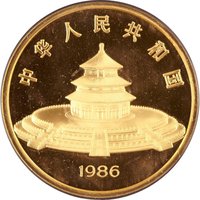
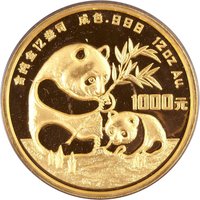
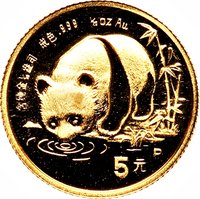
Series: Panda Bullion
✨ Legendary