

20 kroner (Henrik Ibsen) – Norway
Add to wishlist
Circulating commemorative coins
Commemoration: Henrik Ibsen 100 years since death
Norway
Context
Material
References
KM: #
Numista: #17593
Value
Exchange value: 20 NOK
Inflation-adjusted value: 33.05 NOK
Obverse
Description:
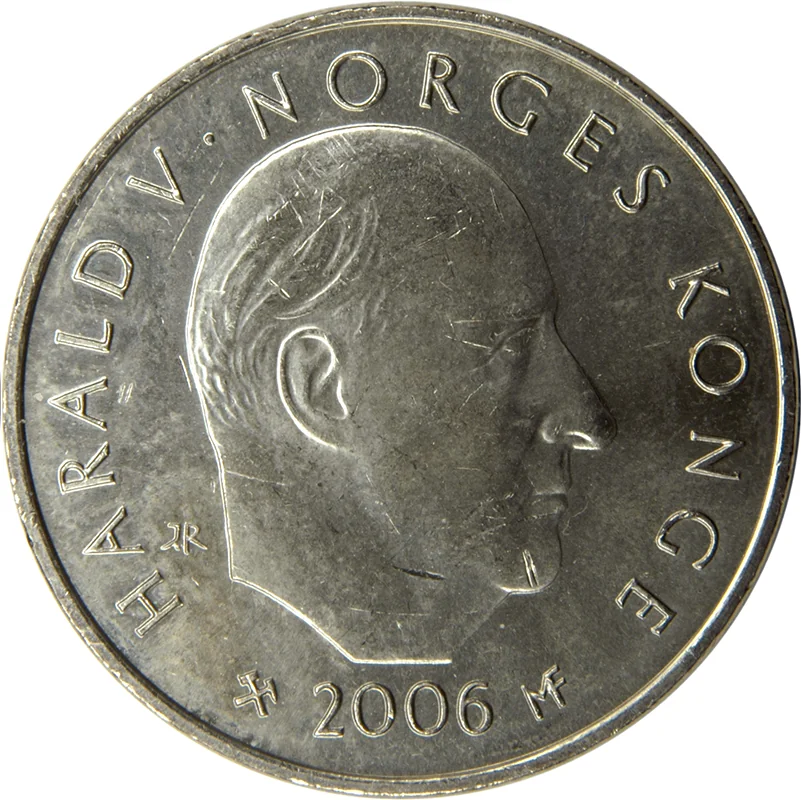
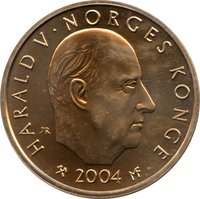
King Harald V bust facing right. Engraver's initials behind bust. Surrounding inscription. Mintmark, date, and mintmaster's initials below. Solid rim ring.
Inscription:
HARALD V · NORGES KONGE
IAR
⚒ 2006 MF
IAR
⚒ 2006 MF
Translation:
Harald V, Norway's King
JAR
Workshop 2006 MF
JAR
Workshop 2006 MF
Script: Latin
Engraver: Ingrid Austlid Rise
Reverse
Description:
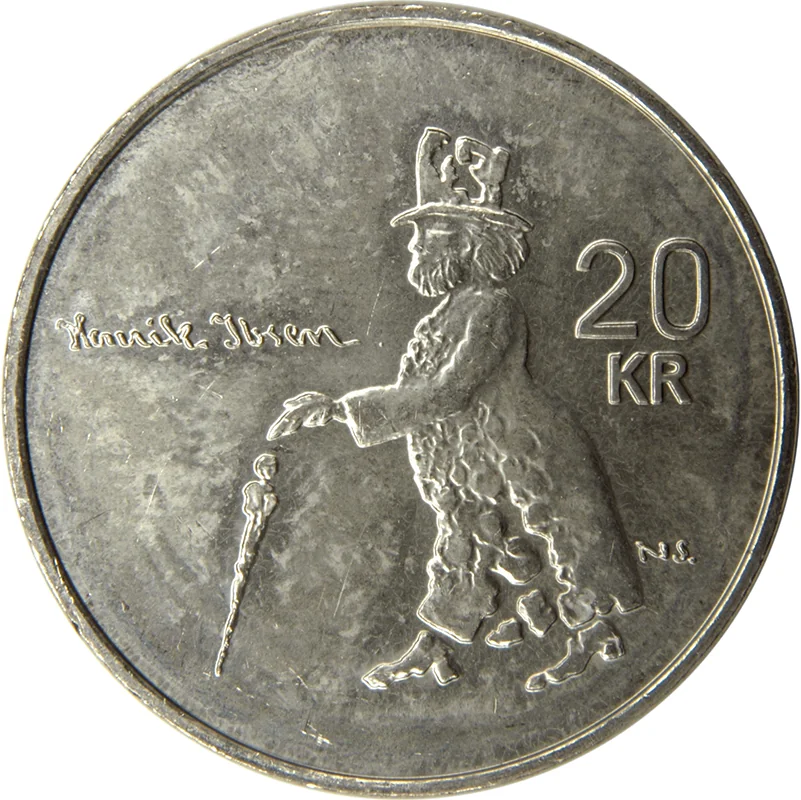
Henrik Ibsen in a top hat, walking left. His signature is left, value in two lines right. Designer initials below value. Solid rim ring.
Inscription:
Henrik Ibsen
20
KR
NS.
20
KR
NS.
Scripts: Latin, Latin (cursive)
Engraver: Ingrid Austlid Rise
Designer: Nina Sundbye
Edge
Plain
Categories
| Event> Death anniversary |
Mints
| Name | Mark |
|---|---|
| Norwegian Mint | — |
Mintings
| Year | Mint Mark | Mintage | Quality | Collection |
|---|---|---|---|---|
| 2006 | — | 801,256 | ||
| 2006 | — | 12,006 | BU | |
| 2006 | — | 8,800 | Proof |
Historical background
In 2006, Norway's currency situation was dominated by the robust performance of the Norwegian krone (NOK), heavily influenced by persistently high global oil and gas prices. As a major petroleum exporter, Norway benefited from record energy revenues, which strengthened its economic fundamentals and attracted substantial foreign capital. This created significant upward pressure on the krone, which traded at strong levels against major currencies like the US dollar and the euro throughout much of the year, contributing to a large current account surplus.
This strength presented a classic challenge for the Norges Bank, the country's central bank. While a strong krone helped curb imported inflation, it also posed a threat to the non-oil tradable sector by making Norwegian exports more expensive and imports cheaper. In response, the bank continued a well-established cycle of interest rate hikes, raising its key policy rate to 3.0% by December 2006. This tightening aimed to manage domestic economic overheating and inflationary pressures, but also had the effect of supporting the krone's value further by increasing yield differentials.
Consequently, the year was characterized by a policy balancing act. Authorities managed the substantial petroleum income through the Government Pension Fund Global (the sovereign wealth fund), insulating the domestic economy from excessive spending and "Dutch disease." The overall picture was one of a prosperous economy with a strong currency, but with ongoing vigilance required to maintain competitiveness in non-oil industries and long-term macroeconomic stability.
This strength presented a classic challenge for the Norges Bank, the country's central bank. While a strong krone helped curb imported inflation, it also posed a threat to the non-oil tradable sector by making Norwegian exports more expensive and imports cheaper. In response, the bank continued a well-established cycle of interest rate hikes, raising its key policy rate to 3.0% by December 2006. This tightening aimed to manage domestic economic overheating and inflationary pressures, but also had the effect of supporting the krone's value further by increasing yield differentials.
Consequently, the year was characterized by a policy balancing act. Authorities managed the substantial petroleum income through the Government Pension Fund Global (the sovereign wealth fund), insulating the domestic economy from excessive spending and "Dutch disease." The overall picture was one of a prosperous economy with a strong currency, but with ongoing vigilance required to maintain competitiveness in non-oil industries and long-term macroeconomic stability.
🌱 Fairly Common