

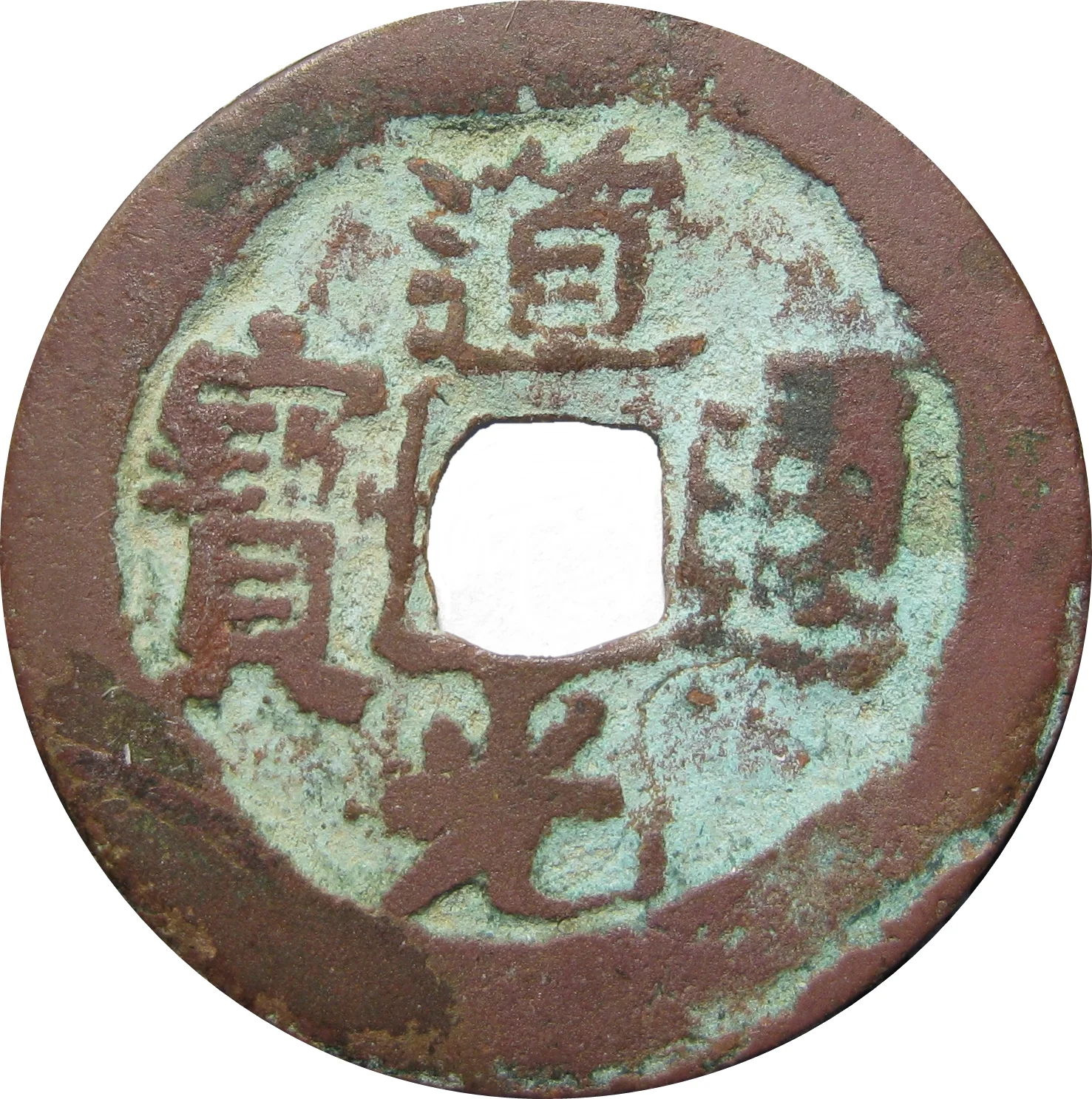
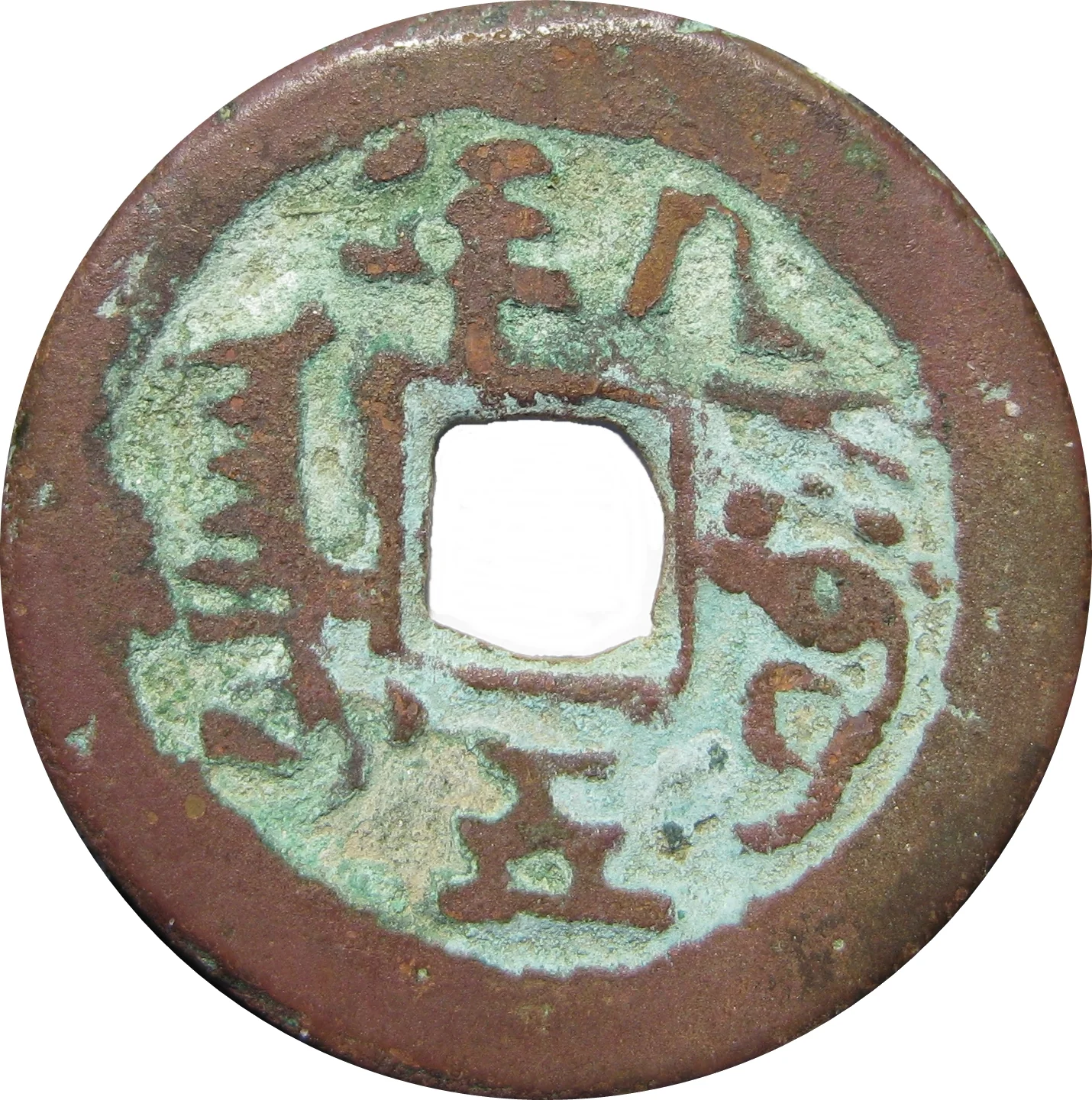
5 Cash – South Xinjiang
China
Context
Years: 1829–1850
Country: China 
Issuer: South Xinjiang
Ruler: Daoguang
Currency:
(1759—1909)
Demonetized: Yes
Material
Diameter: 24 mm
Weight: 4.42 g
Thickness: 1.5 mm
Shape: Round with a square hole
Composition: Copper
Magnetic: No
Technique: Cast
Alignment: Medal alignment
flip
References
Numista: #175246
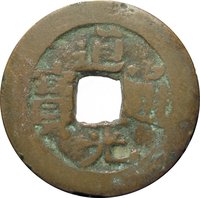
Obverse
Description:
Four Chinese characters read vertically, right to left.
Inscription:
道
寶 通
光
寶 通
光
Translation:
Daoguang
Tongbao
Tongbao
Scripts: Chinese (traditional, regular script)
Language: Chinese
Reverse
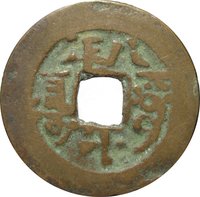
Description:
Chinese ideograms above and below, Uyghur to the right, Manchu to the left.
Inscription:
年八
ᠠᡴᠰᡠ اقسو
五
ᠠᡴᠰᡠ اقسو
五
Translation:
Aksu
Year eight
Five
Year eight
Five
Edge
Plain
Mints
| Name | Mark |
|---|---|
| Aksu Mint | — |
Mintings
| Year | Mint Mark | Mintage | Quality | Collection |
|---|---|---|---|---|
| — | — | — |
Historical background
In 1829, the currency situation in the South Xinjiang (Altishahr) region of the Qing Empire was characterized by a complex and unstable dual system, heavily influenced by recent warfare. The primary circulating coin was the locally minted pūl (or red cash), a small copper coin with a low silver-to-copper ratio. Its value had been severely debased over decades, and its circulation was largely confined to the Tarim Basin, creating a fragmented monetary zone. Alongside this, the official currency of the Qing state, the standardized zhiqian (imperial cash coin) from the Central Mint in Beijing, was also in use but was less common in everyday local transactions, representing the imperial claim to sovereignty.
This monetary disorder was a direct legacy of the Qing reconquest of the region following the Jehangir Khoja invasion of 1826. The conflict disrupted trade, drained silver reserves, and further eroded confidence in the already weak pūl currency. The Qing authorities, having just re-established military control under General Changling, faced the urgent task of economic stabilization. A key focus was on suppressing the debased pūl and increasing the supply and authority of standardized imperial zhiqian to facilitate tax collection, pay troops, and bind the local economy more firmly to the central state.
Consequently, the year 1829 marks a period of active but challenging transition. Qing administrators were implementing policies to retire old pūl coins and introduce new minting, aiming to establish a unified and reliable currency system. However, deep-seated local economic habits, a scarcity of copper, and the vast distance from central China meant that these reforms were met with practical difficulties and resistance. The currency situation remained volatile, reflecting the broader Qing struggle to consolidate political control through economic integration in a strategically vital frontier region.
This monetary disorder was a direct legacy of the Qing reconquest of the region following the Jehangir Khoja invasion of 1826. The conflict disrupted trade, drained silver reserves, and further eroded confidence in the already weak pūl currency. The Qing authorities, having just re-established military control under General Changling, faced the urgent task of economic stabilization. A key focus was on suppressing the debased pūl and increasing the supply and authority of standardized imperial zhiqian to facilitate tax collection, pay troops, and bind the local economy more firmly to the central state.
Consequently, the year 1829 marks a period of active but challenging transition. Qing administrators were implementing policies to retire old pūl coins and introduce new minting, aiming to establish a unified and reliable currency system. However, deep-seated local economic habits, a scarcity of copper, and the vast distance from central China meant that these reforms were met with practical difficulties and resistance. The currency situation remained volatile, reflecting the broader Qing struggle to consolidate political control through economic integration in a strategically vital frontier region.

✨ Legendary