

10 cash – South Xinjiang
Add to wishlist
China
Context
Years: 1828–1850
Country: China
Issuer: South Xinjiang
Ruler: Daoguang
Currency:
(1759—1909)
Demonetized: Yes
Material
Diameter: 26 mm
Weight: 4.72 g
Thickness: 1.2 mm
Shape: Round with a square hole
Composition: Copper
Magnetic: No
Technique: Cast
Alignment: Medal alignment
flip
References
Numista: #175245
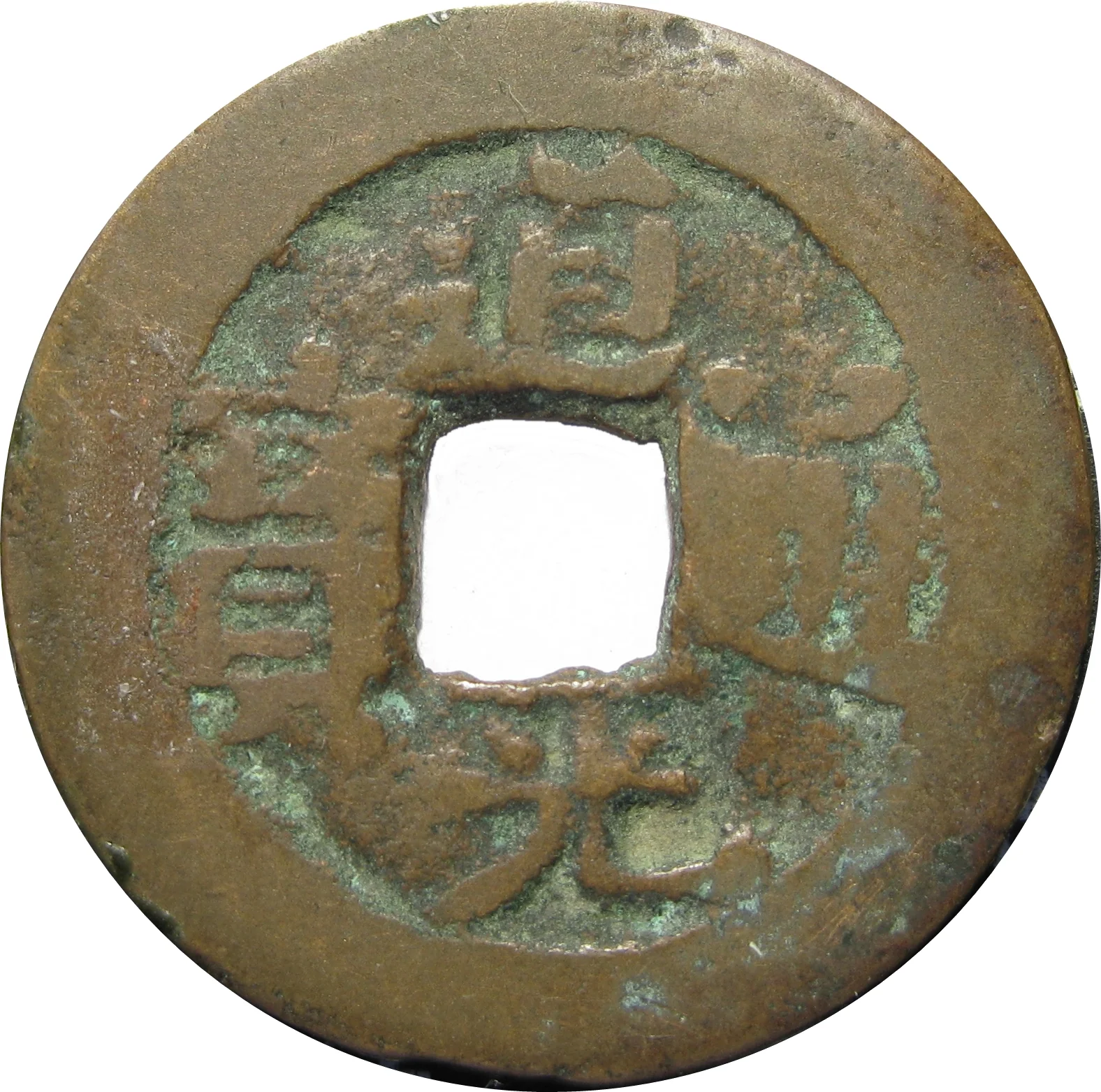
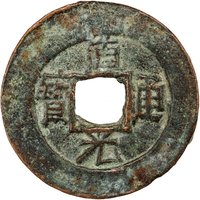
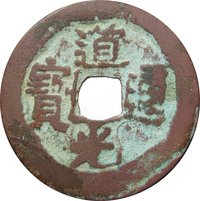
Obverse
Description:
Four Chinese characters read vertically, right to left.
Inscription:
道
寶 通
光
寶 通
光
Translation:
Daoguang
Tongbao
Tongbao
Scripts: Chinese (traditional, regular script)
Language: Chinese
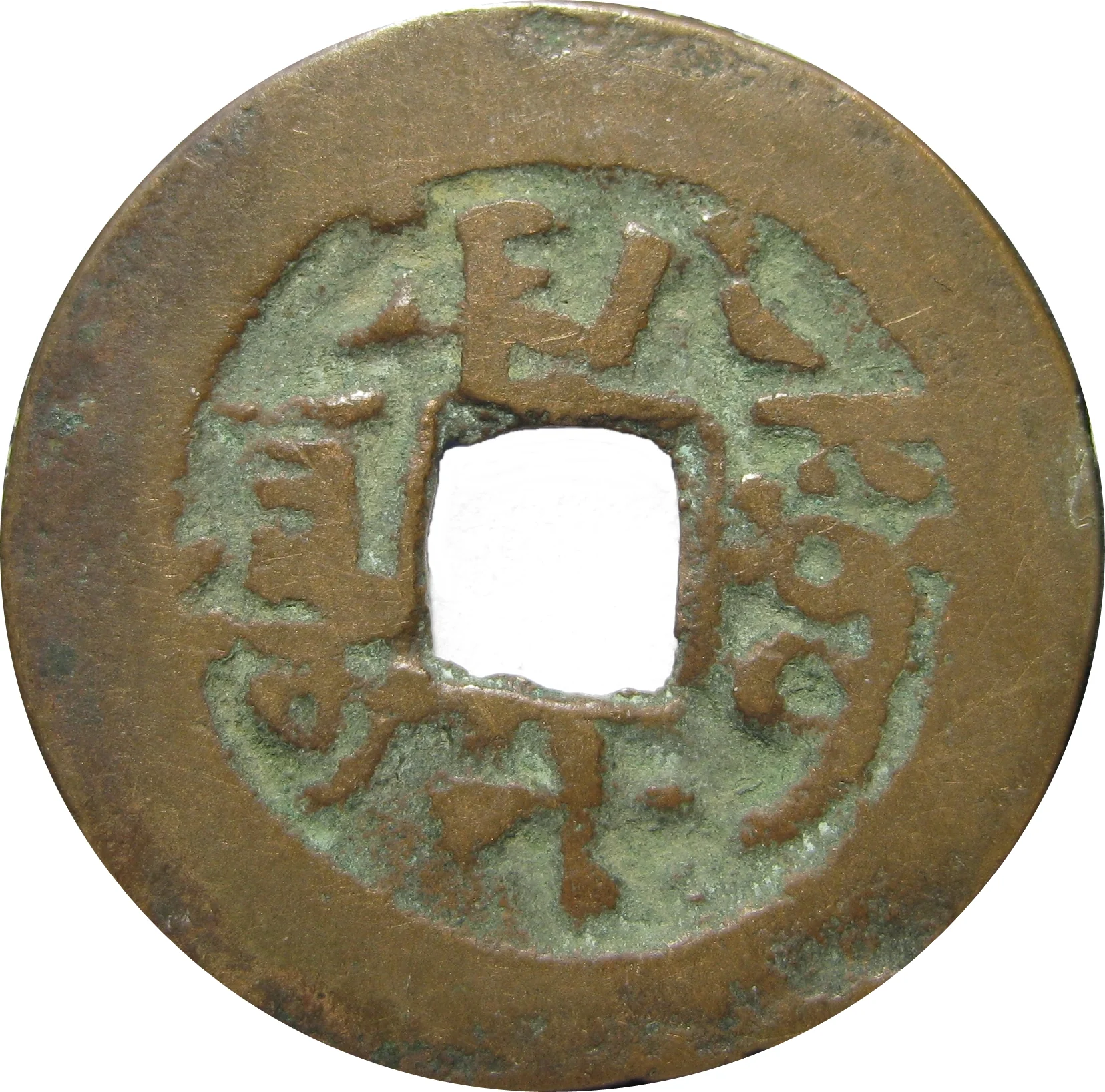
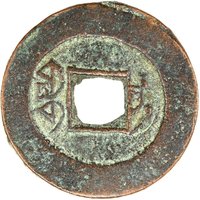
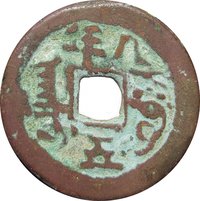
Reverse
Description:
Chinese ideograms above and below, Uyghur to the right, Manchu to the left.
Inscription:
年八
ᠠᡴᠰᡠ اقسو
十
ᠠᡴᠰᡠ اقسو
十
Translation:
Eighth Year
Aksu
Ten
Aksu
Ten
Edge
Plain
Mints
| Name | Mark |
|---|---|
| Aksu Mint | — |
Mintings
| Year | Mint Mark | Mintage | Quality | Collection |
|---|---|---|---|---|
| — | — | — |
Historical background
Following the Qing reconquest of the Tarim Basin in 1828, the currency situation in South Xinjiang (Altishahr) was one of profound disorder and debasement, a direct legacy of the preceding Jungar and Khoja regimes. The primary circulating coin, the pul, was a small, hand-struck copper coin of wildly inconsistent weight, alloy, and legitimacy. Decades of local minting under unstable rulers had flooded the region with inferior coins, often containing high amounts of lead or tin, severely undermining public trust and hindering basic trade.
The Qing authorities, having just suppressed the Jahangir Khoja rebellion, recognized that monetary control was essential for political and economic integration. Their immediate priority was to standardize the currency by introducing a new, official pul coin from a central mint in Aksu. These coins bore the reign title of the Daoguang Emperor in both Manchu and Persian scripts, symbolizing Qing sovereignty. However, the task was immense: sweeping the vast quantities of old, debased coins out of circulation proved difficult, and for years, both official and illegitimate coins circulated side-by-side, with exchange rates fluctuating chaotically in the bazaars.
This monetary instability reflected the broader challenges of Qing consolidation. While the new pul provided a foundation for official transactions and tax collection, the remote oasis economies still relied heavily on barter and informal credit. Furthermore, the region remained connected to trans-Himalayan trade networks, meaning foreign silver coins (particularly from neighbouring khanates) and even silver ingots continued to be used for larger transactions, creating a complex multi-currency environment that the Qing administration would struggle to fully unify for decades to come.
The Qing authorities, having just suppressed the Jahangir Khoja rebellion, recognized that monetary control was essential for political and economic integration. Their immediate priority was to standardize the currency by introducing a new, official pul coin from a central mint in Aksu. These coins bore the reign title of the Daoguang Emperor in both Manchu and Persian scripts, symbolizing Qing sovereignty. However, the task was immense: sweeping the vast quantities of old, debased coins out of circulation proved difficult, and for years, both official and illegitimate coins circulated side-by-side, with exchange rates fluctuating chaotically in the bazaars.
This monetary instability reflected the broader challenges of Qing consolidation. While the new pul provided a foundation for official transactions and tax collection, the remote oasis economies still relied heavily on barter and informal credit. Furthermore, the region remained connected to trans-Himalayan trade networks, meaning foreign silver coins (particularly from neighbouring khanates) and even silver ingots continued to be used for larger transactions, creating a complex multi-currency environment that the Qing administration would struggle to fully unify for decades to come.
✨ Legendary