

5000 korun – Czech Republic
Add to wishlist
Czechia
Context
Year: 2019
Country: Czechia
Issuer: Czech Republic
Period:
(since 1993)
Currency:
(since 1993)
Total mintage: 9,800
Material
Diameter: 28 mm
Weight: 15.55 g
Gold Weight:: 15.55 g
Thickness: 2 mm
Shape: Round
Composition: 99.99% Gold
Standard: Silver half ounce
Magnetic: No
Technique: Milled
Alignment: Medal alignment
flip
References
KM: #
Numista: #175179
Value
Exchange value: 5000 CZK
Bullion value: $2385.39
Inflation-adjusted value: 7594.80 CZK
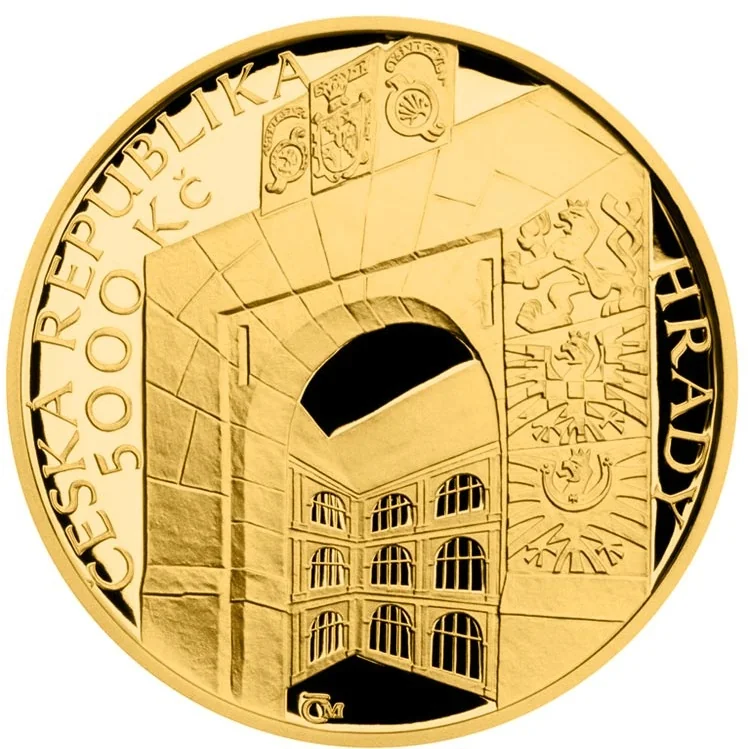
Obverse
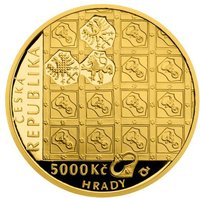
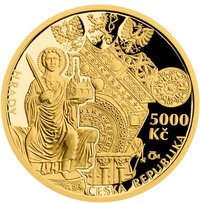
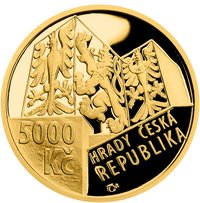
Inscription:
ČESKÁ REPUBLIKA
5000 Kč
HRADY
ČM
5000 Kč
HRADY
ČM
Translation:
CZECH REPUBLIC
5000 CZK
CASTLES
ČM
5000 CZK
CASTLES
ČM
Script: Latin
Language: Czech
Engraver: Asamat Baltaev
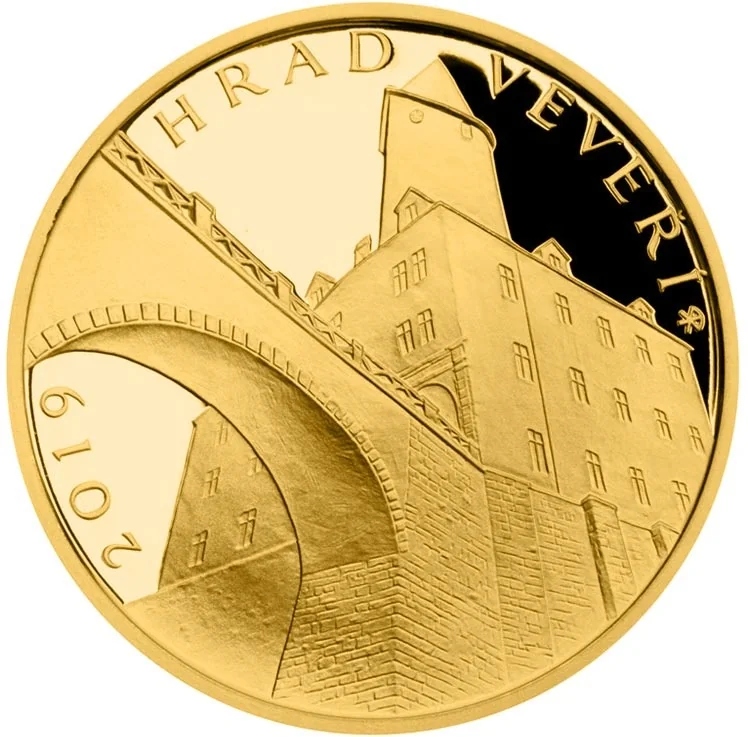
Reverse
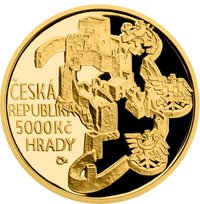
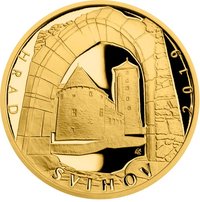
Inscription:
HRAD VEVEŘÍ
2019
2019
Translation:
Veveří Castle
2019
2019
Script: Latin
Language: Czech
Engraver: Asamat Baltaev
Edge
Milled or plain
Categories
| Building> Castle or fortification |
| Building> Bridge |
Mints
| Name | Mark |
|---|---|
| Czech Mint | — |
Mintings
| Year | Mint Mark | Mintage | Quality | Collection |
|---|---|---|---|---|
| 2019 | ČM | 2,900 | ||
| 2019 | ČM | 6,900 | Proof |
Historical background
In 2019, the Czech Republic's currency situation was characterized by a deliberate and sustained weak koruna (CZK) policy orchestrated by the Czech National Bank (CNB). This policy, initiated in 2013, involved foreign exchange interventions where the CNB actively sold korunas and bought foreign currencies, primarily the euro, to prevent excessive appreciation. The primary goal was to combat deflationary risks and stimulate the economy by making exports more competitive and pushing inflation toward the bank's 2% target. By 2019, this long-standing commitment was a cornerstone of the country's monetary framework.
The context for this policy was an economy experiencing robust growth, low unemployment, and rising wage pressures, which would typically lead to currency strength. However, inflation had only recently returned to target after years of being below it. The CNB, led by Governor Jiří Rusnok, repeatedly signaled that it would maintain the weak-koruna cap (set at around 27 CZK/EUR) at least until mid-2019, and likely beyond, to ensure price stability was firmly anchored. This stance created a stable but artificially suppressed exchange rate environment, which was a key topic for financial markets and businesses planning their forex exposure.
By the second half of 2019, with inflation stable and the economy strong, the focus shifted to the eventual exit strategy from the intervention regime. The CNB emphasized that any future moves would be gradual to avoid market disruption. The koruna began to show mild appreciation pressure as exit timing was debated, but it remained within the bank's tolerated range. Thus, 2019 represented the final, watchful phase of the unconventional policy, setting the stage for its anticipated conclusion in the years following, as the bank prepared to normalize monetary policy after a seven-year period of currency interventions.
The context for this policy was an economy experiencing robust growth, low unemployment, and rising wage pressures, which would typically lead to currency strength. However, inflation had only recently returned to target after years of being below it. The CNB, led by Governor Jiří Rusnok, repeatedly signaled that it would maintain the weak-koruna cap (set at around 27 CZK/EUR) at least until mid-2019, and likely beyond, to ensure price stability was firmly anchored. This stance created a stable but artificially suppressed exchange rate environment, which was a key topic for financial markets and businesses planning their forex exposure.
By the second half of 2019, with inflation stable and the economy strong, the focus shifted to the eventual exit strategy from the intervention regime. The CNB emphasized that any future moves would be gradual to avoid market disruption. The koruna began to show mild appreciation pressure as exit timing was debated, but it remained within the bank's tolerated range. Thus, 2019 represented the final, watchful phase of the unconventional policy, setting the stage for its anticipated conclusion in the years following, as the bank prepared to normalize monetary policy after a seven-year period of currency interventions.
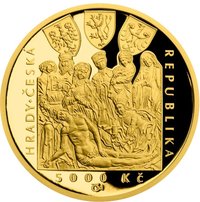
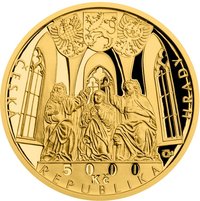
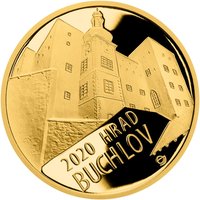
Series: Castles in the Czech Republic



✨ Legendary