

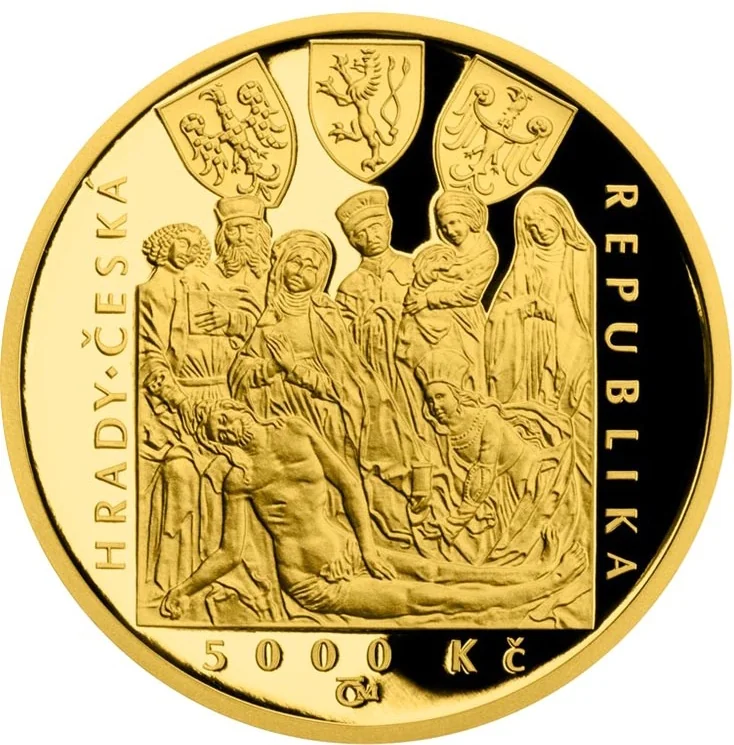
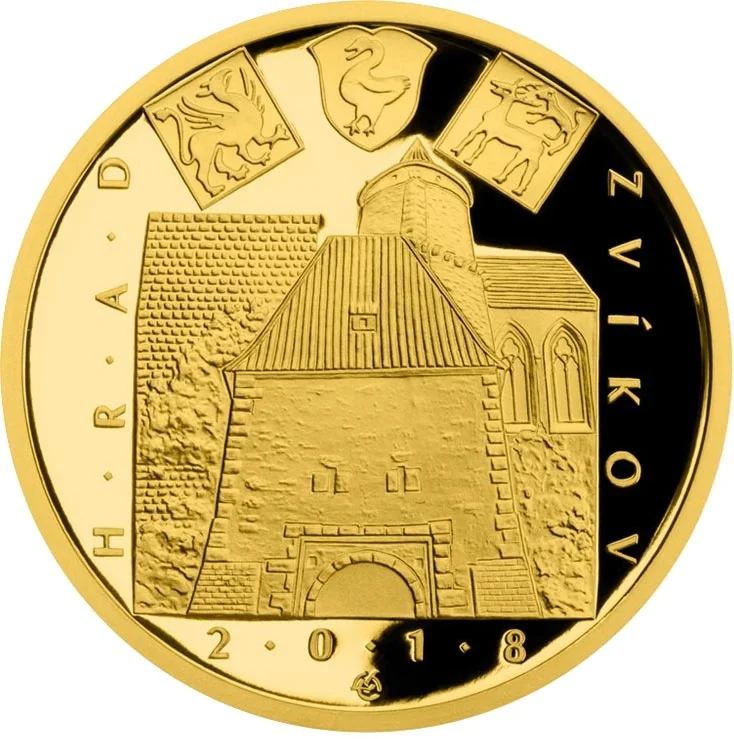
5000 korun – Czech Republic
Add to wishlist
Czechia
Context
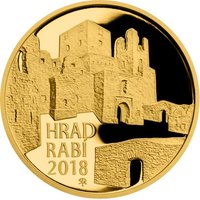
Year: 2018
Country: Czechia
Issuer: Czech Republic
Period:
(since 1993)
Currency:
(since 1993)
Total mintage: 10,800
Material
Diameter: 28 mm
Weight: 15.55 g
Gold Weight:: 15.55 g
Thickness: 1.9 mm
Shape: Round
Composition: 99.99% Gold
Standard: Silver half ounce
Magnetic: No
Technique: Milled
Alignment: Medal alignment
flip
References
KM: #
Numista: #159333
Value
Exchange value: 5000 CZK
Bullion value: $2393.49
Inflation-adjusted value: 7758.10 CZK
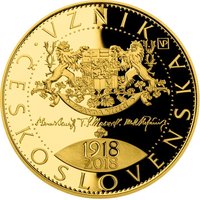
Obverse
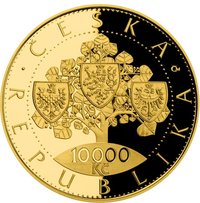
Reverse
Edge
Milled or plain
Categories
| Building> Castle or fortification |
Mints
| Name | Mark |
|---|---|
| Czech Mint | — |
Mintings
| Year | Mint Mark | Mintage | Quality | Collection |
|---|---|---|---|---|
| 2018 | ČM | 7,600 | Proof | |
| 2018 | ČM | 3,200 |
Historical background
In 2018, the Czech Republic's currency situation was characterized by a managed float regime and the ongoing debate about adopting the euro. The Czech koruna (CZK) was, and remains, the national currency, with its exchange rate primarily influenced by market forces. However, the Czech National Bank (CNB) had only recently concluded a significant and unconventional intervention period in April 2017, where it had maintained a cap to keep the koruna weaker than 27 CZK per euro. This policy, designed to fight deflationary risks and stimulate the economy, had a lasting impact into 2018, with the bank continuing to use its substantial foreign exchange reserves to smooth excessive volatility.
The year saw a strong and appreciating koruna, driven by robust economic growth, low unemployment, rising wages, and increasing interest rates from the CNB to curb inflation. This strength sparked considerable discussion among exporters, who were concerned about losing competitiveness, and policymakers. The central bank's communication focused on allowing natural appreciation while remaining ready to intervene if market movements became disorderly. Inflation hovered around the CNB's 2% target, reducing the immediate pressure for further dramatic monetary stimulus.
Fundamentally, 2018 was a year of normalization following the exit from the exchange rate commitment. The political discourse regarding euro adoption remained subdued, with no active timetable for joining the European Exchange Rate Mechanism (ERM II), a prerequisite for adopting the euro. The governing coalition, led by Prime Minister Andrej Babiš, maintained a cautious stance, emphasizing that meeting the Maastricht criteria was not a priority and that the koruna provided beneficial flexibility. Thus, the currency situation reflected a confident, growing economy comfortable with its independent monetary policy, even as it remained a formal EU member with a long-term obligation to eventually adopt the single currency.
The year saw a strong and appreciating koruna, driven by robust economic growth, low unemployment, rising wages, and increasing interest rates from the CNB to curb inflation. This strength sparked considerable discussion among exporters, who were concerned about losing competitiveness, and policymakers. The central bank's communication focused on allowing natural appreciation while remaining ready to intervene if market movements became disorderly. Inflation hovered around the CNB's 2% target, reducing the immediate pressure for further dramatic monetary stimulus.
Fundamentally, 2018 was a year of normalization following the exit from the exchange rate commitment. The political discourse regarding euro adoption remained subdued, with no active timetable for joining the European Exchange Rate Mechanism (ERM II), a prerequisite for adopting the euro. The governing coalition, led by Prime Minister Andrej Babiš, maintained a cautious stance, emphasizing that meeting the Maastricht criteria was not a priority and that the koruna provided beneficial flexibility. Thus, the currency situation reflected a confident, growing economy comfortable with its independent monetary policy, even as it remained a formal EU member with a long-term obligation to eventually adopt the single currency.
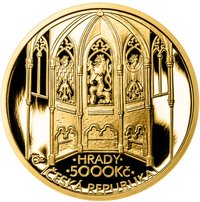
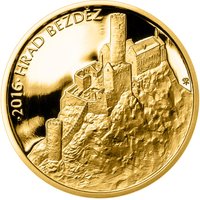
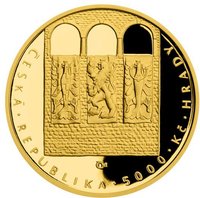
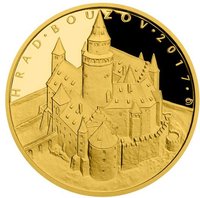
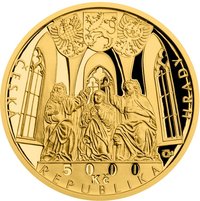
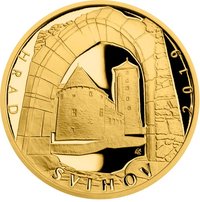
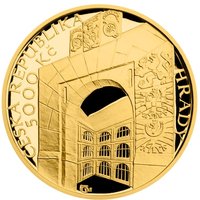
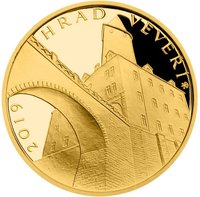
Series: Castles in the Czech Republic
✨ Legendary