

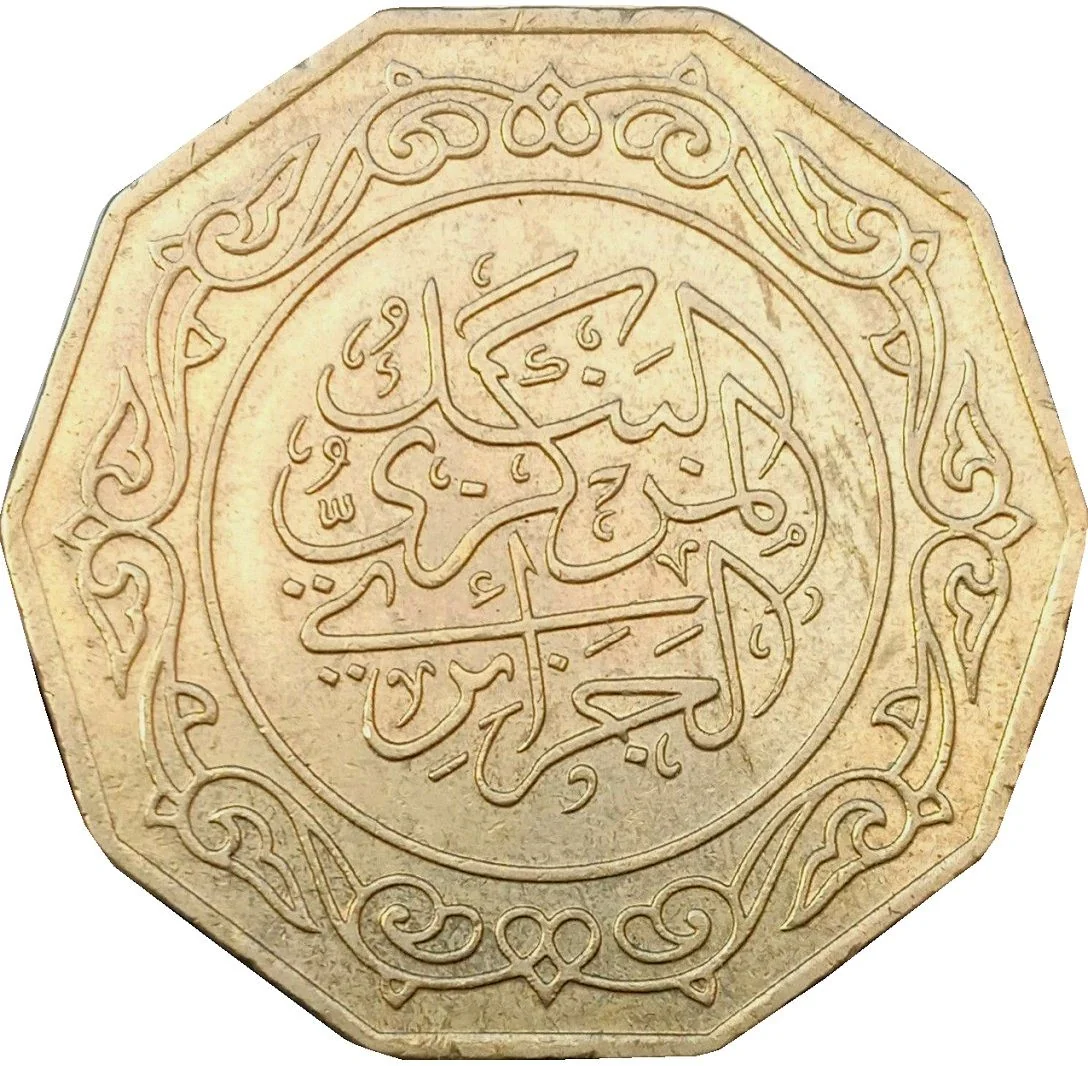
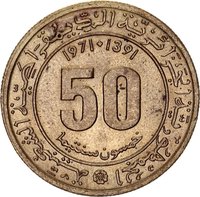
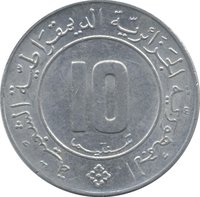
Obverse
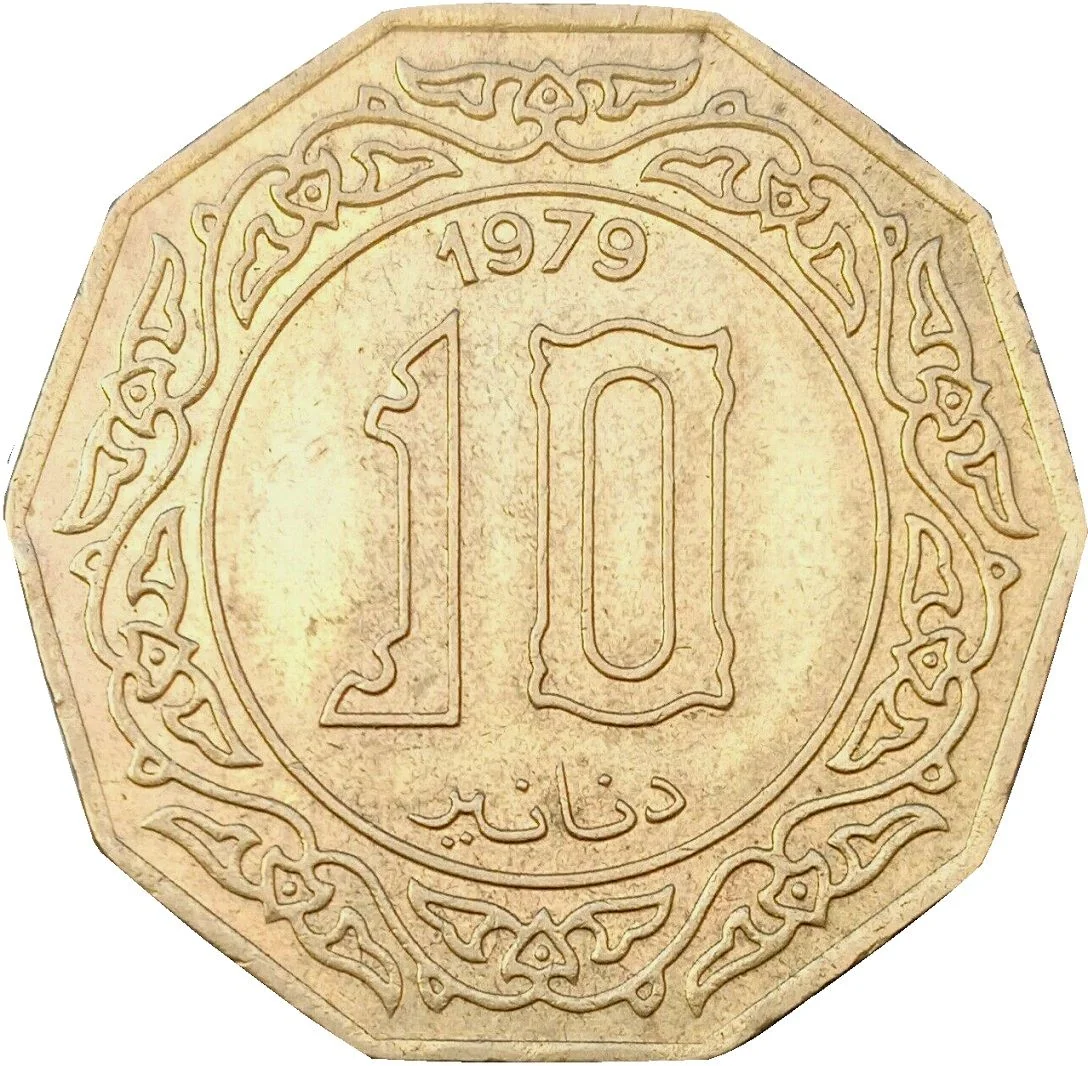
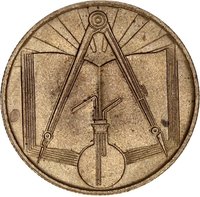
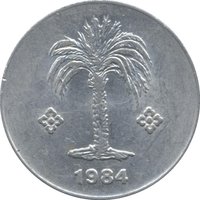
Reverse
Edge
Segmented reeding
Mints
| Name | Mark |
|---|---|
| Algiers | — |
| Monnaie de Paris | — |
| Royal Mint | — |
Mintings
| Year | Mint Mark | Mintage | Quality | Collection |
|---|---|---|---|---|
| 1979 | — | 25,001,000 | ||
| 1981 | — | 40,000,000 |
Historical background
In 1979, Algeria's currency situation was intrinsically tied to its state-led, hydrocarbon-dependent economy and the legacy of its post-independence economic model. The Algerian dinar (DZD) operated under a fixed exchange rate regime, pegged to a basket of currencies heavily weighted towards the French franc and the US dollar. This peg was maintained by strict capital controls and exchange regulations administered by the Banque d'Algérie, insulating the dinar from market fluctuations but also creating distortions. The official exchange rate was overvalued, a policy intended to reduce the cost of importing capital goods for the country's ambitious industrialization projects.
The economy was overwhelmingly reliant on revenues from oil and gas exports, which provided over 95% of foreign exchange earnings. This made the dinar's stability and Algeria's entire financial situation highly vulnerable to shifts in global hydrocarbon prices. The late 1970s saw a second oil price shock (1979), following the first in 1973, which flooded state coffers with petrodollars and reinforced the government's ability to sustain its import-heavy, subsidized economy without immediate pressure to devalue or reform the currency system. This revenue masked underlying inefficiencies in the non-energy sector.
Consequently, while the currency situation appeared stable on the surface in 1979, it contained the seeds of future challenges. The overvalued dinar discouraged non-hydrocarbon exports and encouraged an appetite for imported consumer goods, leading to a growing trade imbalance in non-oil sectors. The rigid controls also fostered a black market for foreign currency, where the dinar traded at a significant discount, highlighting the gap between the official policy and market realities. Thus, the system in place was one of artificial stability, entirely propped up by high oil prices and destined for difficulty when those revenues eventually declined.
The economy was overwhelmingly reliant on revenues from oil and gas exports, which provided over 95% of foreign exchange earnings. This made the dinar's stability and Algeria's entire financial situation highly vulnerable to shifts in global hydrocarbon prices. The late 1970s saw a second oil price shock (1979), following the first in 1973, which flooded state coffers with petrodollars and reinforced the government's ability to sustain its import-heavy, subsidized economy without immediate pressure to devalue or reform the currency system. This revenue masked underlying inefficiencies in the non-energy sector.
Consequently, while the currency situation appeared stable on the surface in 1979, it contained the seeds of future challenges. The overvalued dinar discouraged non-hydrocarbon exports and encouraged an appetite for imported consumer goods, leading to a growing trade imbalance in non-oil sectors. The rigid controls also fostered a black market for foreign currency, where the dinar traded at a significant discount, highlighting the gap between the official policy and market realities. Thus, the system in place was one of artificial stability, entirely propped up by high oil prices and destined for difficulty when those revenues eventually declined.
🌱 Very Common