

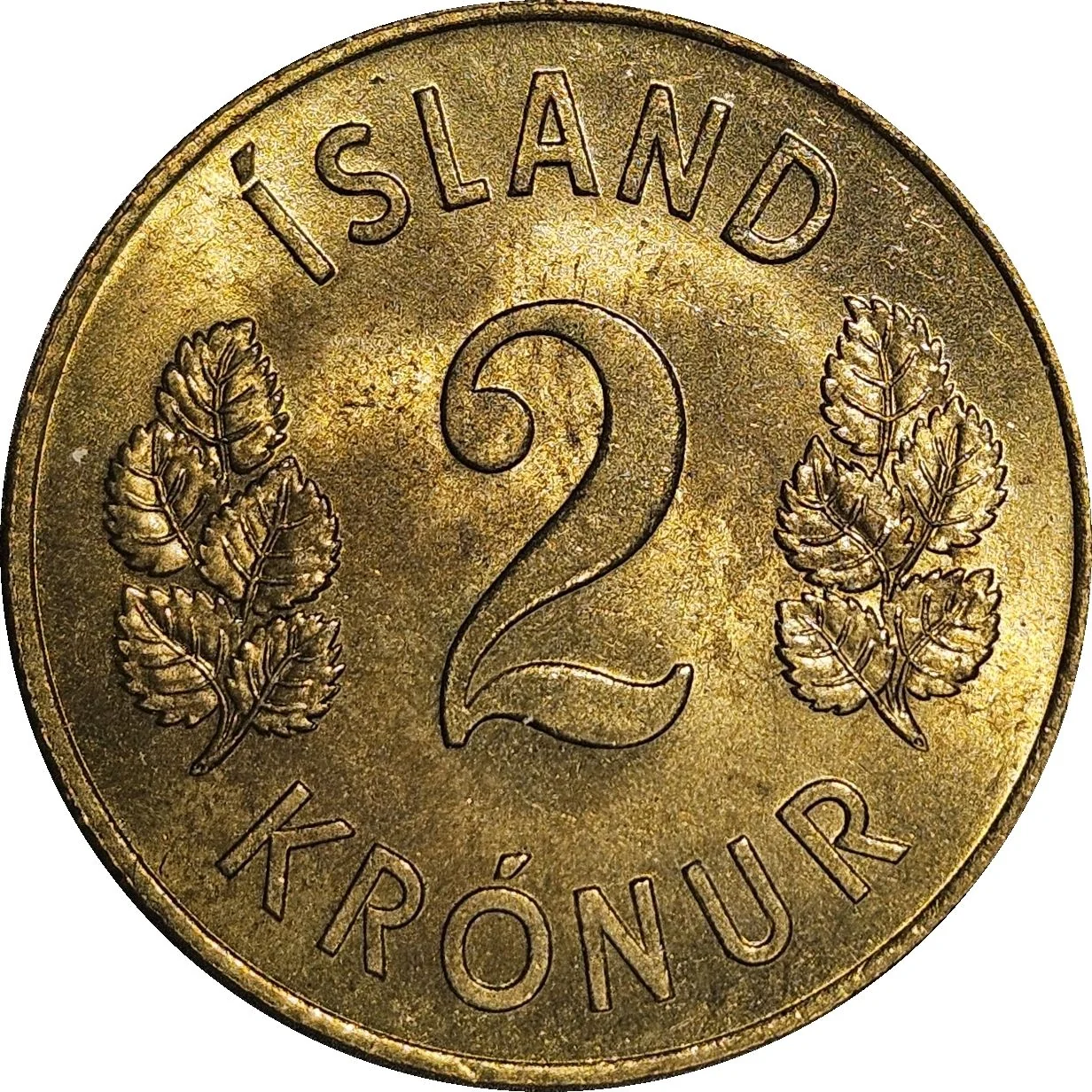
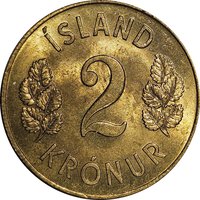
2 Krónur – Iceland
Iceland
Context
Material
Diameter: 28 mm
Weight: 9.5 g
Thickness: 2.25 mm
Shape: Round
Composition: Nickel brass
Magnetic: No
Technique: Milled
Alignment: Medal alignment
flip
References
KM: #Click to copy to clipboard13a
Numista: #17420
Value
Exchange value: 2 ISJ
Inflation-adjusted value: 9275.04 ISJ
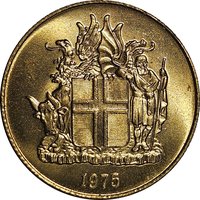
Obverse
Description:
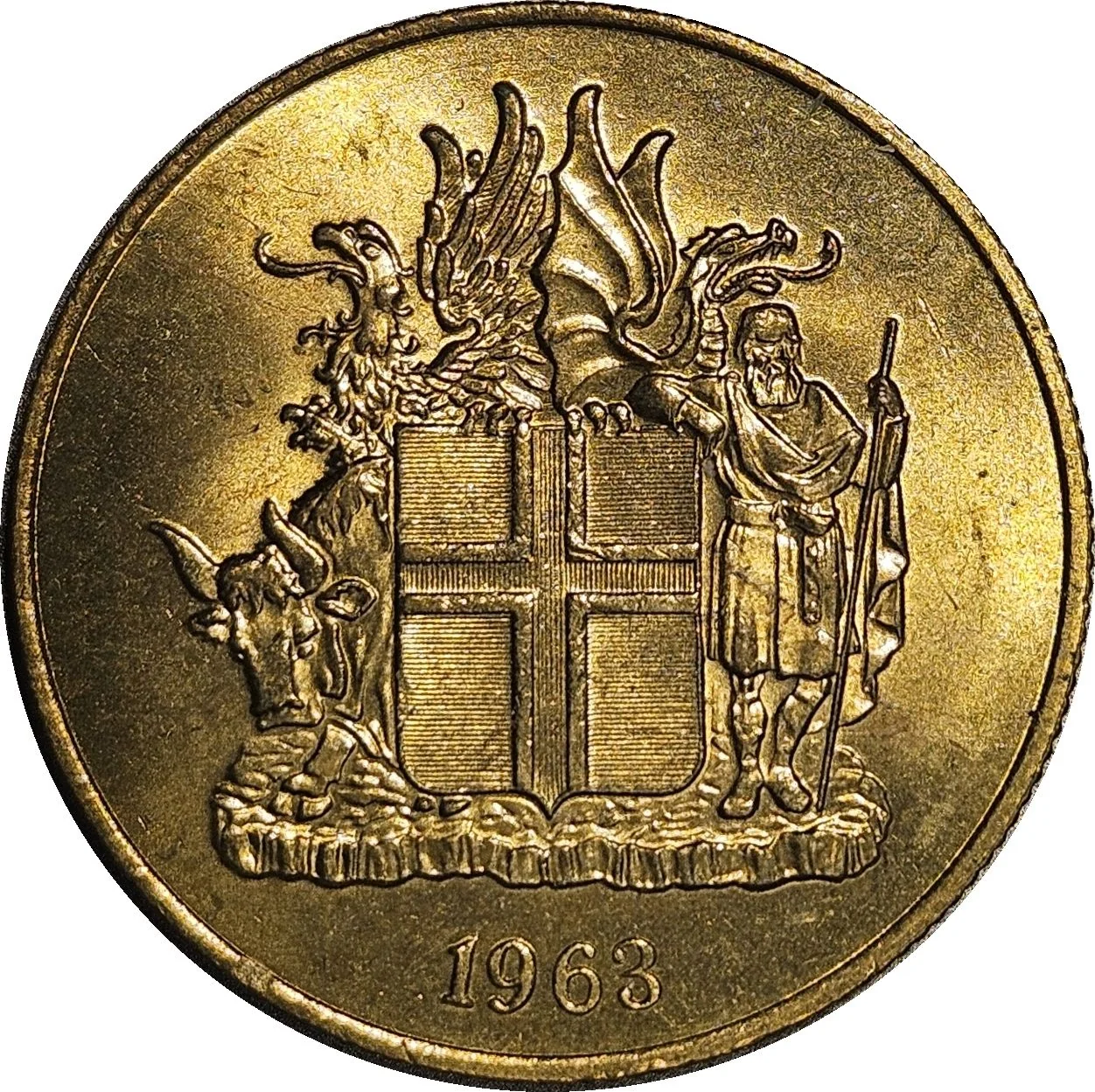
Iceland's coat of arms encircled by its four guardian spirits (Landvættir): the bull, eagle, dragon, and giant.
Inscription:
1963
Script: Latin
Reverse
Edge
Milled
Categories
| Animal> Bird |
| Mythology> Fantastic animal |
| Animal> Cow |
| Symbols> Coat of Arms |
Mints
| Name | Mark |
|---|---|
| Royal Mint (Tower Hill) | — |
Mintings
| Year | Mint Mark | Mintage | Quality | Collection |
|---|---|---|---|---|
| 1958 | — | 500,000 | ||
| 1958 | — | — | Proof | |
| 1962 | — | — | Proof | |
| 1962 | — | 500,000 | ||
| 1963 | — | — | Proof | |
| 1963 | — | 750,000 | ||
| 1966 | — | 1,000,000 | ||
| 1966 | — | 15,000 | Proof |
Historical background
In 1958, Iceland faced a significant currency crisis rooted in the economic challenges of the post-war era. The country's development strategy, heavily reliant on foreign loans to finance large-scale infrastructure and industrialization projects, had led to persistent trade deficits and mounting foreign debt. This was exacerbated by a high inflation rate, which eroded the value of the Icelandic króna and put severe pressure on the country's foreign exchange reserves. By the late 1950s, the situation had become unsustainable, threatening Iceland's ability to pay for essential imports.
The government's response was a decisive devaluation of the króna in 1958, a move that followed a series of smaller devaluations throughout the decade. This was not merely an adjustment of the exchange rate but a fundamental monetary reform. The old króna was replaced by a new króna at a rate of 100 old krónur to 1 new króna, effectively devaluing the currency by a factor of one hundred. This dramatic measure aimed to restore competitiveness to Iceland's vital export sectors, particularly the fisheries, by making their products cheaper on the international market.
The 1958 devaluation succeeded in its primary goal of improving the balance of trade and stabilizing the external economic position. However, it came at a domestic cost, effectively wiping out a substantial portion of domestic savings and purchasing power overnight. This event cemented a pattern of periodic devaluations as a tool for economic adjustment in Iceland, a practice that would continue for decades until the adoption of inflation targeting in the 2000s. Thus, the 1958 currency reform stands as a pivotal moment, highlighting the vulnerabilities of a small, trade-dependent economy and setting the stage for Iceland's subsequent monetary policy trajectory.
The government's response was a decisive devaluation of the króna in 1958, a move that followed a series of smaller devaluations throughout the decade. This was not merely an adjustment of the exchange rate but a fundamental monetary reform. The old króna was replaced by a new króna at a rate of 100 old krónur to 1 new króna, effectively devaluing the currency by a factor of one hundred. This dramatic measure aimed to restore competitiveness to Iceland's vital export sectors, particularly the fisheries, by making their products cheaper on the international market.
The 1958 devaluation succeeded in its primary goal of improving the balance of trade and stabilizing the external economic position. However, it came at a domestic cost, effectively wiping out a substantial portion of domestic savings and purchasing power overnight. This event cemented a pattern of periodic devaluations as a tool for economic adjustment in Iceland, a practice that would continue for decades until the adoption of inflation targeting in the 2000s. Thus, the 1958 currency reform stands as a pivotal moment, highlighting the vulnerabilities of a small, trade-dependent economy and setting the stage for Iceland's subsequent monetary policy trajectory.
🌱 Very Common