

10 euro – Portugal
Add to wishlist
Circulating commemorative coins
Commemoration: Ibero-American Series VIII - Historical Coins
Series: Ibero-American
Portugal
Obverse
Description:
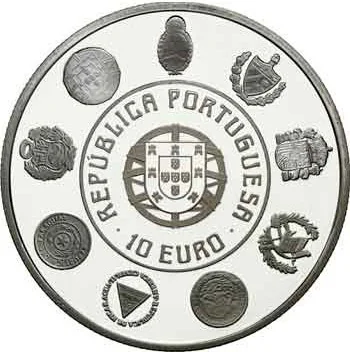
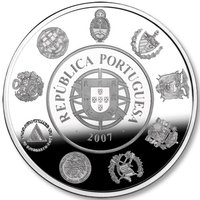
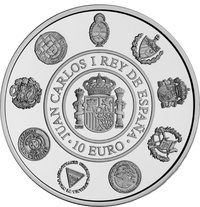
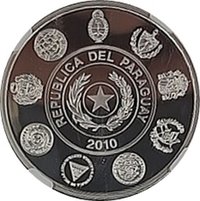
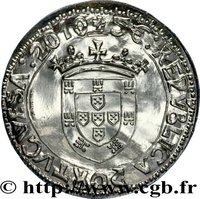
Portuguese coat of arms surrounded by those of Argentina, Cuba, Spain, Guatemala, Mexico, Nicaragua, Paraguay, and Peru.
Inscription:
REPÚBLICA PORTUGUESA
· 10 EURO ·
· 10 EURO ·
Translation:
PORTUGUESE REPUBLIC
· 10 EURO ·
· 10 EURO ·
Script: Latin
Language: Portuguese
Engraver: V. M. Fernandes dos Santos
Reverse
Description:
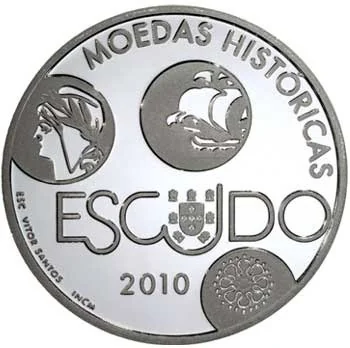
Portuguese coat of arms inside the "U" of "ESCUDO". Features coin symbols, the year 2010, and the inscriptions "ESC VICTOR SANTOS", "INCM", and "MOEDAS HISTORICAS".
Inscription:
MOEDAS HISTÓRICAS
ESCUDO
2010
ESC VITOR SANTOS INCM
ESCUDO
2010
ESC VITOR SANTOS INCM
Translation:
HISTORICAL COINS
SHIELD
2010
ENGRAVER VITOR SANTOS PORTUGUESE MINT
SHIELD
2010
ENGRAVER VITOR SANTOS PORTUGUESE MINT
Script: Latin
Language: Portuguese
Edge
Reeded
Categories
| Symbols> Coat of Arms |
| Currency> Coin depiction |
| Transportation> Watercraft |
Mints
| Name | Mark |
|---|---|
| Imprensa Nacional - Casa da Moeda | INCM |
Mintings
| Year | Mint Mark | Mintage | Quality | Collection |
|---|---|---|---|---|
| 2010 | INCM | 71,153 |
Historical background
In 2010, Portugal was in the throes of a severe sovereign debt crisis, deeply intertwined with its membership in the Eurozone. The country faced a toxic combination of a decade of low economic growth, high public and private debt levels, and a significant loss of competitiveness within the single currency. Unlike nations with their own currency, Portugal could not devalue the escudo to boost exports; it was bound to the euro, which reflected the strength of the broader Eurozone, particularly Germany. This structural handicap, coupled with expansive fiscal policies and a banking sector vulnerable to shocks, led to ballooning budget deficits and a rapid loss of market confidence.
The currency situation was defined by the constraints and pressures of the common currency. As investors grew increasingly worried about Portugal's ability to service its debt, the risk premium on Portuguese government bonds soared, pushing borrowing costs to unsustainable levels. This created a vicious cycle where fears of default made refinancing debt prohibitively expensive, pushing the state toward a liquidity crisis. While the euro itself remained stable in foreign exchange markets, the internal crisis manifested as a dramatic divergence in bond yields ("spreads") between core Eurozone nations like Germany and peripheral ones like Portugal, highlighting the fragility of a monetary union without full fiscal integration.
By the end of 2010, the situation had become untenable. Despite austerity measures enacted by the government, market pressure forced Portugal to seek external financial assistance. In April 2011, it formally requested a €78 billion bailout from the so-called "Troika"—the European Commission, the European Central Bank, and the International Monetary Fund. The bailout package was conditional on implementing strict austerity, structural reforms, and deep privatization programs, aiming to restore fiscal health and competitiveness while remaining within the Eurozone, a fundamental political commitment for the country.
The currency situation was defined by the constraints and pressures of the common currency. As investors grew increasingly worried about Portugal's ability to service its debt, the risk premium on Portuguese government bonds soared, pushing borrowing costs to unsustainable levels. This created a vicious cycle where fears of default made refinancing debt prohibitively expensive, pushing the state toward a liquidity crisis. While the euro itself remained stable in foreign exchange markets, the internal crisis manifested as a dramatic divergence in bond yields ("spreads") between core Eurozone nations like Germany and peripheral ones like Portugal, highlighting the fragility of a monetary union without full fiscal integration.
By the end of 2010, the situation had become untenable. Despite austerity measures enacted by the government, market pressure forced Portugal to seek external financial assistance. In April 2011, it formally requested a €78 billion bailout from the so-called "Troika"—the European Commission, the European Central Bank, and the International Monetary Fund. The bailout package was conditional on implementing strict austerity, structural reforms, and deep privatization programs, aiming to restore fiscal health and competitiveness while remaining within the Eurozone, a fundamental political commitment for the country.
Series: Ibero-American

🌱 Fairly Common