

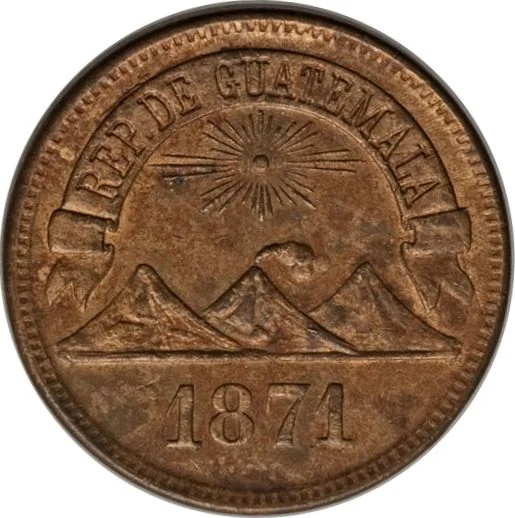
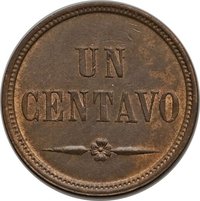
Obverse
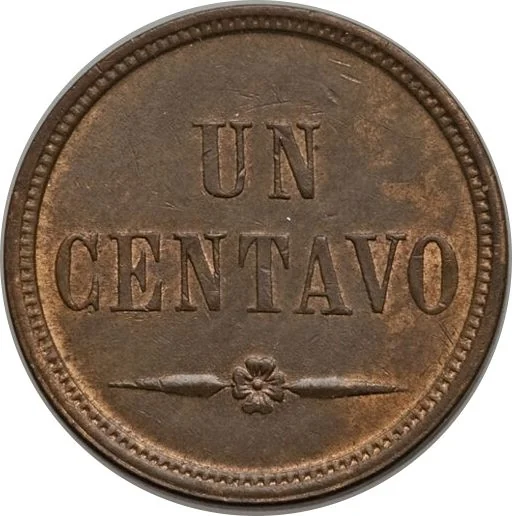
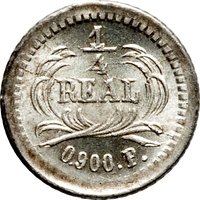
Reverse
Edge
Plain
Mints
| Name | Mark |
|---|---|
| Casa de Moneda de Guatemala | — |
Mintings
| Year | Mint Mark | Mintage | Quality | Collection |
|---|---|---|---|---|
| 1871 | — | — |
Historical background
In 1871, Guatemala's currency system was a complex and unstable legacy of the colonial era and early independence, characterized by a severe shortage of circulating specie. The primary unit was the peso, but the actual money in use was a chaotic mix of foreign and debased coins. Spanish colonial coins like reales and escudos circulated alongside coins from other Latin American nations, British sovereigns, and French francs. Most problematic was the widespread use of low-quality silver pesos febles (weak pesos) from neighboring countries, which traded at a significant discount to the full-weight Guatemalan peso. This created a dual system where prices and contracts often specified whether payment was to be in peso fuerte (strong) or peso feble, leading to confusion and commercial friction.
The root of this monetary disorder lay in the chronic fiscal deficits of the conservative governments, particularly that of President Vicente Cerna (1865–1871). The state treasury was depleted, and the government resorted to issuing copper quartillos (small change coins) in excessive quantities to finance its operations. These coins quickly depreciated, causing inflation that harmed the poor and working classes who used them for daily transactions. Furthermore, the lack of a strong, centralized banking institution meant there was no entity to regulate currency supply or provide credit to stimulate the economy. The system was essentially fragmented, inflationary, and a barrier to both domestic commerce and foreign investment.
This precarious financial situation was a key factor undermining the Cerna regime and was directly addressed by the victorious Liberal forces of the Reform of 1871. The liberal revolution, led by Miguel García Granados and Justo Rufino Barrios, identified monetary reform as an immediate priority. Upon taking power, the new government moved swiftly to rationalize the system, viewing a stable and uniform currency as essential for their modernizing project. Their early actions set the stage for the eventual introduction of the Quetzal in the 1920s, beginning with efforts to retire debased coinage, establish a national mint, and create a banking system that would integrate Guatemala into the global economy on a more stable footing.
The root of this monetary disorder lay in the chronic fiscal deficits of the conservative governments, particularly that of President Vicente Cerna (1865–1871). The state treasury was depleted, and the government resorted to issuing copper quartillos (small change coins) in excessive quantities to finance its operations. These coins quickly depreciated, causing inflation that harmed the poor and working classes who used them for daily transactions. Furthermore, the lack of a strong, centralized banking institution meant there was no entity to regulate currency supply or provide credit to stimulate the economy. The system was essentially fragmented, inflationary, and a barrier to both domestic commerce and foreign investment.
This precarious financial situation was a key factor undermining the Cerna regime and was directly addressed by the victorious Liberal forces of the Reform of 1871. The liberal revolution, led by Miguel García Granados and Justo Rufino Barrios, identified monetary reform as an immediate priority. Upon taking power, the new government moved swiftly to rationalize the system, viewing a stable and uniform currency as essential for their modernizing project. Their early actions set the stage for the eventual introduction of the Quetzal in the 1920s, beginning with efforts to retire debased coinage, establish a national mint, and create a banking system that would integrate Guatemala into the global economy on a more stable footing.
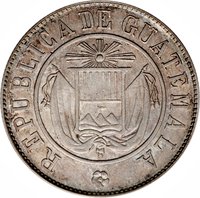
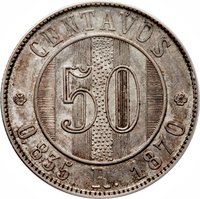
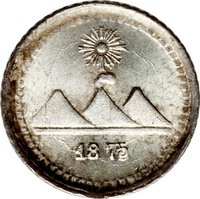
⭐ Rare