

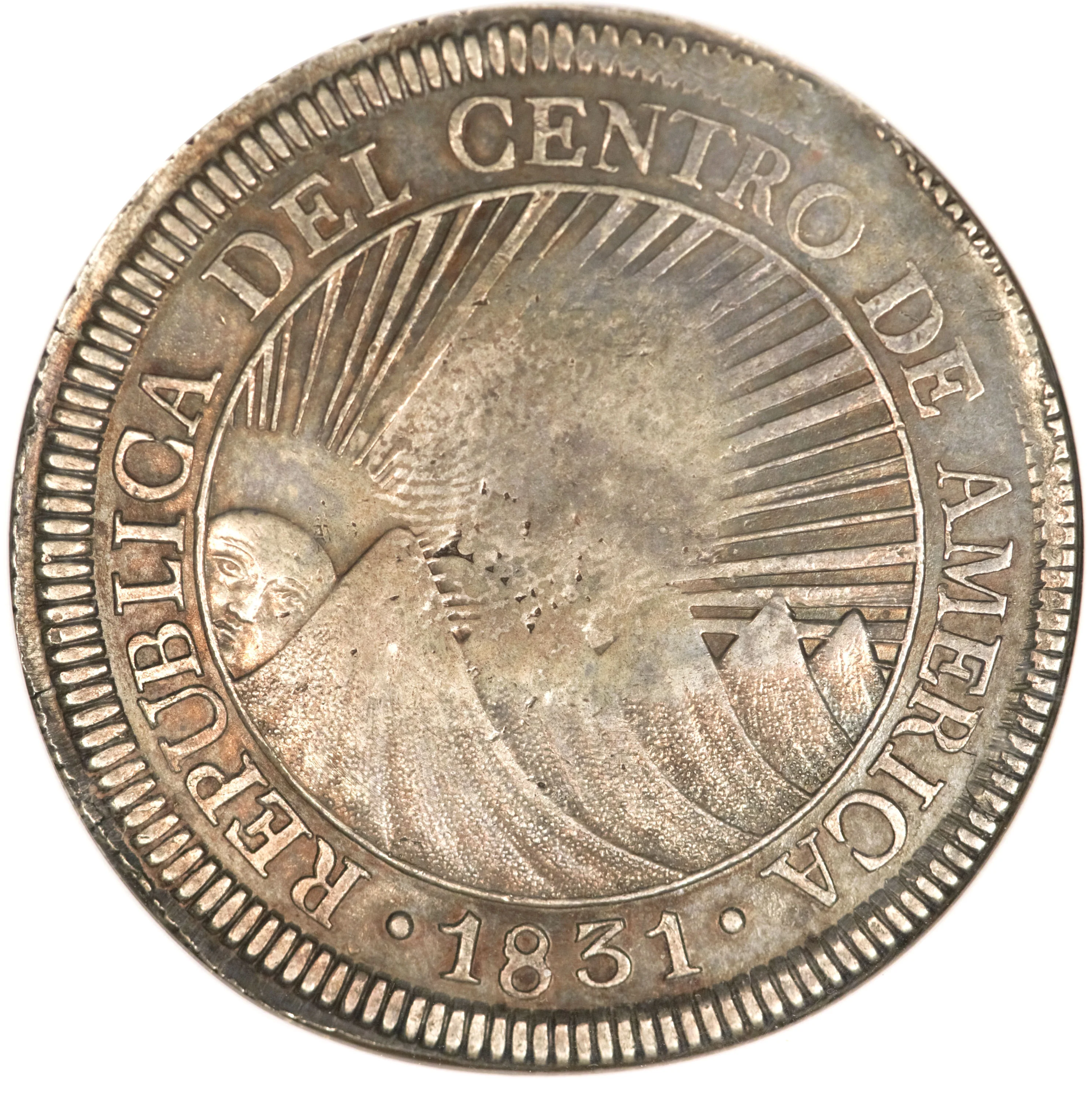
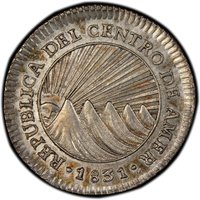
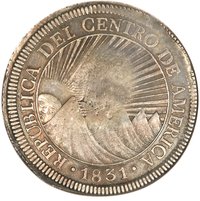
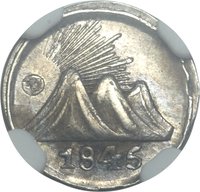
Obverse
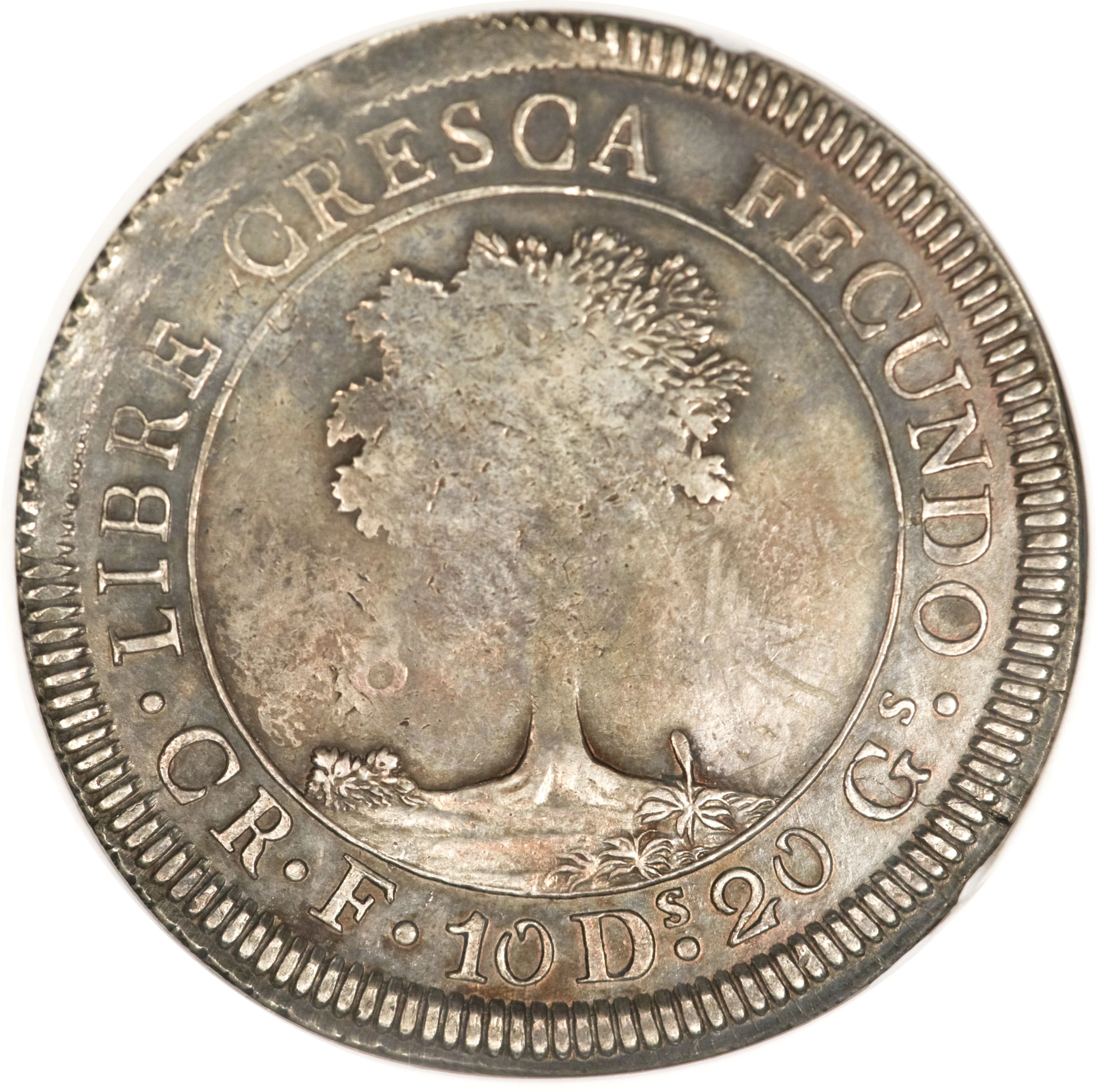
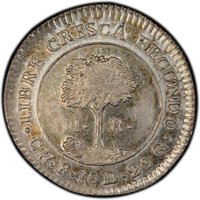
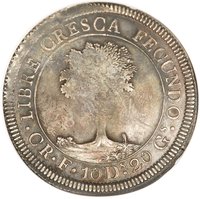
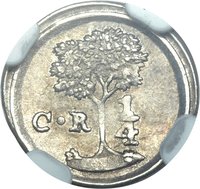
Reverse
Edge
Mints
| Name | Mark |
|---|---|
| Casa Nacional de Moneda de Costa Rica | CR |
Mintings
| Year | Mint Mark | Mintage | Quality | Collection |
|---|---|---|---|---|
| 1831 | CR | — |
Historical background
In 1831, the currency situation within the Federal Republic of Central America was characterized by profound disorder and fragmentation, a direct reflection of the federation's crumbling political unity. The federal government, based in Guatemala City, possessed the constitutional right to mint coinage, but it lacked both the centralized authority and the consistent financial resources to establish a uniform monetary system. Consequently, the five constituent states—Guatemala, El Salvador, Honduras, Nicaragua, and Costa Rica—often operated their finances with significant autonomy, leading to a chaotic mix of currencies in circulation.
The primary circulating medium was a confusing array of silver coins from various origins. These included older Spanish colonial pieces, such as the real and the peso, coins minted by the short-lived Mexican Empire, and a limited number of coins struck by the federal mint in Guatemala. Furthermore, foreign coins, particularly from Peru, Bolivia, and Great Britain, circulated widely due to trade. The critical problem was the lack of a standardized value; the same coin could be accepted at different rates in different states or even towns, stifling interstate commerce and creating opportunities for arbitrage and fraud. This monetary anarchy severely hampered economic planning and federal tax collection.
This chaotic currency landscape was both a symptom and a cause of the federation's deeper troubles. The inability to control money underscored the federal government's weakness, while the economic inefficiencies it created further fueled regional resentments and self-interest. By 1831, the states were increasingly acting as independent entities, with some even beginning to make their own arrangements for coinage or considering the use of foreign currency as a more stable alternative. Thus, the monetary disarray of 1831 was a clear indicator that the Central American federation was unraveling, moving inexorably toward its eventual dissolution in 1839.
The primary circulating medium was a confusing array of silver coins from various origins. These included older Spanish colonial pieces, such as the real and the peso, coins minted by the short-lived Mexican Empire, and a limited number of coins struck by the federal mint in Guatemala. Furthermore, foreign coins, particularly from Peru, Bolivia, and Great Britain, circulated widely due to trade. The critical problem was the lack of a standardized value; the same coin could be accepted at different rates in different states or even towns, stifling interstate commerce and creating opportunities for arbitrage and fraud. This monetary anarchy severely hampered economic planning and federal tax collection.
This chaotic currency landscape was both a symptom and a cause of the federation's deeper troubles. The inability to control money underscored the federal government's weakness, while the economic inefficiencies it created further fueled regional resentments and self-interest. By 1831, the states were increasingly acting as independent entities, with some even beginning to make their own arrangements for coinage or considering the use of foreign currency as a more stable alternative. Thus, the monetary disarray of 1831 was a clear indicator that the Central American federation was unraveling, moving inexorably toward its eventual dissolution in 1839.
✨ Legendary