

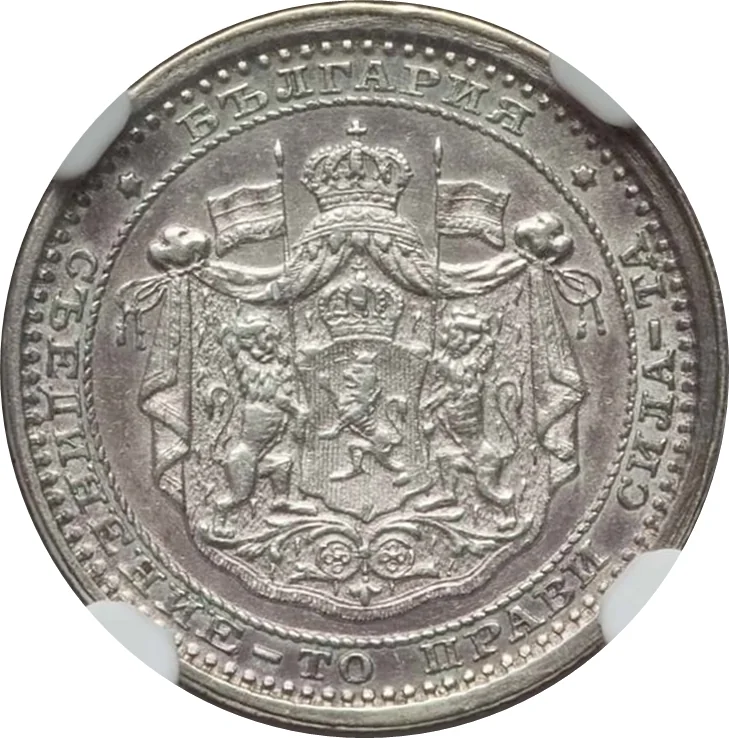
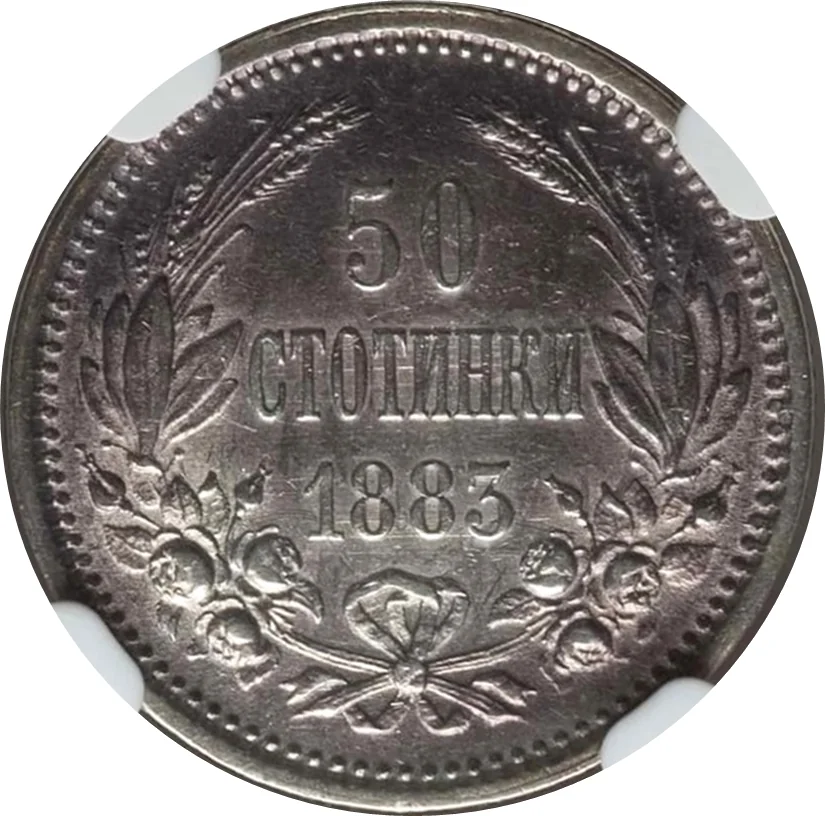
50 Stotinki – Bulgaria
Bulgaria
Context
Year: 1883
Issuer: Bulgaria 
Ruler: Alexander I
Currency:
(1881—1952)
Demonetized: Yes
Total mintage: 3,000,000
Material
References
KM: #Click to copy to clipboard6
Numista: #17104
Value
Bullion value: $6.06
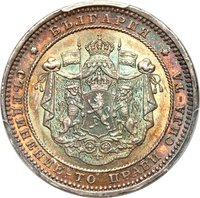
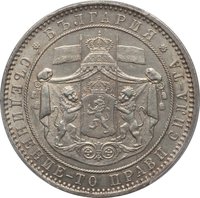
Obverse
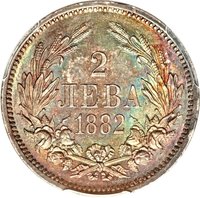
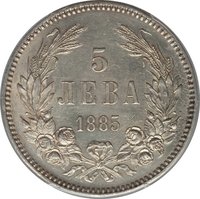
Reverse
Edge
Reeded
Categories
| Symbols> Coat of Arms |
| Symbol> Wreath |
Mints
| Name | Mark |
|---|---|
| Saint Petersburg | — |
Mintings
| Year | Mint Mark | Mintage | Quality | Collection |
|---|---|---|---|---|
| 1883 | — | 3,000,000 |
Historical background
In 1883, Bulgaria was navigating a complex monetary landscape just five years after gaining de facto independence from the Ottoman Empire. The young principality, still under Ottoman suzerainty, lacked a unified national currency. The economy operated on a bimetallic system dominated by several foreign coins, primarily the Ottoman lira (gold) and kuruş (silver), alongside the French franc, Russian ruble, and Austrian florin. This multiplicity of currencies, each with fluctuating values, created significant confusion for trade and state finance, hindering economic stability and sovereign monetary policy.
The situation was a legacy of Ottoman rule, but the Bulgarian government, led by Prince Alexander Battenberg, was actively seeking to establish its own monetary identity. A crucial step had been taken in 1880 with the founding of the Bulgarian National Bank, which was granted the exclusive right to issue banknotes. However, these first notes, the leva, were not yet full-fledged currency; they were denominated in "francs" and functioned more as credit instruments, convertible into foreign metal coins at fixed rates. The state's goal was to move toward a silver standard, with the lev (lion) established as the nominal unit of account, but the physical Bulgarian coin was not yet in circulation.
Therefore, the year 1883 represents a transitional period of monetary preparation. The government was accumulating a silver reserve and laying the legal groundwork for a national coinage, which would culminate in the Currency Act of 1885. This law would formally define the lev on a silver standard and authorize the minting of the first Bulgarian coins, finally replacing the patchwork of foreign currencies. Thus, in 1883, Bulgaria was on the cusp of achieving one of the key symbols of its economic sovereignty.
The situation was a legacy of Ottoman rule, but the Bulgarian government, led by Prince Alexander Battenberg, was actively seeking to establish its own monetary identity. A crucial step had been taken in 1880 with the founding of the Bulgarian National Bank, which was granted the exclusive right to issue banknotes. However, these first notes, the leva, were not yet full-fledged currency; they were denominated in "francs" and functioned more as credit instruments, convertible into foreign metal coins at fixed rates. The state's goal was to move toward a silver standard, with the lev (lion) established as the nominal unit of account, but the physical Bulgarian coin was not yet in circulation.
Therefore, the year 1883 represents a transitional period of monetary preparation. The government was accumulating a silver reserve and laying the legal groundwork for a national coinage, which would culminate in the Currency Act of 1885. This law would formally define the lev on a silver standard and authorize the minting of the first Bulgarian coins, finally replacing the patchwork of foreign currencies. Thus, in 1883, Bulgaria was on the cusp of achieving one of the key symbols of its economic sovereignty.
🌱 Fairly Common