

5 Leva – Bulgaria
Bulgaria
Context
Years: 1884–1885
Issuer: Bulgaria 
Ruler: Alexander I
Currency:
(1881—1952)
Demonetized: Yes
Total mintage: 1,938,473
Material
References
KM: #Click to copy to clipboard7
Numista: #18110
Value
Bullion value: $65.27
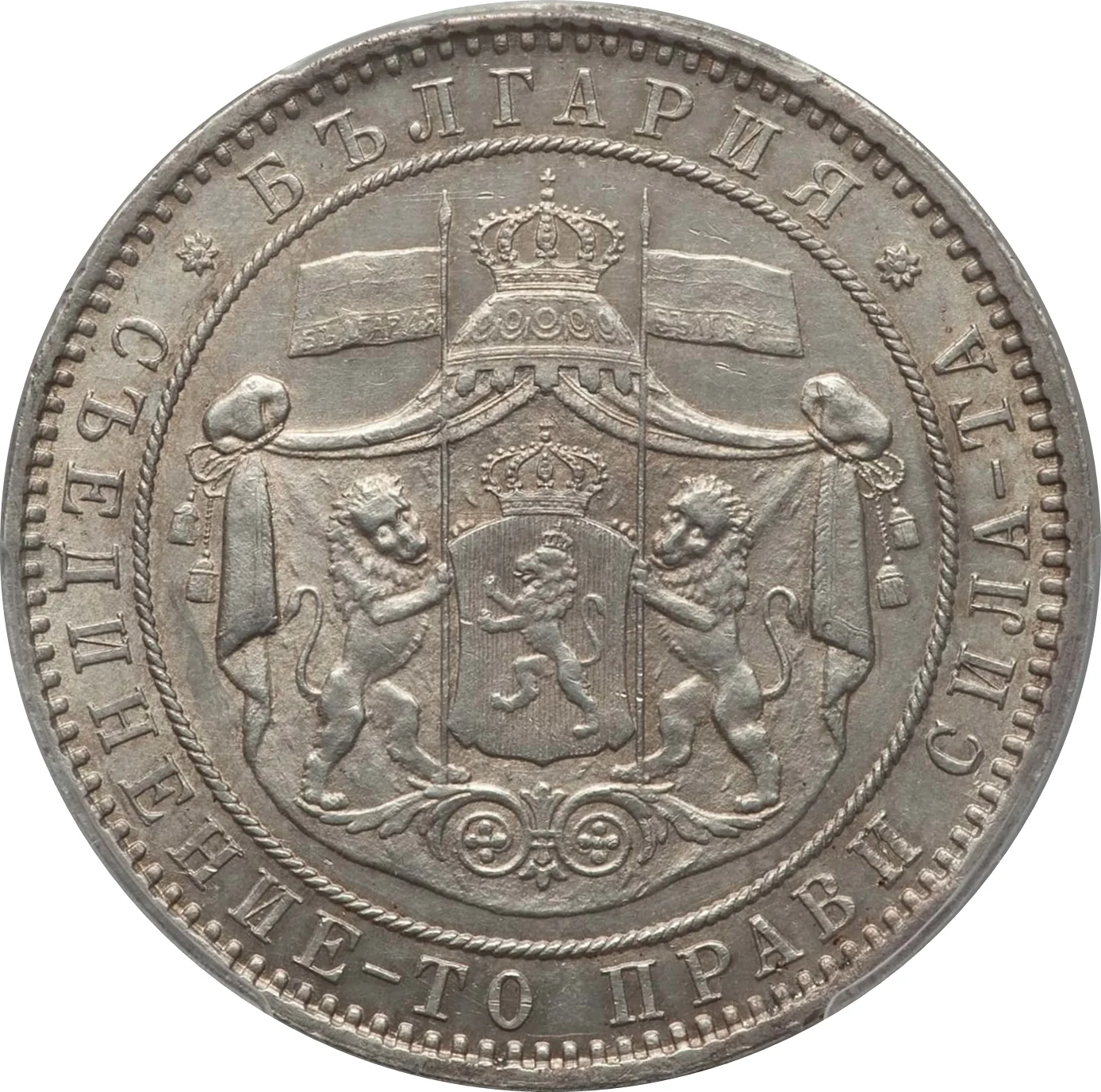
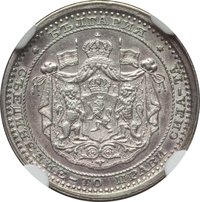
Obverse
Description:
Bulgarian coat of arms.
Inscription:
БЪЛГАРИЯ
* СЪЕДИНЕНИЕ-ТО ПРАВИ СИЛА-ТА *
* СЪЕДИНЕНИЕ-ТО ПРАВИ СИЛА-ТА *
Translation:
BULGARIA
* UNION MAKES STRENGTH *
* UNION MAKES STRENGTH *
Script: Cyrillic
Language: Bulgarian
Engraver: Nikolaj Formás
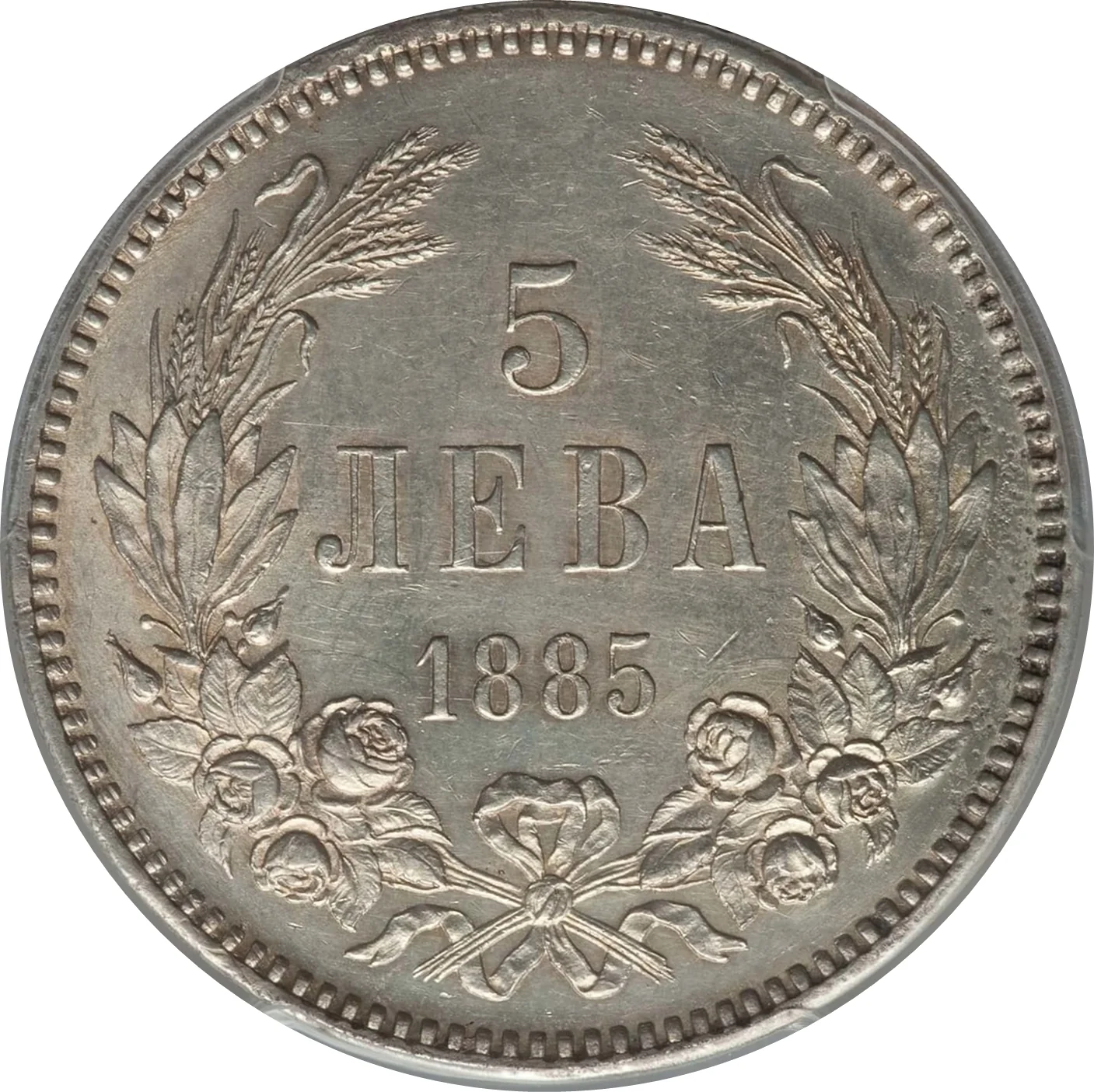
Reverse
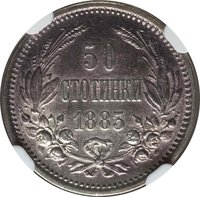
Description:
Denomination above date in wreath.
Inscription:
5
ЛЕВА
1885
ЛЕВА
1885
Translation:
LEVA
1885
1885
Script: Cyrillic
Language: Bulgarian
Engraver: Nikolaj Formás
Edge
Smooth with inscription
Legend:
БОЖЕ ПАЗИ БЪЛГАРИЯ
Translation:
God Save Bulgaria
Language: Bulgarian
Categories
| Symbols> Coat of Arms |
| Symbol> Wreath |
Mints
| Name | Mark |
|---|---|
| Saint Petersburg | — |
Mintings
| Year | Mint Mark | Mintage | Quality | Collection |
|---|---|---|---|---|
| 1884 | — | 512,473 | ||
| 1885 | — | 1,426,000 |
Historical background
In 1884, Bulgaria was navigating a complex monetary landscape as a young principality still under Ottoman suzerainty. Following the Russo-Turkish War and the 1878 Treaty of Berlin, the country lacked its own sovereign currency. The economy operated on a bimetallic system dominated by foreign coins, primarily the Ottoman lira (gold) and kuruş (silver), alongside the French gold franc and Russian silver rubles. This multiplicity of currencies, each fluctuating in value, created significant challenges for trade, state finance, and everyday transactions, leading to commercial confusion and exchange rate instability.
The government, led by Prime Minister Dragan Tsankov, was actively seeking to establish a stable, national currency as a cornerstone of modern statehood and economic independence. Efforts were focused on the planned introduction of the Bulgarian lev, which was intended to be on the gold standard and pegged to the French franc. However, in 1884, this was still a work in progress; the necessary legislation and physical minting were not yet complete. The state's immediate financial maneuvers, including bond issues and negotiations for foreign loans, were all conducted with the ultimate goal of accumulating the gold reserves needed to back the new currency.
Consequently, 1884 represents a pivotal year of transition within a longer monetary reform process. It was a period of preparation, characterized by legislative groundwork and financial diplomacy, set against the daily reality of a fragmented circulating medium. The successful introduction of the lev would finally be realized two years later, in 1886, with the establishment of the Bulgarian National Bank and the issuance of the nation's first stable, unified currency.
The government, led by Prime Minister Dragan Tsankov, was actively seeking to establish a stable, national currency as a cornerstone of modern statehood and economic independence. Efforts were focused on the planned introduction of the Bulgarian lev, which was intended to be on the gold standard and pegged to the French franc. However, in 1884, this was still a work in progress; the necessary legislation and physical minting were not yet complete. The state's immediate financial maneuvers, including bond issues and negotiations for foreign loans, were all conducted with the ultimate goal of accumulating the gold reserves needed to back the new currency.
Consequently, 1884 represents a pivotal year of transition within a longer monetary reform process. It was a period of preparation, characterized by legislative groundwork and financial diplomacy, set against the daily reality of a fragmented circulating medium. The successful introduction of the lev would finally be realized two years later, in 1886, with the establishment of the Bulgarian National Bank and the issuance of the nation's first stable, unified currency.
🌱 Fairly Common