

2 Leva – Bulgaria
Bulgaria
Context
Year: 1882
Issuer: Bulgaria 
Ruler: Alexander I
Currency:
(1881—1952)
Demonetized: Yes
Total mintage: 2,000,000
Material
References
KM: #Click to copy to clipboard5
Numista: #27354
Value
Bullion value: $24.22
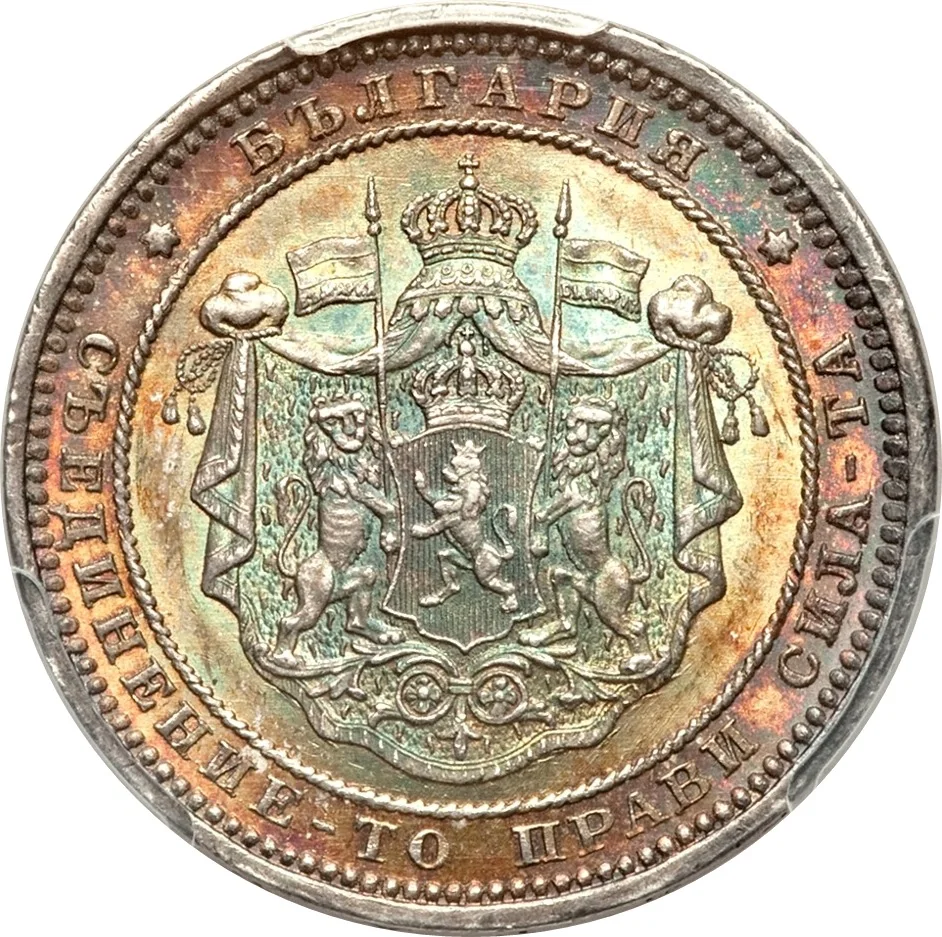
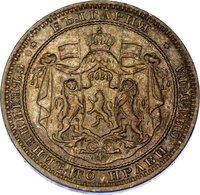
Obverse
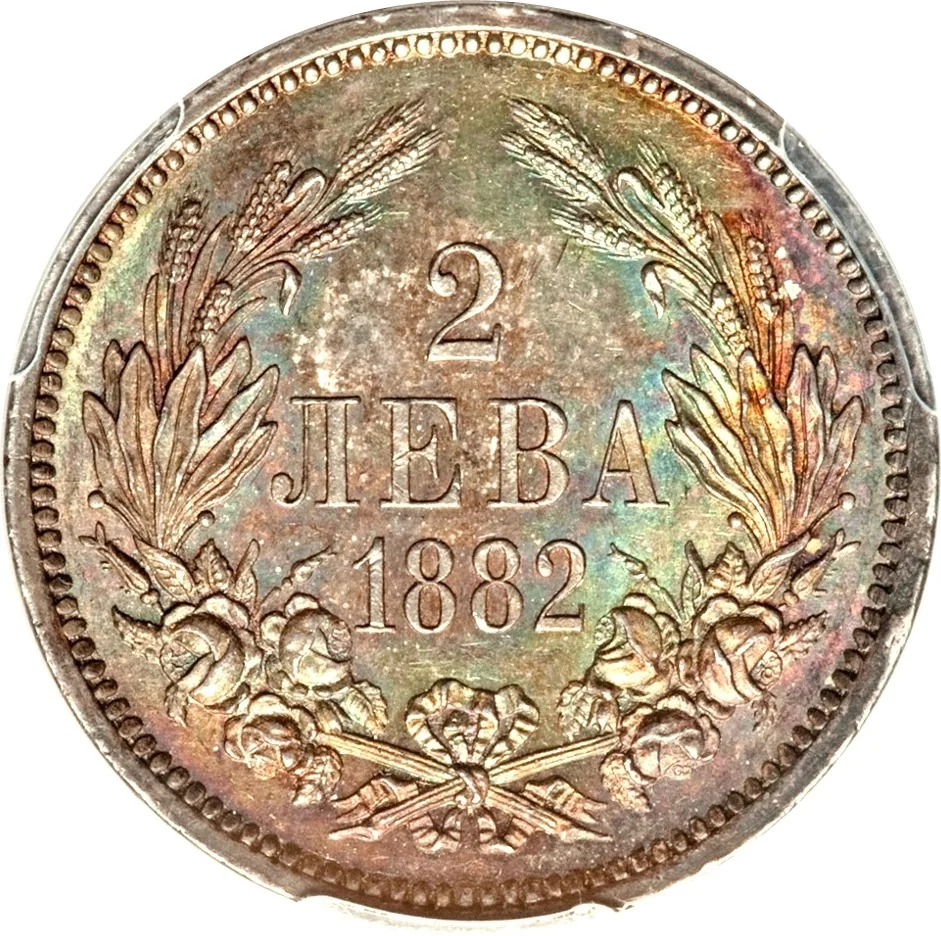
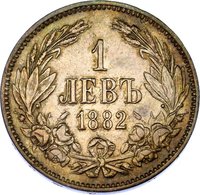
Reverse
Edge
Smooth with inscription
Legend:
БОЖЕ ПАЗИ БЪЛГАРИЯ
Translation:
God Save Bulgaria
Language: Bulgarian
Categories
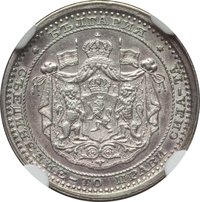
| Symbols> Coat of Arms |
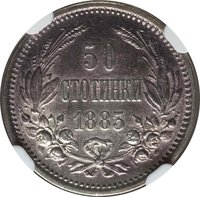
| Symbol> Wreath |
Mints
| Name | Mark |
|---|---|
| Saint Petersburg | — |
Mintings
| Year | Mint Mark | Mintage | Quality | Collection |
|---|---|---|---|---|
| 1882 | — | 2,000,000 |
Historical background
In 1882, Bulgaria’s currency situation was complex and transitional, reflecting its newfound autonomy as the Principality of Bulgaria, a self-governing vassal state under Ottoman suzerainty established in 1878. The monetary landscape was fragmented, with several foreign currencies circulating simultaneously. The most prominent was the Ottoman lira (gold), alongside the silver kuruş and para, a legacy of centuries of Ottoman rule. However, Russian rubles, French francs, British sovereigns, and other European coins also circulated freely, driven by trade and the influence of foreign loans and advisors involved in building the new state. This multiplicity created practical challenges for commerce and state finance, necessitating a move toward a unified national monetary system.
The drive for monetary independence led to the passage of the Law on the Right to Mint Coins in 1880. This law established the lev (divided into 100 stotinki) as Bulgaria’s national currency, pegging it firmly to the international gold standard. The design explicitly mirrored the Latin Monetary Union, with one Bulgarian lev equaling one French franc. In 1882, the state took concrete steps toward realizing this law, though Bulgarian-minted coins would not enter circulation until 1883-1884. Therefore, 1882 was a year of preparation, involving the logistical planning for minting and the accumulation of necessary metal reserves, often through foreign loans.
This monetary reform was not merely an economic technicality but a profound statement of national sovereignty and European orientation. By adopting the gold standard and aligning with the franc, Bulgaria’s leaders aimed to stabilize the economy, attract foreign investment, and symbolically distance the country from the Ottoman monetary sphere. Thus, the currency situation in 1882 was one of poised anticipation, straddling a chaotic multi-currency past and a planned, modern financial future intended to integrate Bulgaria into the European economic order.
The drive for monetary independence led to the passage of the Law on the Right to Mint Coins in 1880. This law established the lev (divided into 100 stotinki) as Bulgaria’s national currency, pegging it firmly to the international gold standard. The design explicitly mirrored the Latin Monetary Union, with one Bulgarian lev equaling one French franc. In 1882, the state took concrete steps toward realizing this law, though Bulgarian-minted coins would not enter circulation until 1883-1884. Therefore, 1882 was a year of preparation, involving the logistical planning for minting and the accumulation of necessary metal reserves, often through foreign loans.
This monetary reform was not merely an economic technicality but a profound statement of national sovereignty and European orientation. By adopting the gold standard and aligning with the franc, Bulgaria’s leaders aimed to stabilize the economy, attract foreign investment, and symbolically distance the country from the Ottoman monetary sphere. Thus, the currency situation in 1882 was one of poised anticipation, straddling a chaotic multi-currency past and a planned, modern financial future intended to integrate Bulgaria into the European economic order.
🌱 Fairly Common