

½ stuiver – Java
Add to wishlist
Indonesia
Obverse
Description:
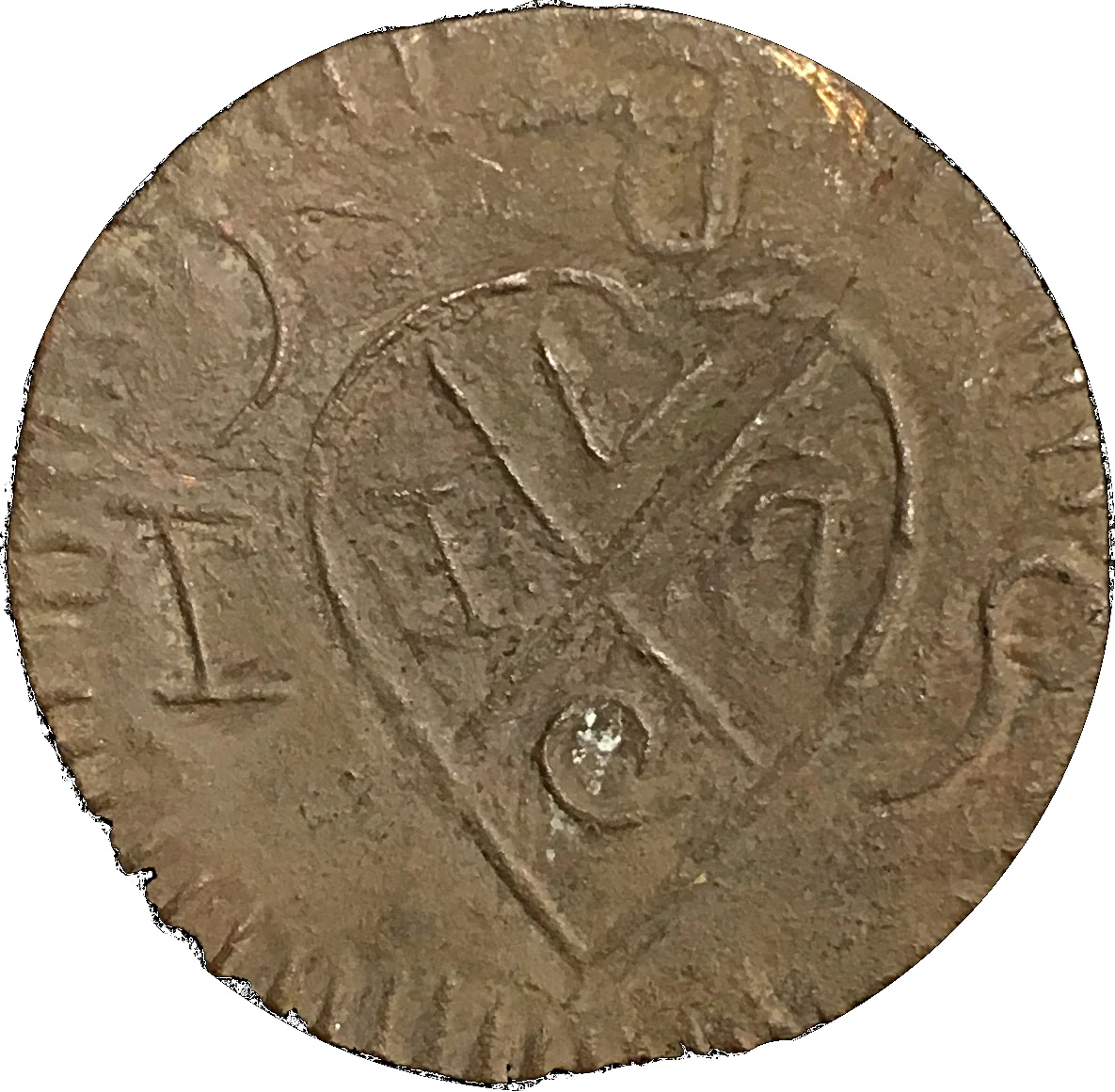
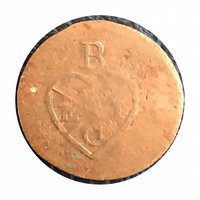
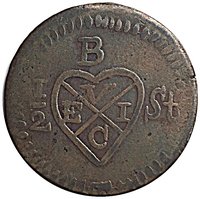
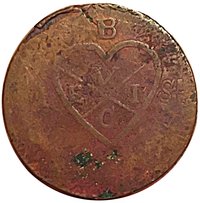
The coin's obverse features mirrored and flawed characters. The top "B" is reversed. The left "1/2" appears as a mirrored "2/1" without a fraction bar. The central VEIC heart mark is crude and tilted: its "E" is mirrored with weak bars, its "I" lacks a bottom bar and has a malformed top, and its "C" is missing the top serif. The right "S" is elongated and missing end bars. The "t." portion is absent.
Inscription:
B
2 1
V E 9 (P) C
S
Corrupted and retrograde (mirrored) script of
B
1/2
V E I C
St.
2 1
V E 9 (P) C
S
Corrupted and retrograde (mirrored) script of
B
1/2
V E I C
St.
Translation:
B
2 1
V E 9 (P) C
S
Corrupted and retrograde (mirrored) script of
B
1/2
V E I C
St.
2 1
V E 9 (P) C
S
Corrupted and retrograde (mirrored) script of
B
1/2
V E I C
St.
Script: Latin
Language: Latin
Reverse
Description:
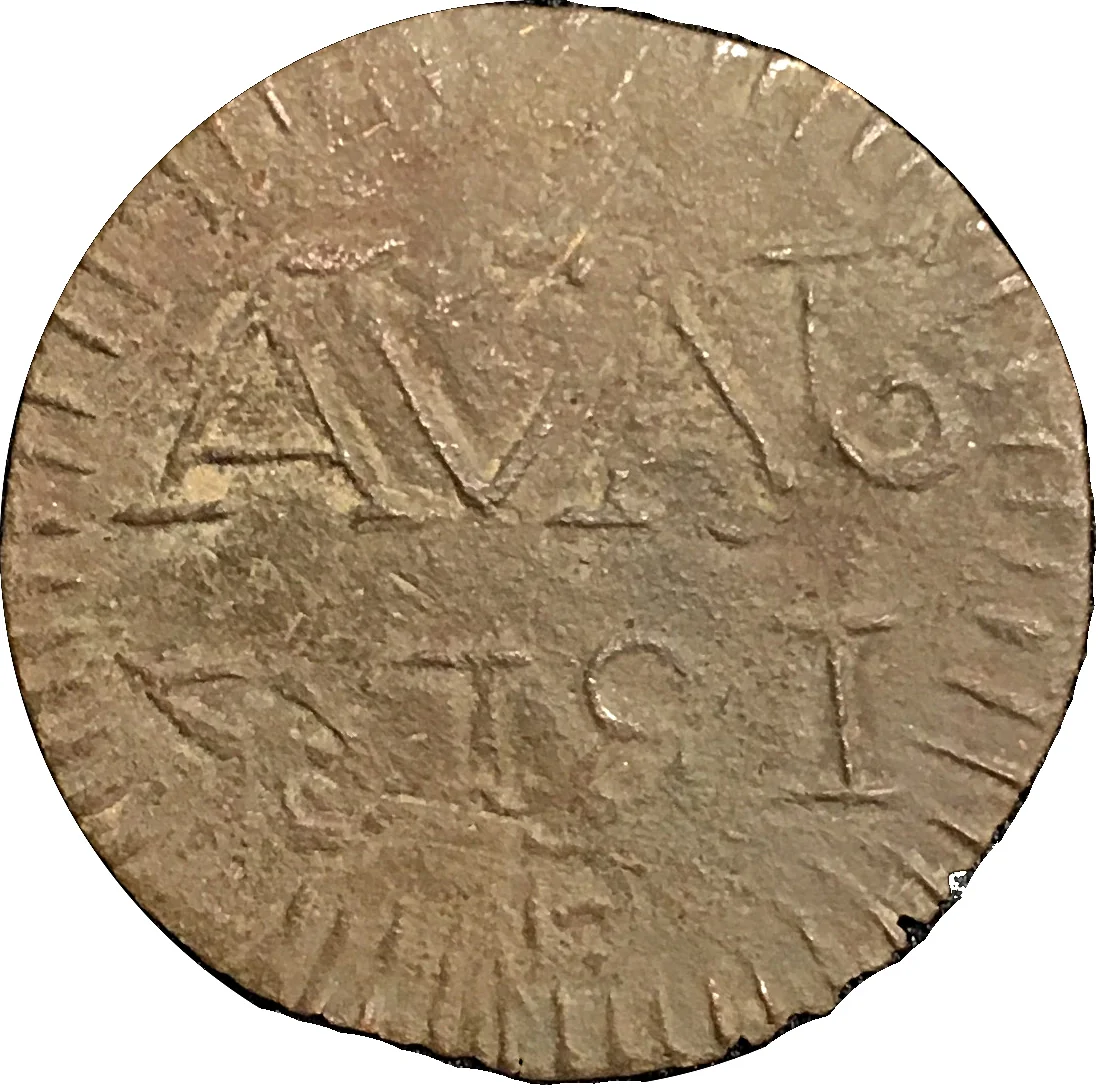
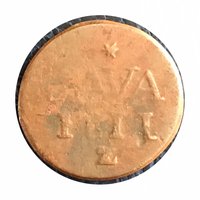
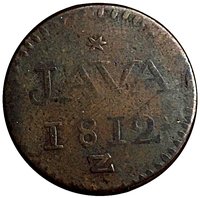
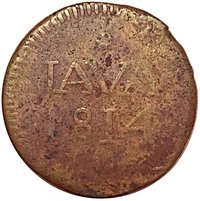
This reverse features a mirrored crude imitation of an 1813 ½ Stuiver, with a reversed "Z" forming the "2."
Inscription:
AVAJ
3181
2
Retrograde (mirrored) script of
JAVA
1813
Z
3181
2
Retrograde (mirrored) script of
JAVA
1813
Z
Script: Latin
Edge
Mintings
| Year | Mint Mark | Mintage | Quality | Collection |
|---|---|---|---|---|
| 1811 | — | — | ||
| 1812 | — | — | ||
| 1813 | — | — | ||
| 1814 | — | — | ||
| 1815 | — | — |
Historical background
In 1811, Java's currency situation was a complex and unstable legacy of the Napoleonic Wars in Europe. The island was under the administration of the British East India Company, following the Dutch surrender in 1811, but the monetary system remained dominated by the recently discredited paper money of the previous Dutch regime. The Batavian Republic, and later the Kingdom of Holland under French influence, had heavily resorted to issuing paper muntbiljetten (coin notes) to finance its deficits. By the time of the British takeover, this paper currency was severely depreciated, causing widespread inflation and a profound loss of public confidence.
The British Lieutenant-Governor, Thomas Stamford Raffles, faced an immediate monetary crisis. His primary challenge was to restore a stable medium of exchange to facilitate trade and tax collection. He moved decisively to demonetize the depreciated Dutch paper notes, declaring them no longer legal tender for government transactions. To fill the void, Raffles promoted the use of physical silver coinage, particularly the Spanish dollar and its fractional parts, which were widely trusted in regional trade. He also arranged for the import of silver rupees from British India to increase the supply of sound specie.
Despite these measures, the year 1811 was one of transition and difficulty. The sudden withdrawal of paper notes, without full redemption, caused hardship and a contraction in the money supply. Raffles’s subsequent attempts to introduce a new silver coinage system, the Javan rupee, would only be realized in 1813. Therefore, the currency situation in 1811 was characterized by a precarious shift from a collapsed fiduciary system to an emergent, but not yet fully established, specie-based economy, underlining the economic disruptions of the colonial transition.
The British Lieutenant-Governor, Thomas Stamford Raffles, faced an immediate monetary crisis. His primary challenge was to restore a stable medium of exchange to facilitate trade and tax collection. He moved decisively to demonetize the depreciated Dutch paper notes, declaring them no longer legal tender for government transactions. To fill the void, Raffles promoted the use of physical silver coinage, particularly the Spanish dollar and its fractional parts, which were widely trusted in regional trade. He also arranged for the import of silver rupees from British India to increase the supply of sound specie.
Despite these measures, the year 1811 was one of transition and difficulty. The sudden withdrawal of paper notes, without full redemption, caused hardship and a contraction in the money supply. Raffles’s subsequent attempts to introduce a new silver coinage system, the Javan rupee, would only be realized in 1813. Therefore, the currency situation in 1811 was characterized by a precarious shift from a collapsed fiduciary system to an emergent, but not yet fully established, specie-based economy, underlining the economic disruptions of the colonial transition.
✨ Legendary