

200 rupiah – Indonesia
Add to wishlist
Indonesia
Material
References
KM: #
Numista: #1677
Value
Exchange value: 200 IDR
Inflation-adjusted value: 631.55 IDR
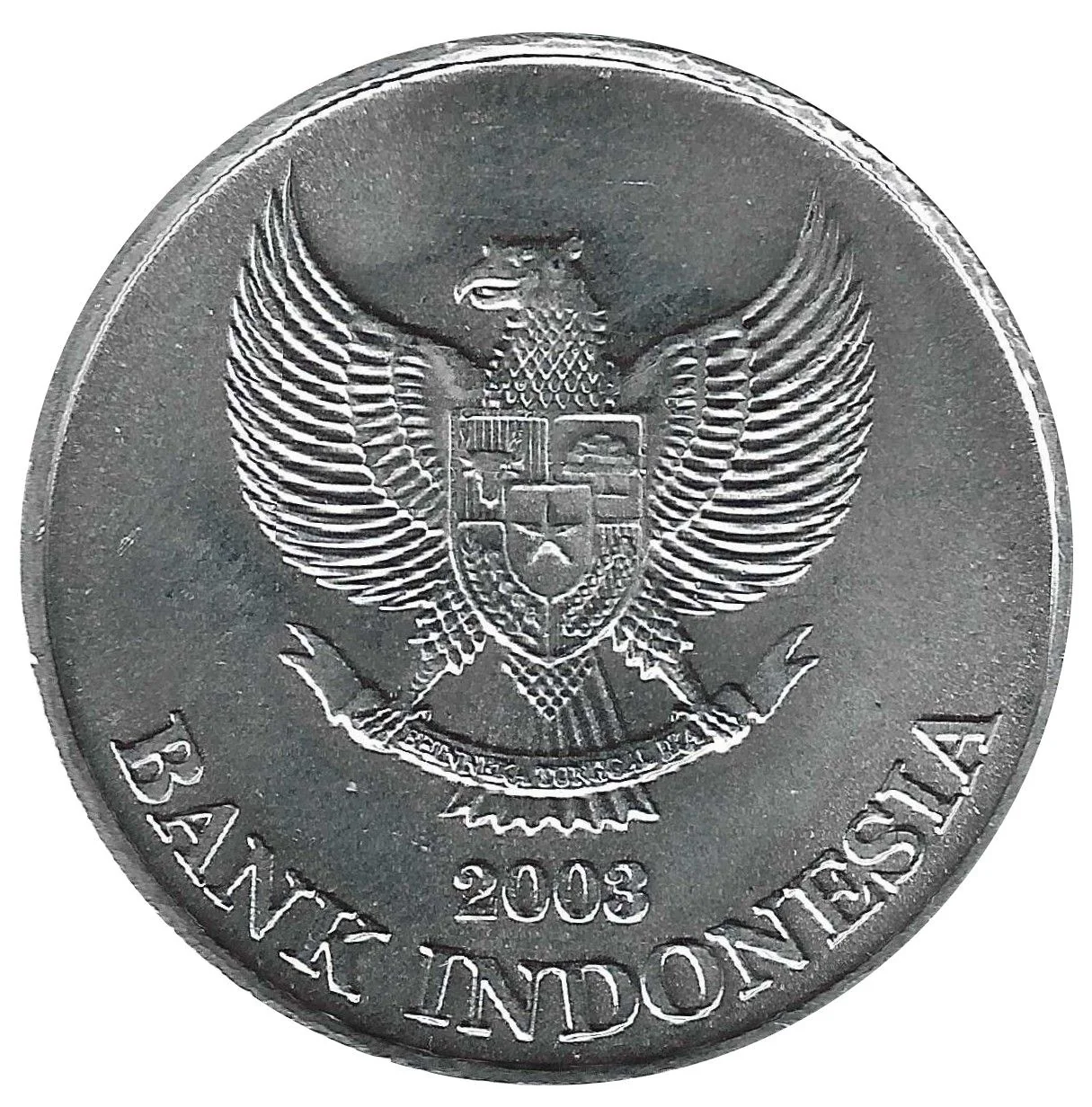
Obverse
Description:
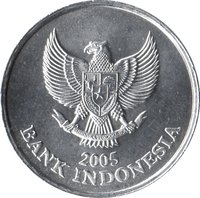
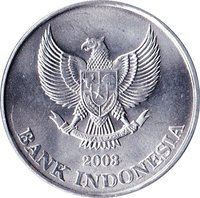
Garuda Pancasila, the national emblem.
Inscription:
BHINNEKA TUNGGAL IKA
2003
BANK INDONESIA
2003
BANK INDONESIA
Translation:
Unity in Diversity
2003
Bank Indonesia
2003
Bank Indonesia
Script: Latin
Languages: Indonesian, Javanese
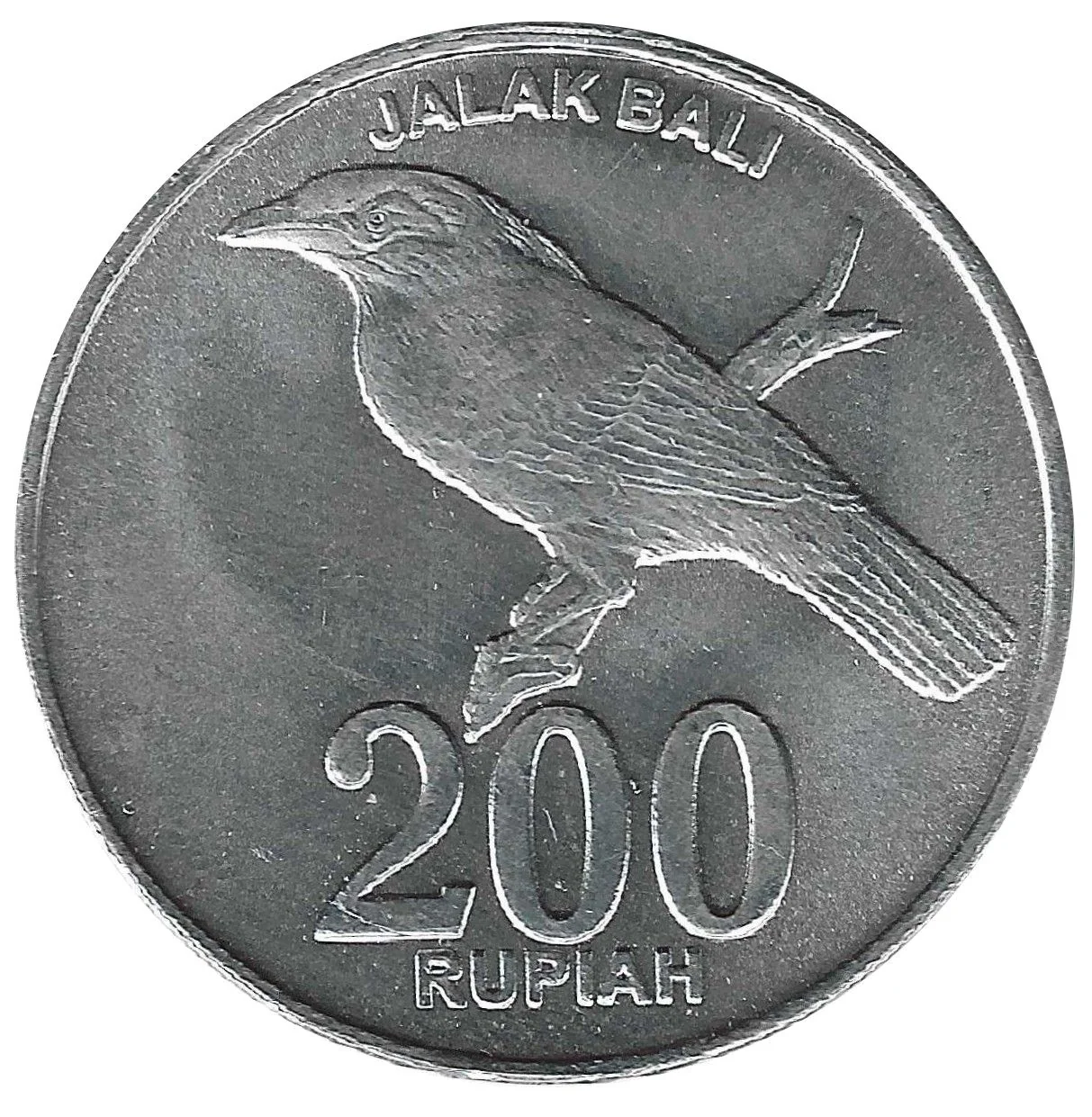
Reverse
Description:
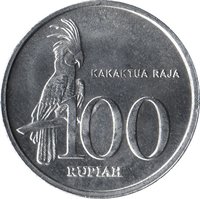
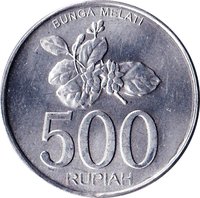
Bali mynah (Jalak Bali) on a branch, left. Denomination below.
Inscription:
JALAK BALI
200
RUPIAH
200
RUPIAH
Script: Latin
Edge
Plain
Categories
| Animal> Bird |
| Symbols> Coat of Arms |
Mints
| Name | Mark |
|---|---|
| Perum Peruri | — |
Mintings
| Year | Mint Mark | Mintage | Quality | Collection |
|---|---|---|---|---|
| 2003 | — | — |
Historical background
In 2003, Indonesia's currency, the rupiah (IDR), was in a period of cautious stabilization following the profound trauma of the 1997-98 Asian Financial Crisis. During that crisis, the rupiah had lost over 80% of its value against the US dollar, plunging the economy into deep recession and social turmoil. By 2003, under the presidency of Megawati Sukarnoputri and with oversight from the International Monetary Fund (IMF) program concluding that year, the currency had recovered significantly from its lowest point but remained vulnerable and subject to volatility. The central bank, Bank Indonesia, maintained a managed float regime, intervening in foreign exchange markets to smooth out excessive fluctuations without targeting a specific fixed rate.
The year was characterized by a "twin deficits" challenge, with both the government budget and the current account running in the red. This created underlying pressure on the rupiah, as it increased reliance on foreign capital inflows. Investor sentiment was periodically rattled by domestic and international events, including the aftermath of the 2002 Bali bombings, the Iraq War, and the outbreak of SARS in Asia, which all contributed to risk aversion. Consequently, the rupiah traded in a relatively wide band, fluctuating between approximately 8,400 and 8,900 against the US dollar throughout the year, reflecting persistent concerns about political stability, corporate debt restructuring, and the health of the banking sector.
Despite these pressures, 2003 saw continued, albeit fragile, progress. Key reforms in banking supervision and fiscal management, initiated after the crisis, began to provide a stronger institutional foundation. Inflation was brought under control, falling to a historic low, which allowed Bank Indonesia to gradually lower interest rates to stimulate growth. The conclusion of the IMF program in December 2003 was a symbolic milestone, signaling restored—but not complete—international confidence. Overall, the currency situation in 2003 was one of a recovering economy still navigating the long shadow of financial collapse, with the rupiah stable yet sensitive to shifts in global risk appetite and domestic policy credibility.
The year was characterized by a "twin deficits" challenge, with both the government budget and the current account running in the red. This created underlying pressure on the rupiah, as it increased reliance on foreign capital inflows. Investor sentiment was periodically rattled by domestic and international events, including the aftermath of the 2002 Bali bombings, the Iraq War, and the outbreak of SARS in Asia, which all contributed to risk aversion. Consequently, the rupiah traded in a relatively wide band, fluctuating between approximately 8,400 and 8,900 against the US dollar throughout the year, reflecting persistent concerns about political stability, corporate debt restructuring, and the health of the banking sector.
Despite these pressures, 2003 saw continued, albeit fragile, progress. Key reforms in banking supervision and fiscal management, initiated after the crisis, began to provide a stronger institutional foundation. Inflation was brought under control, falling to a historic low, which allowed Bank Indonesia to gradually lower interest rates to stimulate growth. The conclusion of the IMF program in December 2003 was a symbolic milestone, signaling restored—but not complete—international confidence. Overall, the currency situation in 2003 was one of a recovering economy still navigating the long shadow of financial collapse, with the rupiah stable yet sensitive to shifts in global risk appetite and domestic policy credibility.
🌱 Very Common