

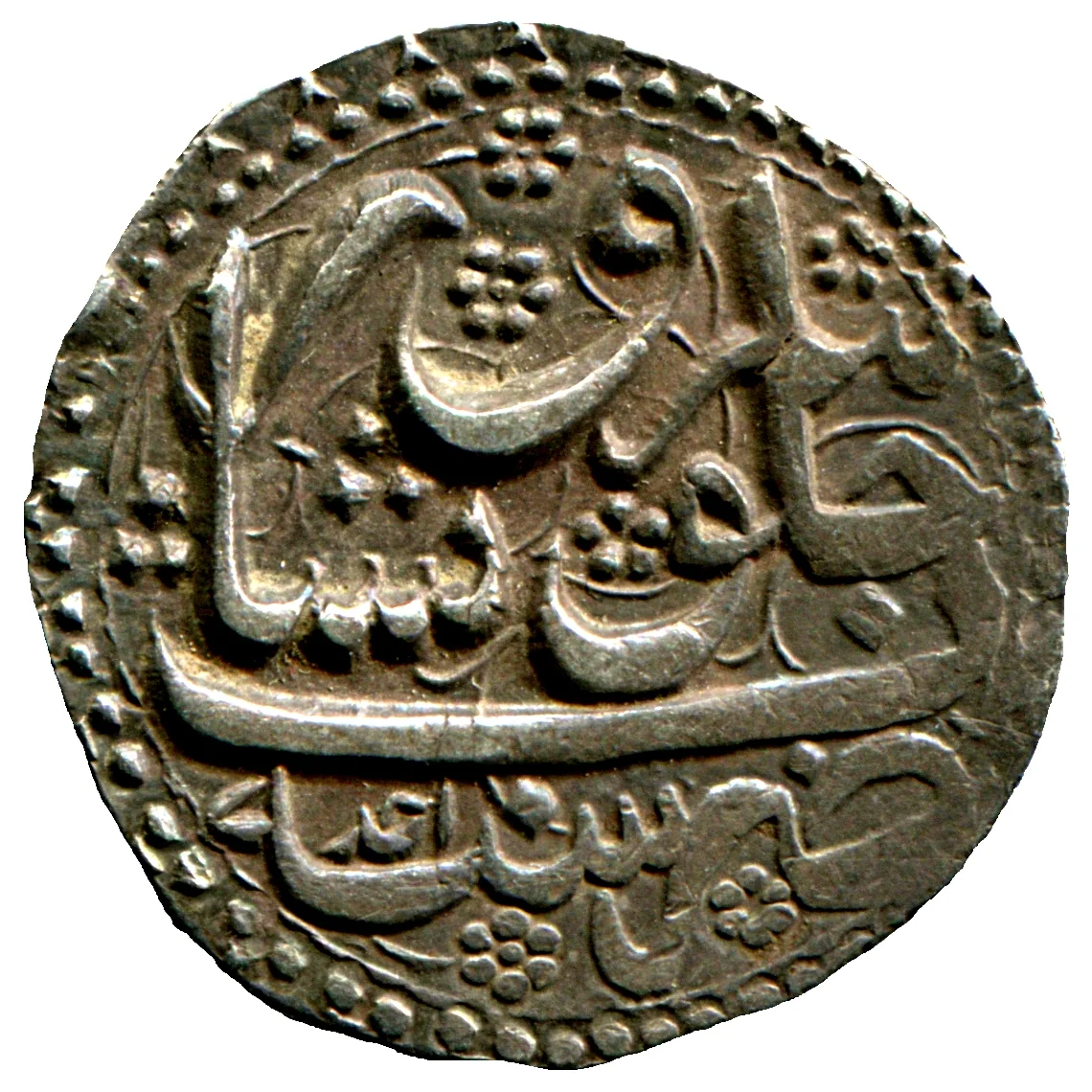
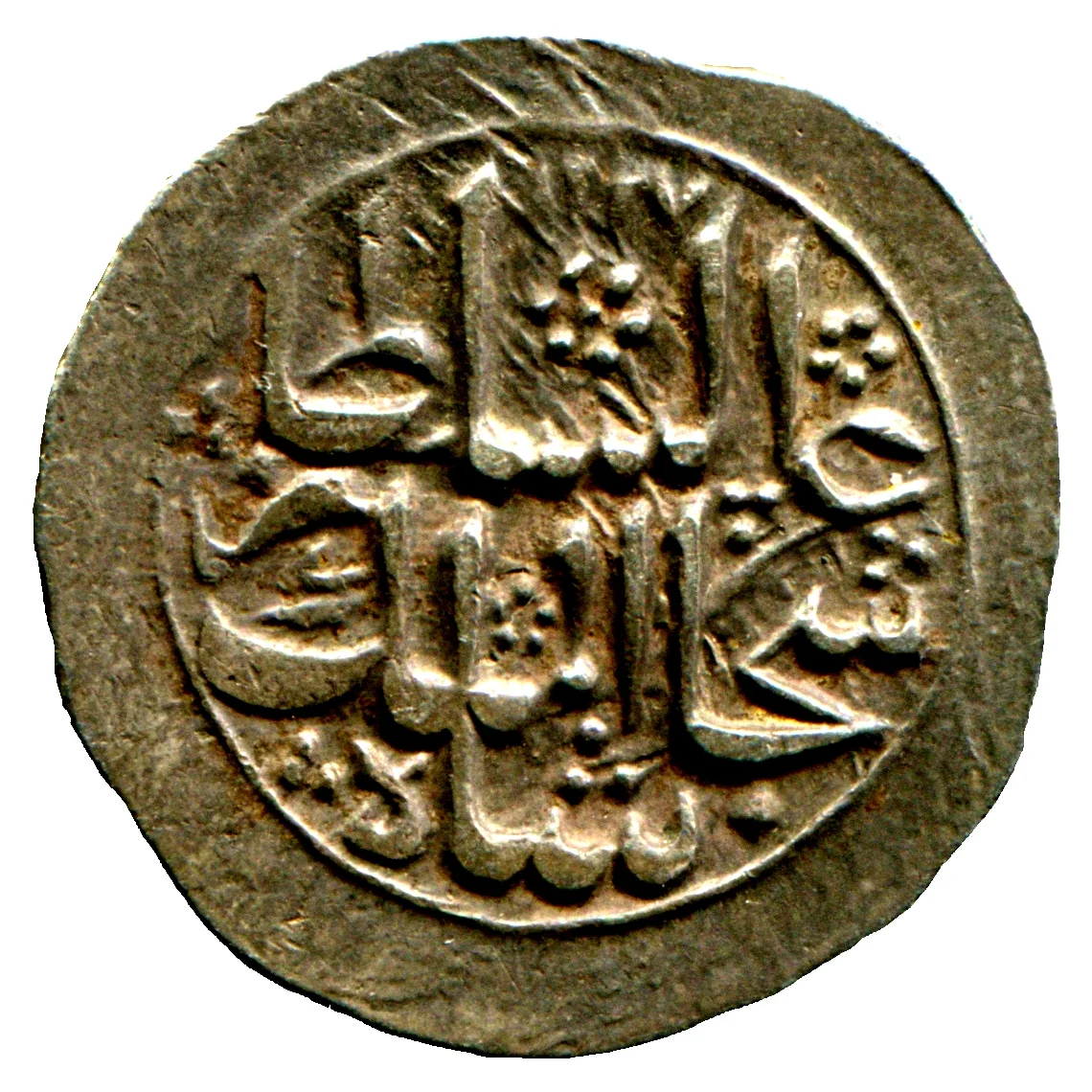
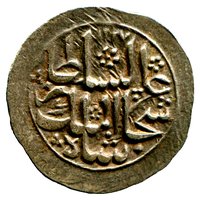
1 Rupee – Afghanistan
Afghanistan
Context
Year: 1812
Islamic (Hijri) Year: 1227
Issuer: Afghanistan 
Ruler: Shujah Shah
Currency:
(1747—1891)
Demonetized: Yes
Material
Diameter: 22 mm
Weight: 11.5 g
Silver weight: 11.50 g
Shape: Irregular round
Composition: Silver
Magnetic: No
References
KM: #Click to copy to clipboard723
Numista: #167307
Value
Bullion value: $32.69
Mints
| Name | Mark |
|---|---|
| Peshawar | — |
Mintings
| Year | Mint Mark | Mintage | Quality | Collection |
|---|---|---|---|---|
| 1812 | — | — |
Historical background
In 1812, Afghanistan was not a unified nation-state but a patchwork of rival principalities and tribal confederations, most notably the Durrani Empire, which was in a state of severe fragmentation following the assassination of its founder, Ahmad Shah Durrani, in 1772. The nominal ruler in Kabul was Shah Mahmud Durrani, but his authority was contested and unstable, with effective power often lying with regional chieftains and his own powerful Barakzai viziers. This political decentralization was directly reflected in the monetary system, which lacked a standardized, centrally issued currency accepted across the realm.
The primary circulating currency was the Kabuli rupee, a silver coin that derived its name and standard from the Mughal rupee, a legacy of earlier imperial influence. However, its weight, purity, and value were not uniform, varying significantly between the mints of different cities like Kabul, Kandahar, and Peshawar. Alongside these, older Persian Mohurs (gold coins) and Abbasis (silver coins) from the Safavid era still circulated, as did a multitude of regional and tribal issues. The most crucial and disruptive monetary influence was the influx of foreign silver, particularly Spanish Dollars (pieces of eight) and Indian rupees from British India, which entered through trade and used as a more reliable store of value amidst local instability.
This complex and fragmented currency landscape posed significant challenges to trade and state revenue. The constant fluctuation in exchange rates between different coinages created uncertainty for merchants and facilitated arbitrage. For the struggling Durrani monarchy, the inability to control the minting of currency weakened its fiscal authority and symbolic power, as coinage is a key assertion of sovereignty. Thus, in 1812, Afghanistan's currency situation was a direct symptom of its political disintegration—a heterogeneous mix of legacy, regional, and foreign coins circulating in a volatile economic space devoid of central monetary control.
The primary circulating currency was the Kabuli rupee, a silver coin that derived its name and standard from the Mughal rupee, a legacy of earlier imperial influence. However, its weight, purity, and value were not uniform, varying significantly between the mints of different cities like Kabul, Kandahar, and Peshawar. Alongside these, older Persian Mohurs (gold coins) and Abbasis (silver coins) from the Safavid era still circulated, as did a multitude of regional and tribal issues. The most crucial and disruptive monetary influence was the influx of foreign silver, particularly Spanish Dollars (pieces of eight) and Indian rupees from British India, which entered through trade and used as a more reliable store of value amidst local instability.
This complex and fragmented currency landscape posed significant challenges to trade and state revenue. The constant fluctuation in exchange rates between different coinages created uncertainty for merchants and facilitated arbitrage. For the struggling Durrani monarchy, the inability to control the minting of currency weakened its fiscal authority and symbolic power, as coinage is a key assertion of sovereignty. Thus, in 1812, Afghanistan's currency situation was a direct symptom of its political disintegration—a heterogeneous mix of legacy, regional, and foreign coins circulating in a volatile economic space devoid of central monetary control.

✨ Legendary