

1 Falus – Afghanistan
Afghanistan
Context
Material
References
KM: #Click to copy to clipboard32
Numista: #10443
Obverse
Description:
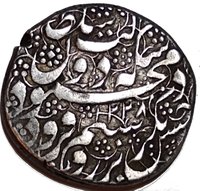
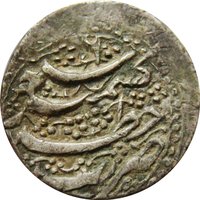
Blossom between blades.
Reverse
Edge
Mints
| Name | Mark |
|---|---|
| Balkh | — |
Mintings
| Year | Mint Mark | Mintage | Quality | Collection |
|---|---|---|---|---|
| 1813 | — | — | ||
| 1818 | — | — | ||
| 1819 | — | — | ||
| 1823 | — | — |
Historical background
In 1813, the currency situation in Afghanistan was fragmented and complex, reflecting the decentralized political landscape of the Durrani Empire following the death of its founder, Ahmad Shah Durrani, in 1772. The empire was in a state of dissolution, with various princes and chieftains, particularly in Kabul, Kandahar, Herat, and Peshawar, vying for power. There was no unified national monetary system. Instead, regional rulers and even major cities often minted their own coins, leading to a circulation of diverse and competing currencies. The primary coinage was silver rupees and their fractional pieces (like annas), but their weight, purity, and design could vary significantly depending on the minting authority.
The most prevalent coins were likely those bearing the names of the diminishing Durrani monarchs, such as Shah Mahmud Durrani, who ruled from Kabul but whose authority was contested. However, the actual control of mints and revenue meant that local potentates issued their own imitations. Alongside these, older coins from the Mughal Empire and the Safavid dynasty remained in circulation due to their recognized silver content, functioning as bullion. Furthermore, trade brought foreign currencies into the mix, including Persian tomans and krans, Indian rupees from neighboring Sikh and Mughal territories, and even some Russian and Central Asian coins via the Silk Road, making commerce a matter of constant assay and negotiation.
This monetary fragmentation was a direct impediment to trade and state administration. The lack of standardization created uncertainty, facilitated debasement by local rulers in need of funds, and hindered the collection of uniform taxes. The chaotic currency environment mirrored the broader political instability, where no single authority could impose economic order. It was a system operating on the reliability of precious metal content rather than the trust in a central issuing authority, which would only begin to coalesce later in the century under the more centralized rule of Dost Mohammad Khan.
The most prevalent coins were likely those bearing the names of the diminishing Durrani monarchs, such as Shah Mahmud Durrani, who ruled from Kabul but whose authority was contested. However, the actual control of mints and revenue meant that local potentates issued their own imitations. Alongside these, older coins from the Mughal Empire and the Safavid dynasty remained in circulation due to their recognized silver content, functioning as bullion. Furthermore, trade brought foreign currencies into the mix, including Persian tomans and krans, Indian rupees from neighboring Sikh and Mughal territories, and even some Russian and Central Asian coins via the Silk Road, making commerce a matter of constant assay and negotiation.
This monetary fragmentation was a direct impediment to trade and state administration. The lack of standardization created uncertainty, facilitated debasement by local rulers in need of funds, and hindered the collection of uniform taxes. The chaotic currency environment mirrored the broader political instability, where no single authority could impose economic order. It was a system operating on the reliability of precious metal content rather than the trust in a central issuing authority, which would only begin to coalesce later in the century under the more centralized rule of Dost Mohammad Khan.

💎 Extremely Rare