

2 Shu – Japan
Japan
Context
Material
Weight: 1.64 g
Gold weight: 0.49 g
Shape: Irregular rectangular
Composition: 29.8% Gold
Magnetic: No
Technique: Hammered
Alignment: Medal alignment
flip
References
Numista: #16677
Value
Bullion value: $81.36
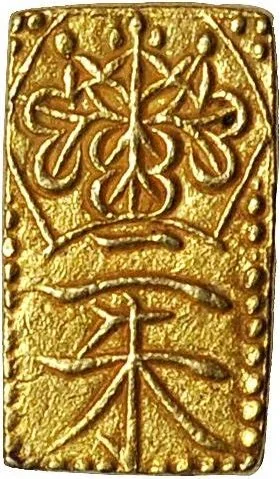
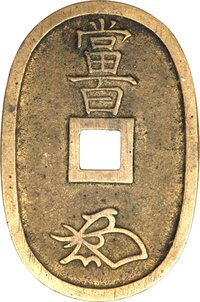
Obverse
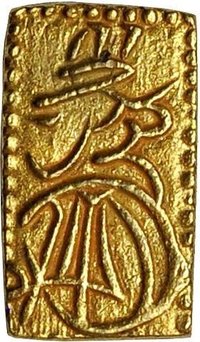
Description:
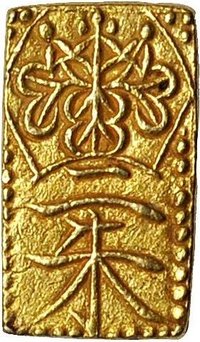
Kiri top center, dotted border value.
Inscription:
二
朱
朱
Translation:
Two Zhu
Scripts: Chinese (traditional, regular script)
Language: Classical Chinese
Engraver: Shozaburo Mitsutsugu
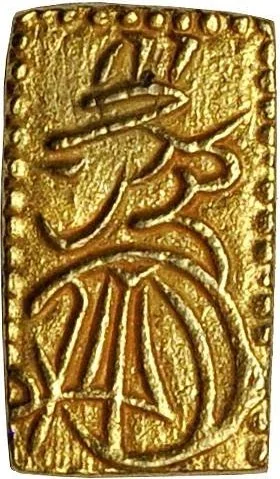
Reverse
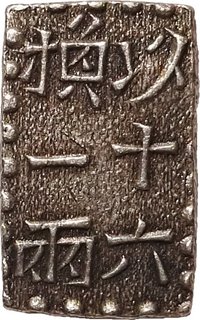
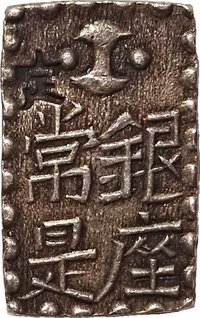
Description:
Mint Official and signature in dotted outline.
Inscription:
光
次
次
Translation:
Guangci
Scripts: Chinese (traditional, grass script)
Language: Chinese
Engraver: Shozaburo Mitsutsugu
Edge
Mints
| Name | Mark |
|---|---|
| Kinza, Edo | — |
Mintings
| Year | Mint Mark | Mintage | Quality | Collection |
|---|---|---|---|---|
| — | — | 103,069,602 |
Historical background
In 1832, Japan operated under a complex and strained multi-metallic currency system administered by the Tokugawa shogunate. The official system was based on gold (koban), silver (chogin), and copper (zeni) coins, each with separate, non-decimal denominations and distinct spheres of use—gold for large domains and the shogunate, silver for regional commerce, and copper for daily transactions. This system was centrally controlled, with minting a shogunal monopoly, but in practice, it was complicated by the existence of over 200 regional domains that issued their own low-denomination paper scrip (hansatsu), which was only valid within their own borders.
The period was marked by severe and chronic debasement. Facing persistent fiscal deficits from the costly sankin-kotai system and natural disasters, the shogunate repeatedly engaged in currency recoinage (kahei aratame), reducing the precious metal content in new coins while mandating they retain the same face value. This practice, essentially a form of seigniorage, created a confusing circulation of older, purer coins alongside newer, debased ones, leading to widespread distrust and complex exchange rates. Furthermore, a thriving black market in currency exchange (ginza no baibai) emerged in major cities, where merchants set more realistic market rates that often deviated sharply from the government's official valuations.
This monetary instability was a significant symptom of the broader structural problems facing the Tokugawa regime in the late Edo period. The debasements triggered inflation, eroded the fixed stipends of the samurai class, and created lucrative arbitrage opportunities for wealthy merchant financiers, thereby undermining the social order. While not yet in a state of collapse, the currency situation of 1832 reflected a weakening central authority, growing commercial pressures that the rigid feudal system could not accommodate, and laid the groundwork for the more severe economic and political crises that would culminate in the Meiji Restoration decades later.
The period was marked by severe and chronic debasement. Facing persistent fiscal deficits from the costly sankin-kotai system and natural disasters, the shogunate repeatedly engaged in currency recoinage (kahei aratame), reducing the precious metal content in new coins while mandating they retain the same face value. This practice, essentially a form of seigniorage, created a confusing circulation of older, purer coins alongside newer, debased ones, leading to widespread distrust and complex exchange rates. Furthermore, a thriving black market in currency exchange (ginza no baibai) emerged in major cities, where merchants set more realistic market rates that often deviated sharply from the government's official valuations.
This monetary instability was a significant symptom of the broader structural problems facing the Tokugawa regime in the late Edo period. The debasements triggered inflation, eroded the fixed stipends of the samurai class, and created lucrative arbitrage opportunities for wealthy merchant financiers, thereby undermining the social order. While not yet in a state of collapse, the currency situation of 1832 reflected a weakening central authority, growing commercial pressures that the rigid feudal system could not accommodate, and laid the groundwork for the more severe economic and political crises that would culminate in the Meiji Restoration decades later.
🌟 Uncommon