

100 mon – Japan
Add to wishlist
Japan
Obverse
Description:
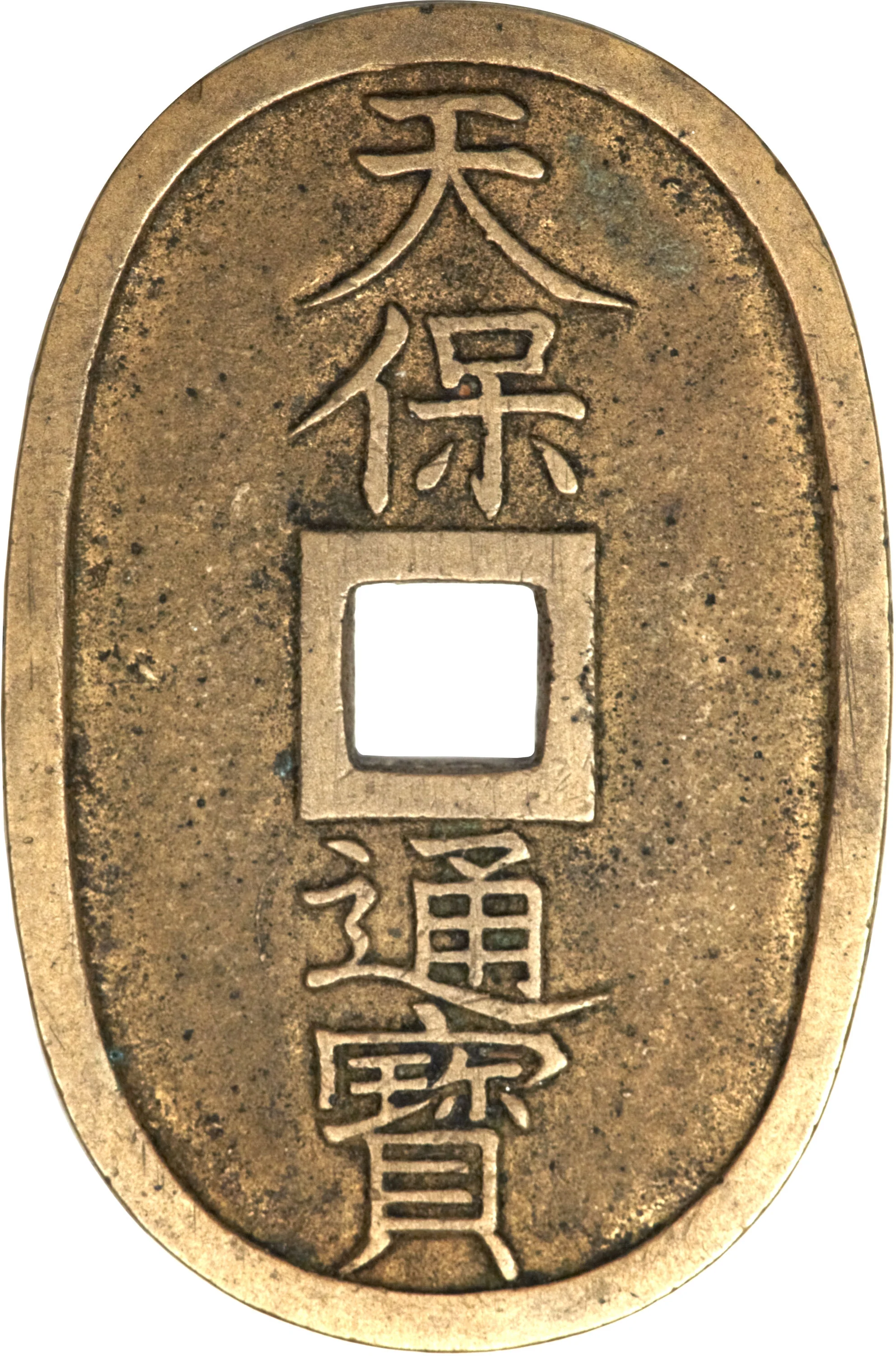
Four characters, split by a hole.
Inscription:
天
保
通
寶
保
通
寶
Translation:
Heaven
Protect
Circulating
Treasure
Protect
Circulating
Treasure
Scripts: Chinese (traditional, regular script)
Language: Chinese
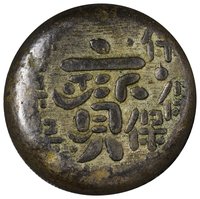
Reverse
Description:
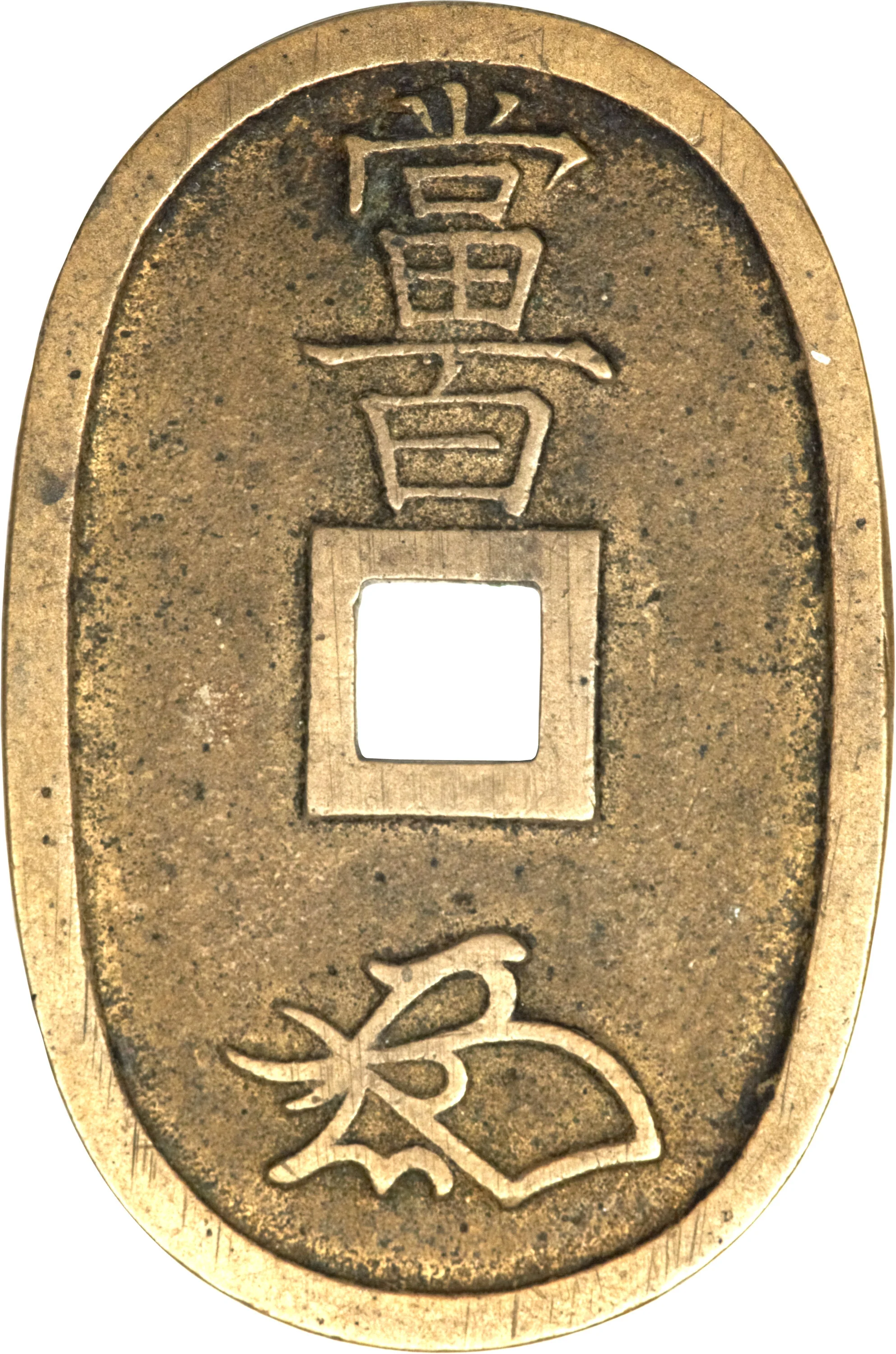
Chinese regular script denomination above hole, mint official's kaō below.
Inscription:
當
百
百
Translation:
Value One Hundred.
Scripts: Chinese (traditional, regular script)
Language: Classical Chinese
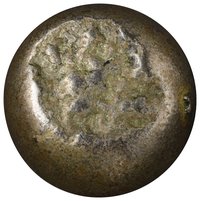
Edge
Smooth, paulownia stamps on the left and right side (various sizes and forms exist)
Mintings
| Year | Mint Mark | Mintage | Quality | Collection |
|---|---|---|---|---|
| — | — | — |
Historical background
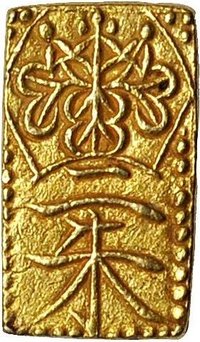
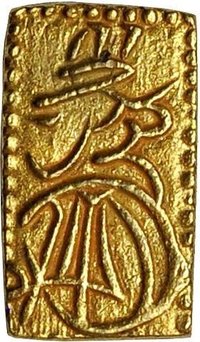
In 1835, Japan operated under the Tokugawa shogunate's complex and strained monetary system, which was based on a tri-metallic standard of gold, silver, and copper coins. The official currency, the Koban (gold oval coin) and Ichibu silver coins, were minted by the central shogunate. However, over 200 semi-autonomous domains also issued their own paper scrip, known as hansatsu, which was only valid within their own borders. This created a fragmented and often confusing economic landscape where exchange rates between metals and between domain notes fluctuated, hampering national trade and causing significant inefficiency.
The system was under severe pressure due to chronic debasement. Facing persistent budget deficits from the costly sankin-kōtai system (alternate attendance of lords in Edo) and rising costs, the shogunate repeatedly ordered the minting of new coins with reduced precious metal content. The Tenpō Reforms, initiated in the early 1830s under Mizuno Tadakuni, sought to address this crisis. In 1832-33, new, lower-quality gold and silver coins were issued, but this failed to solve the underlying fiscal problems and instead contributed to inflation, eroding public trust in the currency.
Consequently, by 1835, Japan's monetary situation was characterized by inflation, a confusing multiplicity of currencies, and a weakening central fiscal authority. The debasement practices provided short-term revenue for the shogunate and domains but were undermining the broader economy. This instability was a significant symptom of the structural weaknesses within the late Tokugawa regime, foreshadowing the greater economic and political turmoil that would culminate in the Meiji Restoration decades later.
The system was under severe pressure due to chronic debasement. Facing persistent budget deficits from the costly sankin-kōtai system (alternate attendance of lords in Edo) and rising costs, the shogunate repeatedly ordered the minting of new coins with reduced precious metal content. The Tenpō Reforms, initiated in the early 1830s under Mizuno Tadakuni, sought to address this crisis. In 1832-33, new, lower-quality gold and silver coins were issued, but this failed to solve the underlying fiscal problems and instead contributed to inflation, eroding public trust in the currency.
Consequently, by 1835, Japan's monetary situation was characterized by inflation, a confusing multiplicity of currencies, and a weakening central fiscal authority. The debasement practices provided short-term revenue for the shogunate and domains but were undermining the broader economy. This instability was a significant symptom of the structural weaknesses within the late Tokugawa regime, foreshadowing the greater economic and political turmoil that would culminate in the Meiji Restoration decades later.
🌱 Common