

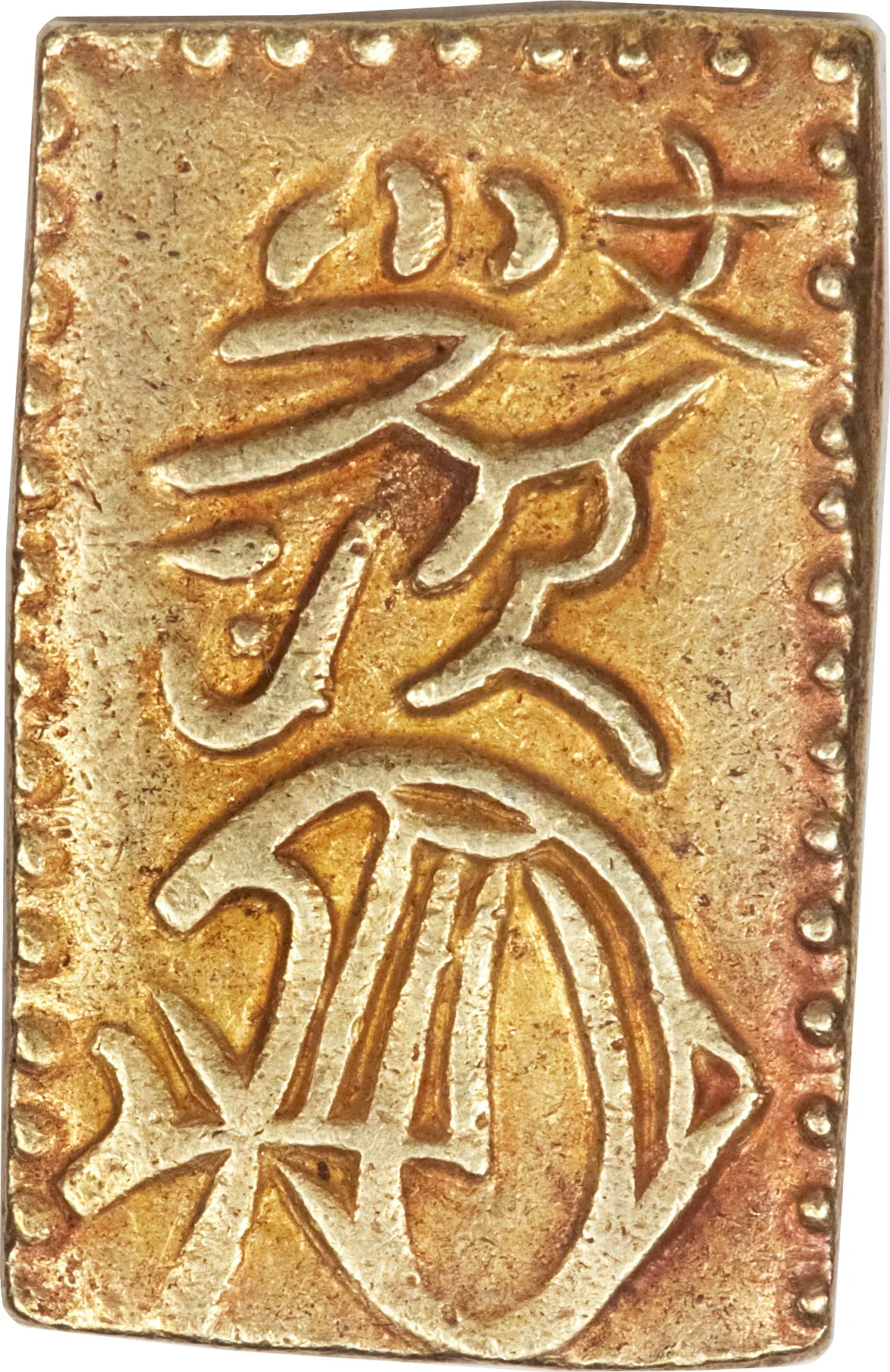
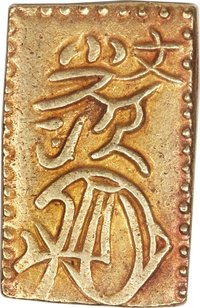
2 Bu – Japan
Japan
Context
Material
Weight: 6.52 g
Gold weight: 3.69 g
Shape: Irregular rectangular
Magnetic: No
Technique: Hammered
Alignment: Coin alignment

flip
References
Numista: #16373
Value
Bullion value: $616.33
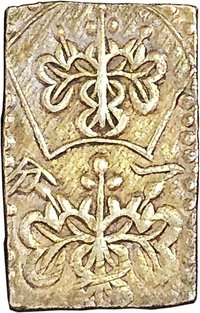
Obverse
Description:
Kiri crests above and below the central value.
Inscription:
分 二
Translation:
Two Fen
Language: Chinese
Engraver: Shozaburo Mitsutsugu
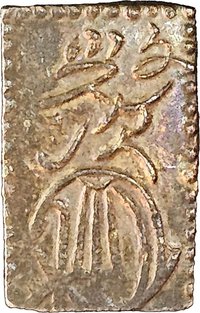
Reverse
Description:
The Mint Official and his signature.
Inscription:
文
光
次
光
次
Translation:
Civil and Military Affairs
Prosperity and Abundance
Prosperity and Abundance
Language: Chinese
Engraver: Shozaburo Mitsutsugu
Edge
Mints
| Name | Mark |
|---|---|
| Kinza, Edo | — |
Mintings
| Year | Mint Mark | Mintage | Quality | Collection |
|---|---|---|---|---|
| — | — | 5,972,044 |
Historical background
In 1818, Japan operated under a complex and strained monetary system that was a legacy of the Tokugawa shogunate's isolationist policy, known as sakoku. The official currency was a tri-metallic system based on gold, silver, and copper, each with its own denominations and spheres of use. The gold koban was the high-value coin for lordly and official transactions, silver was measured by weight in the commercial hub of Osaka, and copper mon and zeni served for everyday purchases. However, the system was not unified; domains across Japan also issued their own paper scrip (hansatsu), which circulated only within their borders, creating a fragmented economic landscape.
This period fell within the late Edo era's "Tempō Reforms," a time of significant financial distress. Decades of debasement by the shogunate, which reduced the precious metal content in coins to fund government expenses, had led to severe inflation and a loss of public confidence in currency. Furthermore, a series of famines and poor harvests strained the agrarian tax base, while the rising commercial class (chōnin) in cities like Edo and Osaka accumulated wealth, creating social and economic imbalances. The shogunate's rigid control over foreign trade—limited almost exclusively to Dutch and Chinese merchants at Nagasaki—meant that the money supply was largely insulated from external silver flows, making domestic policy the primary driver of monetary instability.
Consequently, by 1818, Japan's currency situation was characterized by a confusing multiplicity of coins and notes, chronic inflation, and a widening gap between the official coinage and market exchange rates. The shogunate, under Tokugawa Ienari, was struggling to maintain monetary authority and economic stability. These underlying weaknesses in the financial system were symptomatic of the broader structural problems that would eventually contribute to the decline of the Tokugawa regime in the decades leading up to the Meiji Restoration of 1868.
This period fell within the late Edo era's "Tempō Reforms," a time of significant financial distress. Decades of debasement by the shogunate, which reduced the precious metal content in coins to fund government expenses, had led to severe inflation and a loss of public confidence in currency. Furthermore, a series of famines and poor harvests strained the agrarian tax base, while the rising commercial class (chōnin) in cities like Edo and Osaka accumulated wealth, creating social and economic imbalances. The shogunate's rigid control over foreign trade—limited almost exclusively to Dutch and Chinese merchants at Nagasaki—meant that the money supply was largely insulated from external silver flows, making domestic policy the primary driver of monetary instability.
Consequently, by 1818, Japan's currency situation was characterized by a confusing multiplicity of coins and notes, chronic inflation, and a widening gap between the official coinage and market exchange rates. The shogunate, under Tokugawa Ienari, was struggling to maintain monetary authority and economic stability. These underlying weaknesses in the financial system were symptomatic of the broader structural problems that would eventually contribute to the decline of the Tokugawa regime in the decades leading up to the Meiji Restoration of 1868.
💎 Extremely Rare