

5 Monme – Japan
Japan
Context
Years: 1765–1768
Issuer: Japan 
Ruler: Go-Sakuramachi
Currency:
(1601—1874)
Demonetization: 1874
Total mintage: 361,280
Material
Weight: 18.75 g
Thickness: 2.9 mm
Shape: Rectangular
Alignment: Medal alignment
flip
References
KM: #Click to copy to clipboard9.70
Numista: #26996
Obverse
Description:
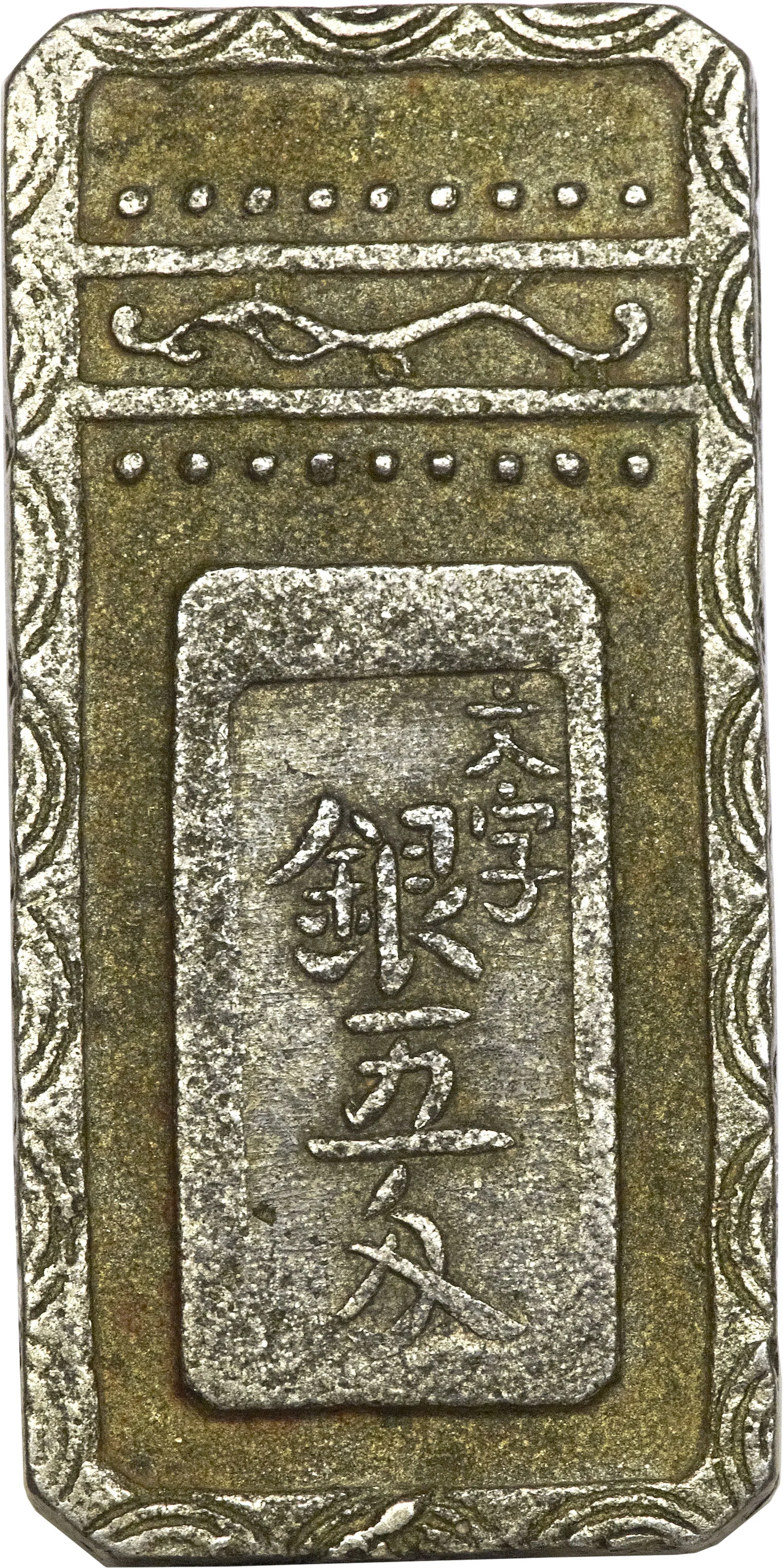
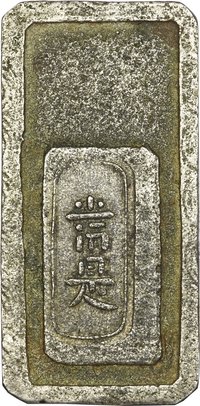
Wavy symbol between solid and dotted lines above. Raised field with value below, distinguishing it from unmarked ingots. Inscription "文字" (BUNJI) indicates fineness equal to Genbun Chōgin. Wave-patterned rim.
Inscription:
文
字
銀
五
匁
字
銀
五
匁
Script: Chinese
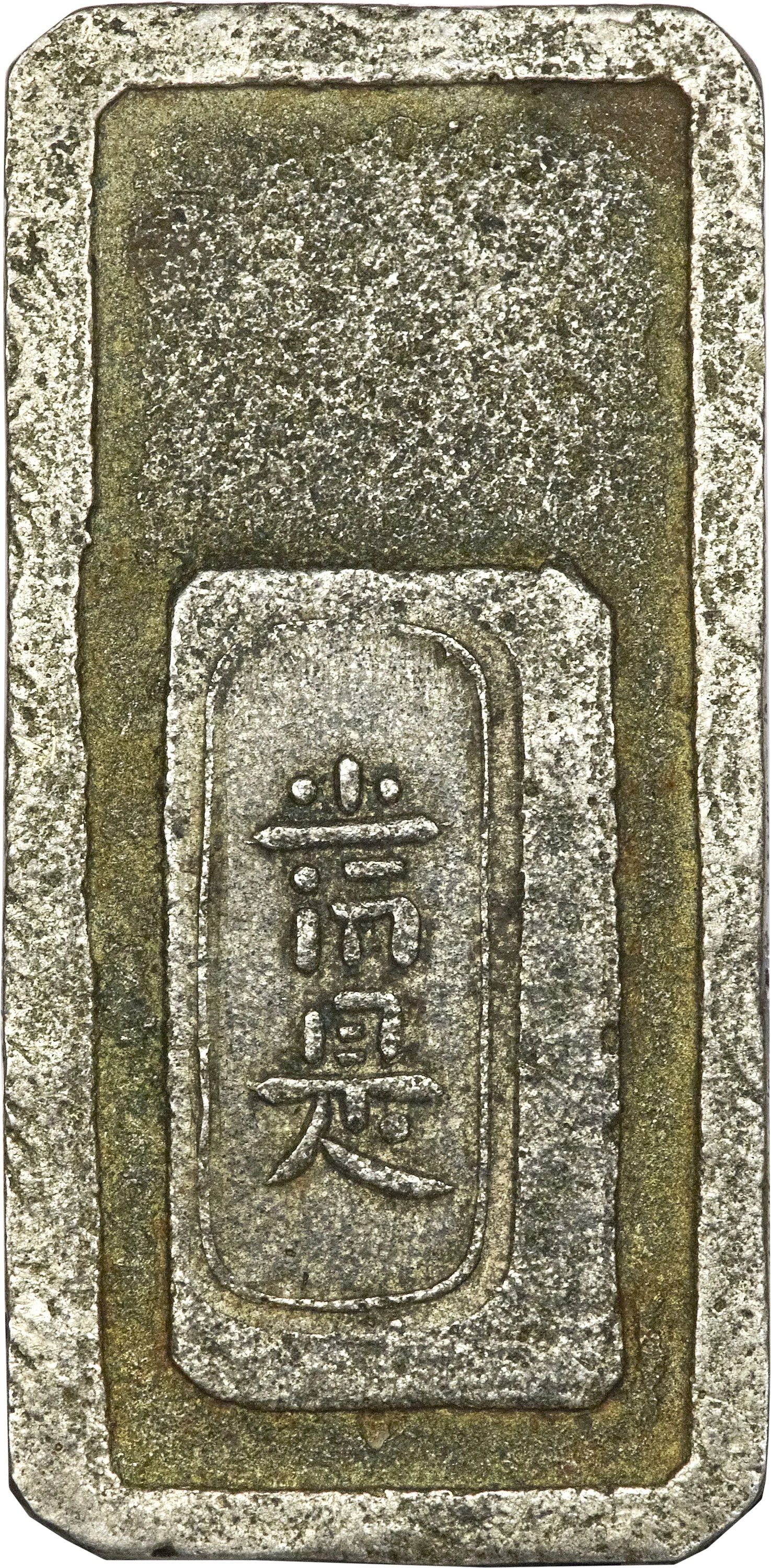
Reverse
Edge
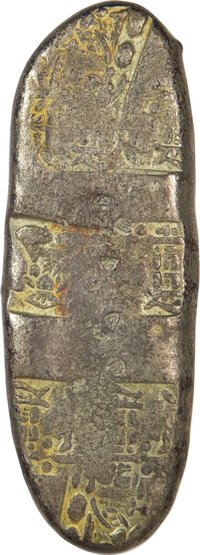
Stamped with the sakura cherry blossom symbol
Mintings
| Year | Mint Mark | Mintage | Quality | Collection |
|---|---|---|---|---|
| — | — | 361,280 |
Historical background
In 1765, Japan’s monetary system was a complex and strained tri-metallic structure of gold, silver, and copper, all under the exclusive control of the Tokugawa shogunate. The system was not nationally unified; gold was measured in weight (ryō), silver by weight in malleable chōgin bars, and copper in coin strings (mon), with exchange rates between them officially set but fluctuating in practice. This created significant friction for inter-domain trade, as different regions historically preferred different metals. Furthermore, the shogunate held the sole right to mint currency, a crucial source of its authority and revenue, but this monopoly was increasingly challenged by economic pressures.
The period was marked by chronic currency debasement, a primary tool used by the shogunate to address severe fiscal shortfalls. Facing mounting debts from lavish spending, natural disasters, and the fixed costs of the sankin-kōtai system, the government repeatedly reduced the precious metal content in coins while maintaining their face value. The most significant debasement had occurred under Shogun Tokugawa Yoshimune earlier in the century, but the financial strain persisted. By 1765, the economy was still reeling from the effects of these policies, which led to inflation, eroded public trust in currency, and sparked widespread counterfeiting as the value of intrinsic metal sometimes exceeded the coin's nominal worth.
This unstable monetary environment exacerbated the social and economic tensions of the mid-Tenmei era (1765-1780). While the shogunate profited from seigniorage in the short term, the debasement disproportionately harmed the samurai on fixed stipends and the poor, while benefiting merchant financiers and those with tangible assets. The situation also encouraged the rise of private credit instruments and hansatsu (domainal paper notes), as individual feudal domains began issuing their own scrip to circumvent the shortage of reliable central currency. Thus, by 1765, Japan's currency system was a key symptom and cause of the structural decline of the Tokugawa regime, caught between rigid political control and the dynamic forces of a commercializing economy.
The period was marked by chronic currency debasement, a primary tool used by the shogunate to address severe fiscal shortfalls. Facing mounting debts from lavish spending, natural disasters, and the fixed costs of the sankin-kōtai system, the government repeatedly reduced the precious metal content in coins while maintaining their face value. The most significant debasement had occurred under Shogun Tokugawa Yoshimune earlier in the century, but the financial strain persisted. By 1765, the economy was still reeling from the effects of these policies, which led to inflation, eroded public trust in currency, and sparked widespread counterfeiting as the value of intrinsic metal sometimes exceeded the coin's nominal worth.
This unstable monetary environment exacerbated the social and economic tensions of the mid-Tenmei era (1765-1780). While the shogunate profited from seigniorage in the short term, the debasement disproportionately harmed the samurai on fixed stipends and the poor, while benefiting merchant financiers and those with tangible assets. The situation also encouraged the rise of private credit instruments and hansatsu (domainal paper notes), as individual feudal domains began issuing their own scrip to circumvent the shortage of reliable central currency. Thus, by 1765, Japan's currency system was a key symptom and cause of the structural decline of the Tokugawa regime, caught between rigid political control and the dynamic forces of a commercializing economy.

✨ Legendary