

2 Dollars – Newfoundland
Canada
Context
Years: 1865–1888
Country: Canada 
Issuer: Newfoundland
Ruler: Victoria
Currency:
(1865—1949)
Total mintage: 98,575
Material
References
KM: #Click to copy to clipboard5
Numista: #16041
Value
Exchange value: 2 NFD
Bullion value: $509.13
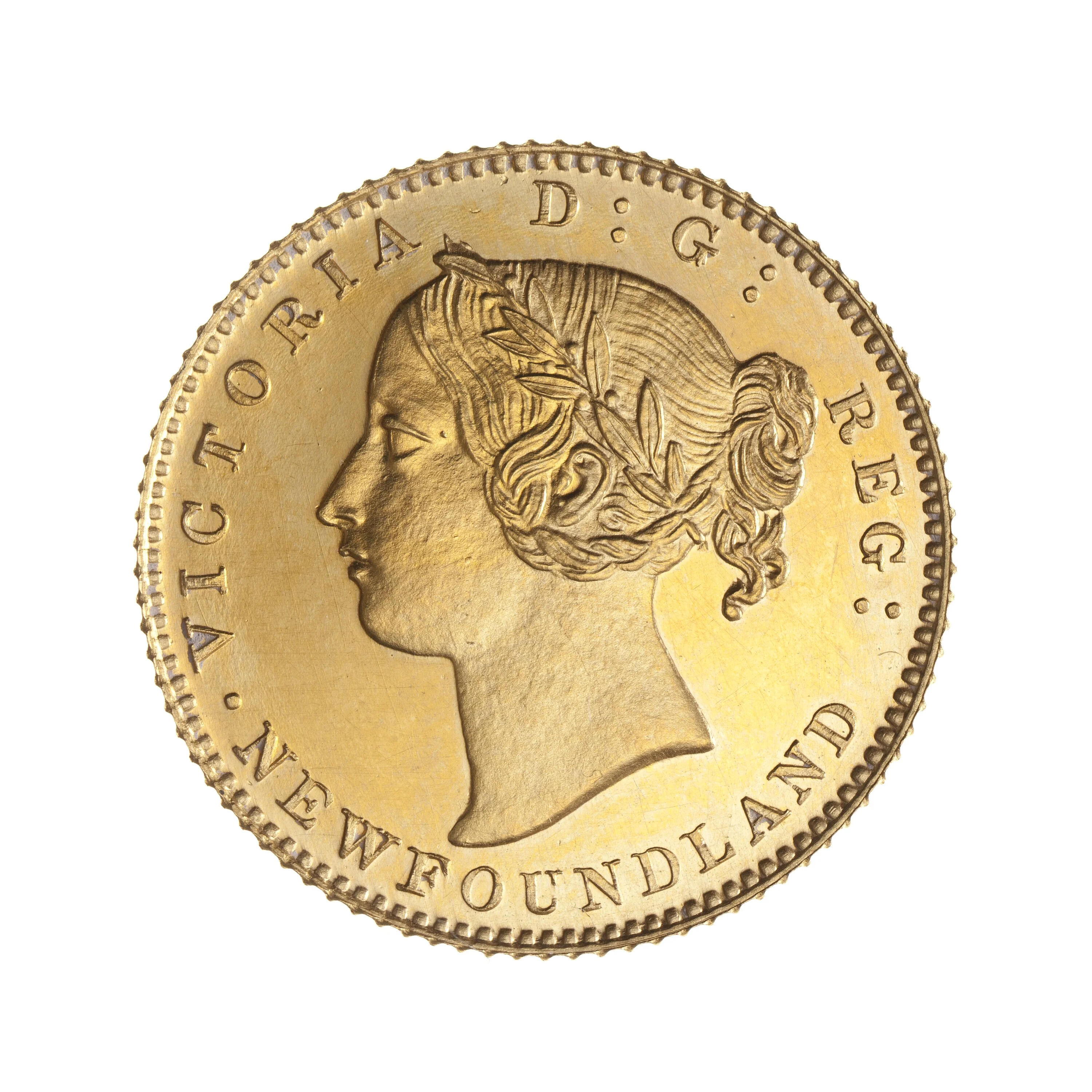
Obverse
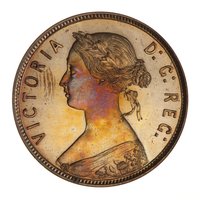
Description:
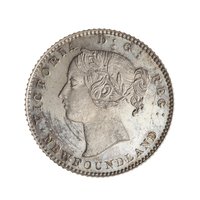
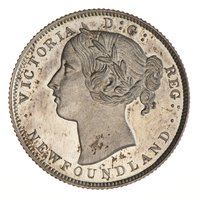
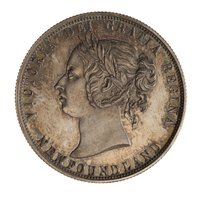
Queen Victoria facing left, legend encircling.
Inscription:
VICTORIA D : G : REG :
· NEWFOUNDLAND
· NEWFOUNDLAND
Translation:
Victoria by the Grace of God, Queen of Newfoundland
Script: Latin
Language: Latin
Engraver: Leonard Charles Wyon
Reverse
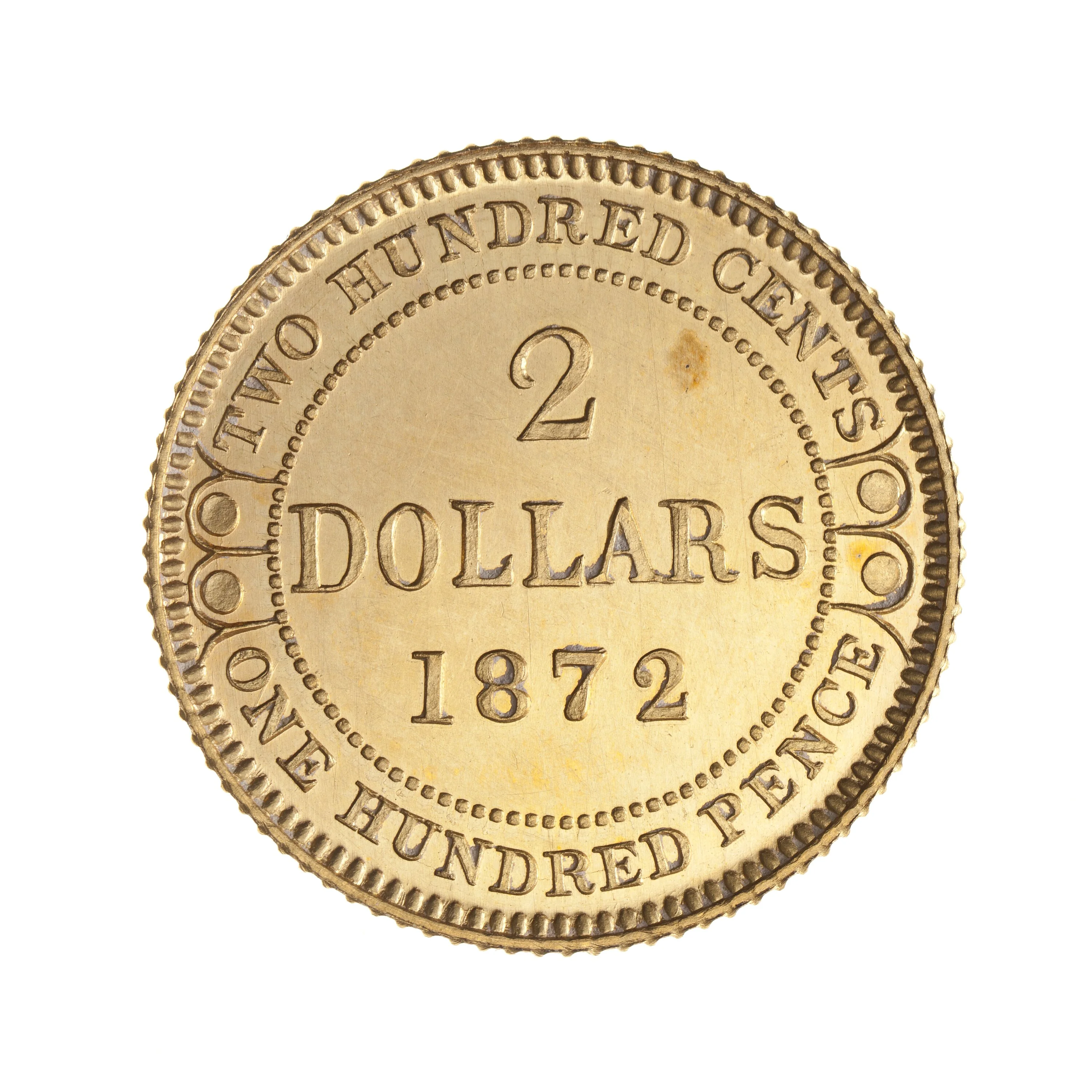
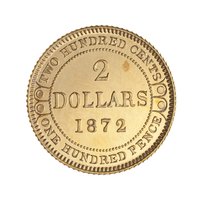
Description:
Face value and issue year in centre, encircled by text stating the full value in cents and pence.
Inscription:
TWO HUNDRED CENTS
2
DOLLARS
1885
ONE HUNDRED PENCE
2
DOLLARS
1885
ONE HUNDRED PENCE
Script: Latin
Engraver: Leonard Charles Wyon
Edge
Reeded
Mints
| Name | Mark |
|---|---|
| Royal Mint (Tower Hill) | — |
| Heaton and Sons / The Mint Birmingham | H |
Mintings
| Year | Mint Mark | Mintage | Quality | Collection |
|---|---|---|---|---|
| 1865 | — | 10,000 | ||
| 1865 | · | 5 | ||
| 1870 | — | 10,000 | ||
| 1870 | · | 10 | ||
| 1872 | — | 6,050 | ||
| 1872 | · | 10 | ||
| 1880 | — | 2,500 | ||
| 1880 | · | — | ||
| 1881 | — | 10,000 | ||
| 1881 | · | — | ||
| 1882 | H | 25,000 | ||
| 1882 | H· | — | ||
| 1885 | · | — | ||
| 1885 | — | 10,000 | ||
| 1888 | — | 25,000 | ||
| 1888 | · | — |
Historical background
In 1865, Newfoundland operated with a complex and often chaotic currency system, a direct reflection of its isolated colonial economy and lack of a unified banking structure. As a British colony not yet part of Canada, it lacked a standardized provincial coinage or paper money. Instead, its commerce relied on a confusing mixture of foreign coins, including British pounds, shillings, and pence, Spanish dollars, Portuguese joes, and even American gold coins, all circulating simultaneously. Their values fluctuated based on scarcity and the whims of local merchants, making everyday transactions cumbersome and prone to dispute.
This monetary disorder severely hampered economic development and trade. The government attempted to impose order by officially rating foreign coins in terms of sterling, but these "currency proclamations" were frequently ignored or adjusted in private commerce. The shortage of small change was a persistent problem, leading to the use of token coinage issued by local merchants and even makeshift paper notes, which further eroded public confidence. The instability discouraged outside investment and complicated government accounting, as revenues and expenditures were difficult to calculate with a fluctuating medium of exchange.
The situation underscored Newfoundland's broader political and economic uncertainties in the mid-1860s. While the neighbouring Maritime colonies were debating Confederation with Canada, Newfoundland was simultaneously considering its own future. The currency crisis became a tangible symbol of the colony's administrative challenges and isolation. It strengthened the arguments of both reformers, who saw a unified Canadian currency as a solution, and anti-Confederates, who feared losing local control. Ultimately, the monetary chaos of 1865 highlighted a critical need for financial reform, a issue that would remain unresolved until Newfoundland finally adopted the Canadian dollar upon joining Confederation in 1949.
This monetary disorder severely hampered economic development and trade. The government attempted to impose order by officially rating foreign coins in terms of sterling, but these "currency proclamations" were frequently ignored or adjusted in private commerce. The shortage of small change was a persistent problem, leading to the use of token coinage issued by local merchants and even makeshift paper notes, which further eroded public confidence. The instability discouraged outside investment and complicated government accounting, as revenues and expenditures were difficult to calculate with a fluctuating medium of exchange.
The situation underscored Newfoundland's broader political and economic uncertainties in the mid-1860s. While the neighbouring Maritime colonies were debating Confederation with Canada, Newfoundland was simultaneously considering its own future. The currency crisis became a tangible symbol of the colony's administrative challenges and isolation. It strengthened the arguments of both reformers, who saw a unified Canadian currency as a solution, and anti-Confederates, who feared losing local control. Ultimately, the monetary chaos of 1865 highlighted a critical need for financial reform, a issue that would remain unresolved until Newfoundland finally adopted the Canadian dollar upon joining Confederation in 1949.
⭐ Somewhat Rare