

50 Cents – Newfoundland
Canada
Context
Years: 1870–1900
Country: Canada 
Issuer: Newfoundland
Ruler: Victoria
Currency:
(1865—1949)
Total mintage: 799,000
Material
References
KM: #Click to copy to clipboard6
Numista: #6788
Value
Exchange value: 0.50 NFD
Bullion value: $30.20
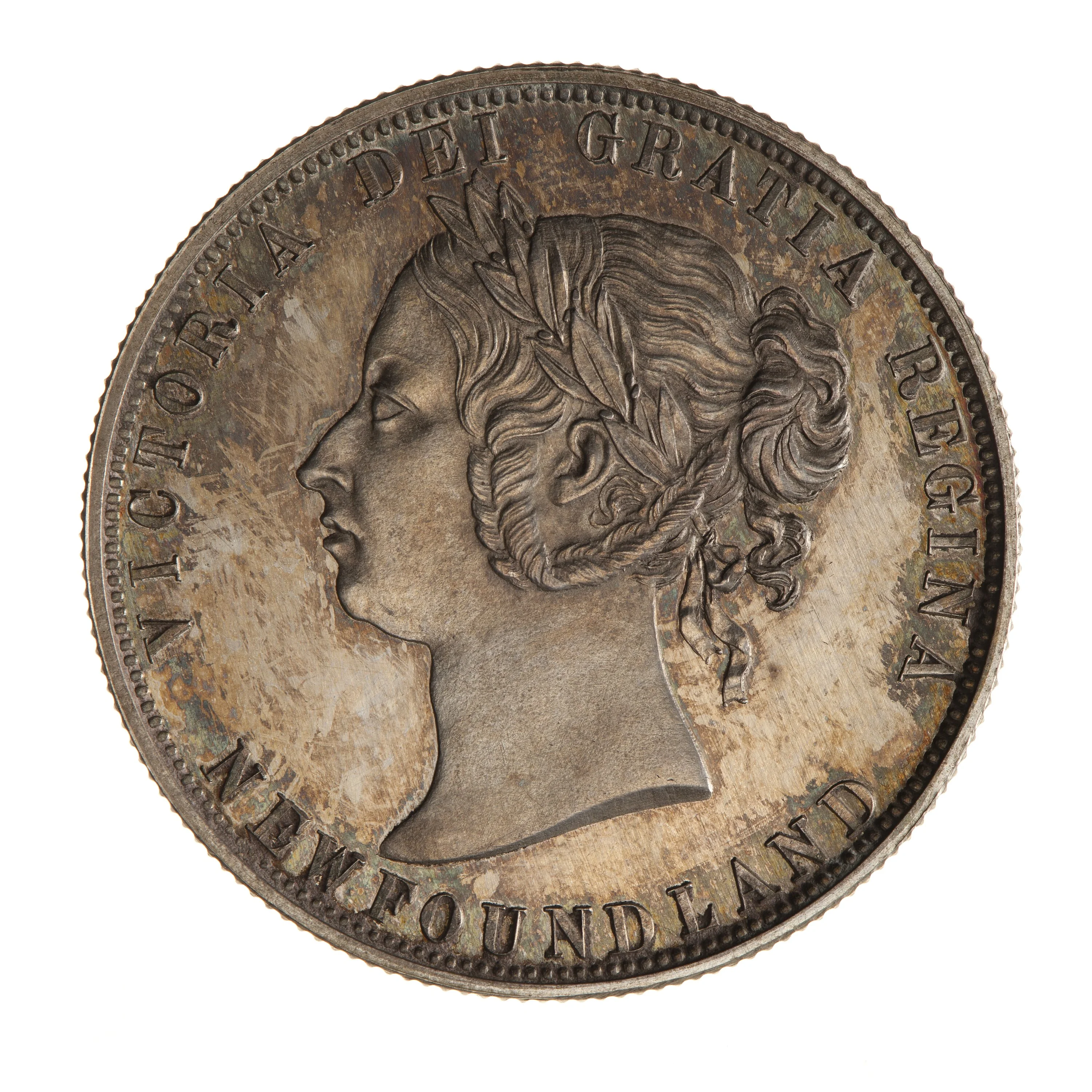
Obverse
Description:
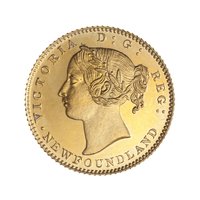
Queen Victoria in leftward profile.
Inscription:
VICTORIA DEI GRATIA REGINA
NEWFOUNDLAND
NEWFOUNDLAND
Translation:
Victoria by the Grace of God Queen
Newfoundland
Newfoundland
Script: Latin
Language: Latin
Engraver: Leonard Charles Wyon
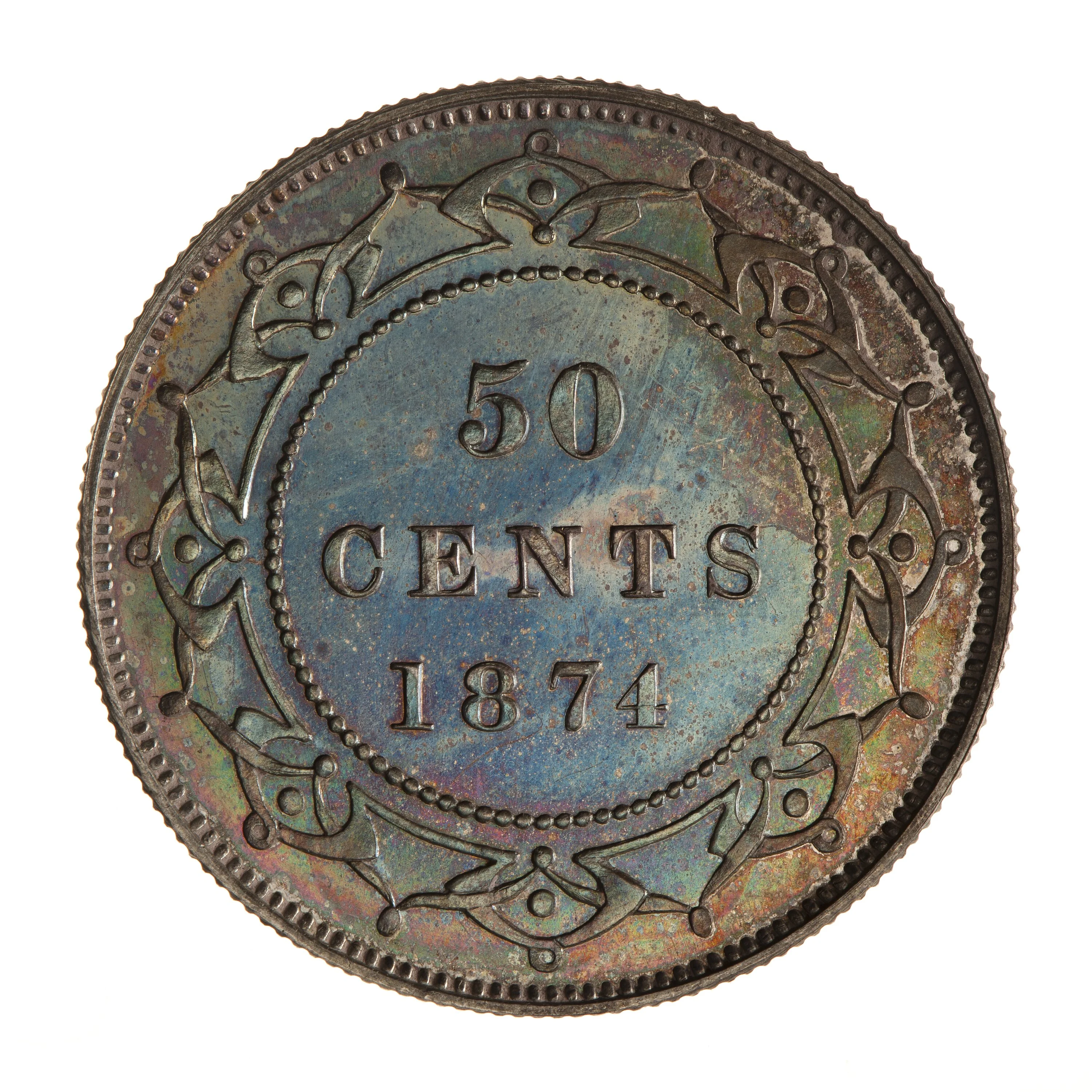
Reverse
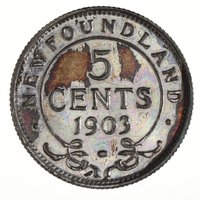
Description:
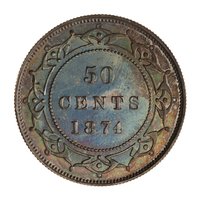
Face value and issue year centered within a decorative circle.
Inscription:
50
CENTS
1894
CENTS
1894
Script: Latin
Engraver: Leonard Charles Wyon
Edge
Reeded
Mints
| Name | Mark |
|---|---|
| Royal Mint (Tower Hill) | — |
| Heaton and Sons / The Mint Birmingham | H |
Mintings
| Year | Mint Mark | Mintage | Quality | Collection |
|---|---|---|---|---|
| 1870 | — | 50,000 | ||
| 1870 | — | — | Proof | |
| 1872 | H | 48,000 | ||
| 1873 | — | — | Proof | |
| 1873 | — | 32,000 | ||
| 1874 | — | — | Proof | |
| 1874 | — | 80,000 | ||
| 1876 | H | 28,000 | ||
| 1880 | — | 24,000 | ||
| 1880 | — | — | Proof | |
| 1881 | — | 50,000 | ||
| 1881 | — | — | Proof | |
| 1882 | H | — | Proof | |
| 1882 | H | 100,000 | ||
| 1885 | — | 40,000 | ||
| 1885 | — | — | Proof | |
| 1888 | — | 20,000 | ||
| 1888 | — | — | Proof | |
| 1894 | — | 40,000 | ||
| 1896 | — | 60,000 | ||
| 1896 | — | — | Proof | |
| 1898 | — | 77,000 | ||
| 1899 | — | — | ||
| 1900 | — | 150,000 |
Historical background
In 1870, Newfoundland operated with a complex and often chaotic currency system, a direct result of its status as a self-governing British colony without a standardized official coinage. The island's economy, heavily reliant on the seasonal cod fishery and trade with North America, the Caribbean, and Europe, was awash in a confusing mixture of foreign coins. Spanish dollars, British sovereigns and shillings, Portuguese joes, and American gold eagles all circulated simultaneously, their values fluctuating based on weight, metal content, and local merchant agreements. This lack of uniformity led to significant inconvenience and risk in everyday transactions, hindering commercial stability and economic development.
The colonial government had made previous attempts to impose order, notably by adopting the Spanish dollar as a standard unit of account in 1825 and later tying it to British sterling at a fixed rate. However, these measures were only partially successful. The real value of coins in hand often differed from their official "currency" value, leading to a dual system of "sterling" for government accounts and "currency" for local trade, with an awkward conversion rate. Furthermore, a chronic shortage of small change plagued the island, forcing merchants and individuals to resort to makeshift solutions like issuing private token coins or cutting larger coins into pieces to facilitate small transactions.
This unsatisfactory monetary environment was a key factor driving Newfoundland's political and financial leaders towards a more ambitious solution: the establishment of a local bank with the power to issue paper money. The year 1870 was, therefore, a pivotal moment on the cusp of change. Just a few years later, in 1874, the newly chartered Commercial Bank of Newfoundland would begin issuing the colony's first official banknotes, marking the beginning of a more standardized, though not yet uncomplicated, monetary system for the island.
The colonial government had made previous attempts to impose order, notably by adopting the Spanish dollar as a standard unit of account in 1825 and later tying it to British sterling at a fixed rate. However, these measures were only partially successful. The real value of coins in hand often differed from their official "currency" value, leading to a dual system of "sterling" for government accounts and "currency" for local trade, with an awkward conversion rate. Furthermore, a chronic shortage of small change plagued the island, forcing merchants and individuals to resort to makeshift solutions like issuing private token coins or cutting larger coins into pieces to facilitate small transactions.
This unsatisfactory monetary environment was a key factor driving Newfoundland's political and financial leaders towards a more ambitious solution: the establishment of a local bank with the power to issue paper money. The year 1870 was, therefore, a pivotal moment on the cusp of change. Just a few years later, in 1874, the newly chartered Commercial Bank of Newfoundland would begin issuing the colony's first official banknotes, marking the beginning of a more standardized, though not yet uncomplicated, monetary system for the island.
🌱 Common