

10 cents – Hong Kong
Add to wishlist
China
Context
Years: 1956–1980
Country: China
Issuer: Hong Kong
Ruler: Elizabeth II
Currency:
(since 1863)
Demonetization: 31 December 1988
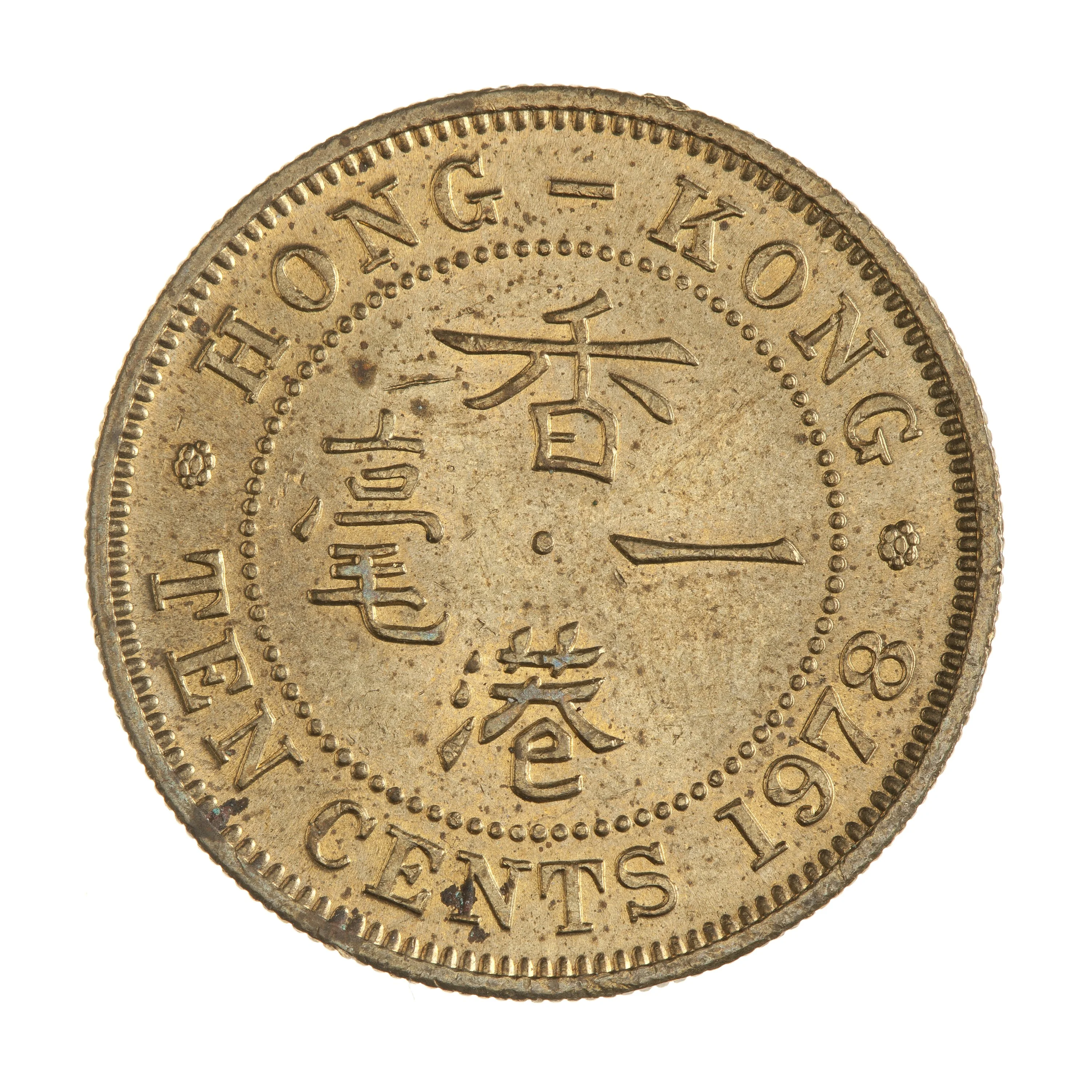
Total mintage: 276,690,000
Material
References
KM: #
Numista: #152637
Value
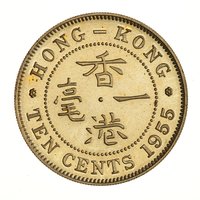
Exchange value: 0.10 HKD
Obverse
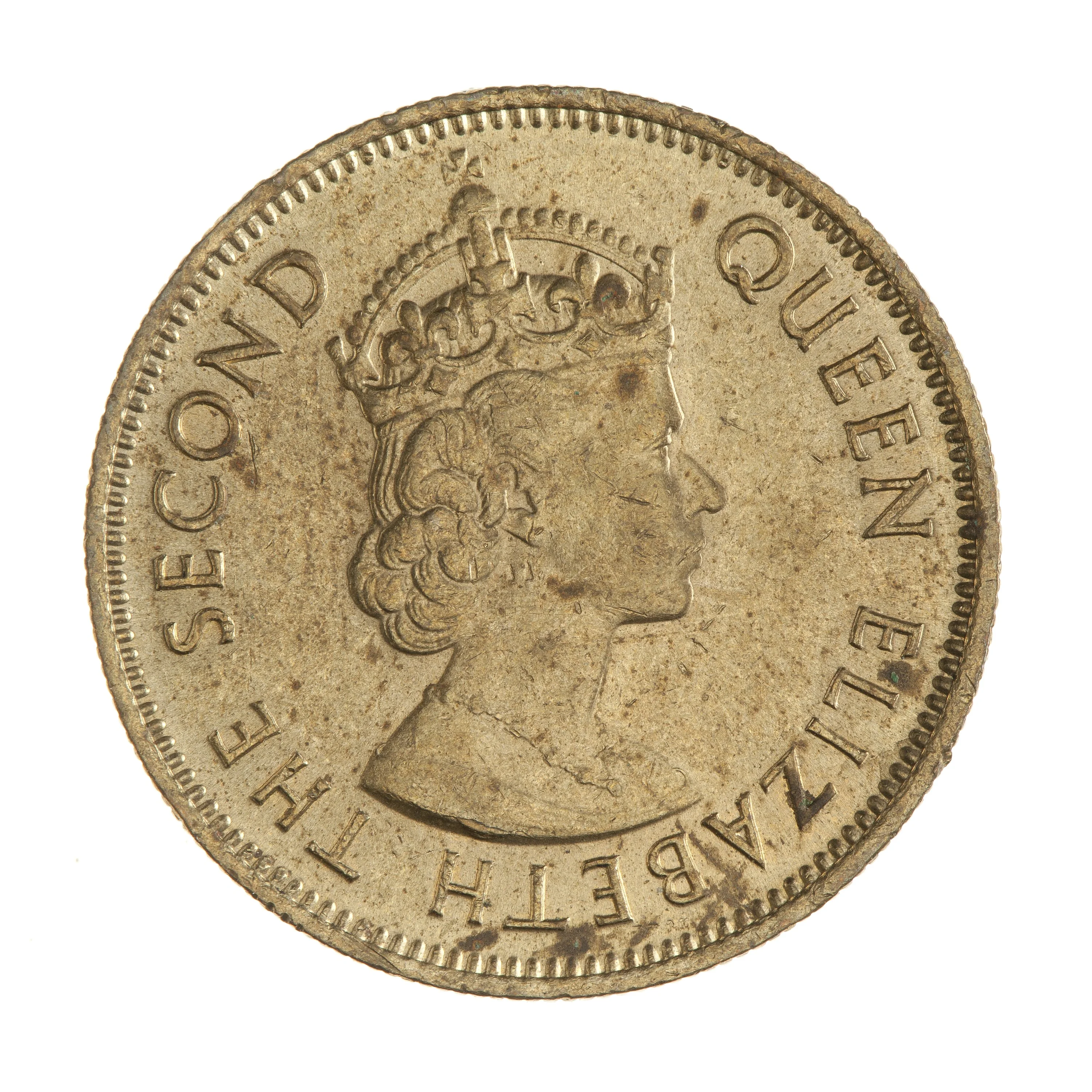
Description:
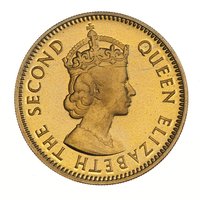
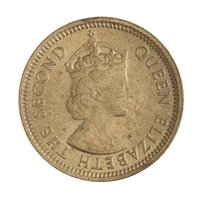
Right-facing crowned bust.
Inscription:
QUEEN ELIZABETH THE SECOND
Script: Latin
Engraver: Cecil Thomas
Reverse
Edge
Reeded
Mints
| Name | Mark |
|---|---|
| Royal Mint (Tower Hill) | — |
| Heaton and Sons / The Mint Birmingham | H |
| Kings Norton Metal Company | KN |
Mintings
Historical background
In 1956, Hong Kong operated under a colonial currency board system, with the Hong Kong dollar (HKD) pegged to sterling at a fixed rate of 1 HKD = 1 shilling 3 pence (or 16 HKD = £1). This arrangement, established in 1935, provided stability by requiring the note-issuing banks—The Hong Kong and Shanghai Banking Corporation (HSBC), Chartered Bank, and Mercantile Bank—to hold full sterling reserves for all issued banknotes. The colony's currency was essentially a sterling proxy, with its value and credibility directly tied to Britain's pound and the substantial foreign exchange reserves held in London.
Economically, the mid-1950s was a period of post-war reconstruction and industrialization, with trade and light manufacturing driving growth. The sterling peg facilitated stable exchange rates for Hong Kong's vital entrepôt trade and burgeoning exports. However, this system also meant Hong Kong's monetary policy was entirely subordinated to British interests, leaving it vulnerable to sterling crises and UK inflation. There was little domestic monetary control; credit availability was largely determined by the balance of payments and the commercial decisions of the note-issuing banks.
Politically, the currency's stability was a key pillar of colonial administration and business confidence. The year 1956 itself was marked by the Kowloon riots in October, sparked by political tensions over Nationalist and Communist symbols. While these riots had social and political causes, they did not trigger a currency crisis, underscoring the perceived robustness of the sterling-linked system. This stability was deemed essential for Hong Kong's role as a financial and trading hub, a consensus that would remain unchallenged until the sterling devaluation of 1967 forced a revaluation of the peg.
Economically, the mid-1950s was a period of post-war reconstruction and industrialization, with trade and light manufacturing driving growth. The sterling peg facilitated stable exchange rates for Hong Kong's vital entrepôt trade and burgeoning exports. However, this system also meant Hong Kong's monetary policy was entirely subordinated to British interests, leaving it vulnerable to sterling crises and UK inflation. There was little domestic monetary control; credit availability was largely determined by the balance of payments and the commercial decisions of the note-issuing banks.
Politically, the currency's stability was a key pillar of colonial administration and business confidence. The year 1956 itself was marked by the Kowloon riots in October, sparked by political tensions over Nationalist and Communist symbols. While these riots had social and political causes, they did not trigger a currency crisis, underscoring the perceived robustness of the sterling-linked system. This stability was deemed essential for Hong Kong's role as a financial and trading hub, a consensus that would remain unchallenged until the sterling devaluation of 1967 forced a revaluation of the peg.
🌱 Very Common