

1 krona – Sweden
Add to wishlist
Sweden
Context
Years: 1982–2000
Issuer: Sweden
Ruler: Carl XVI Gustaf
Currency:
(since 1873)
Demonetization: 30 June 2017
Total mintage: 513,257,922
Material
References
KM: #
Numista: #6862
Value
Exchange value: 1 SEK
Inflation-adjusted value: 3.75 SEK
Obverse
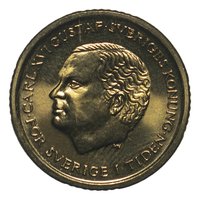
Description:
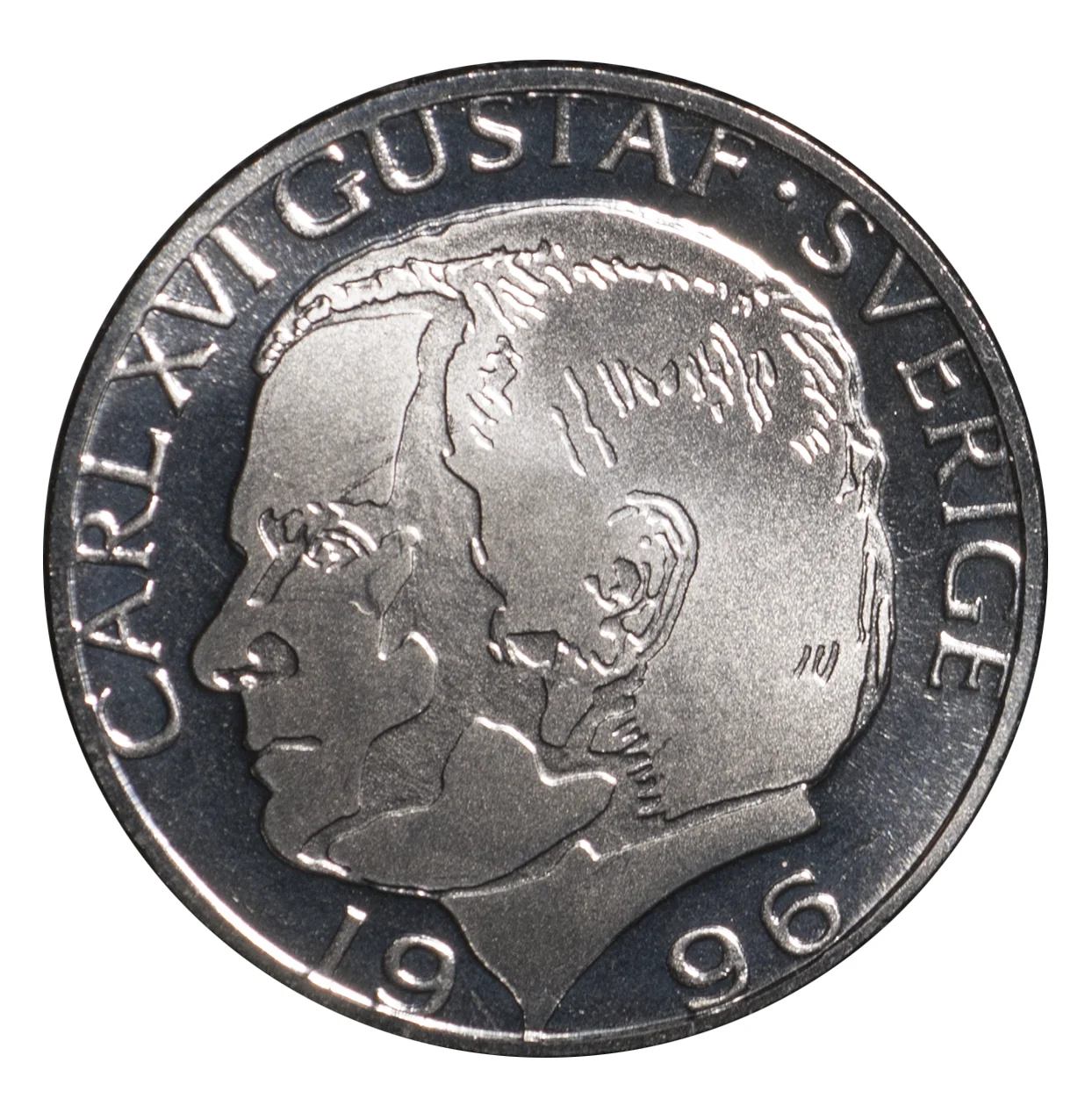
King Carl XVI Gustaf, stylized portrait facing left.
Inscription:
CARL XVI GUSTAF · SVERIGE
19 92
19 92
Translation:
CARL XVI GUSTAF · SWEDEN
19 92
19 92
Script: Latin
Engraver: Lars Englund
Reverse
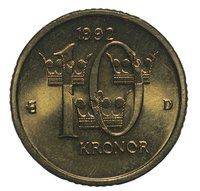
Description:
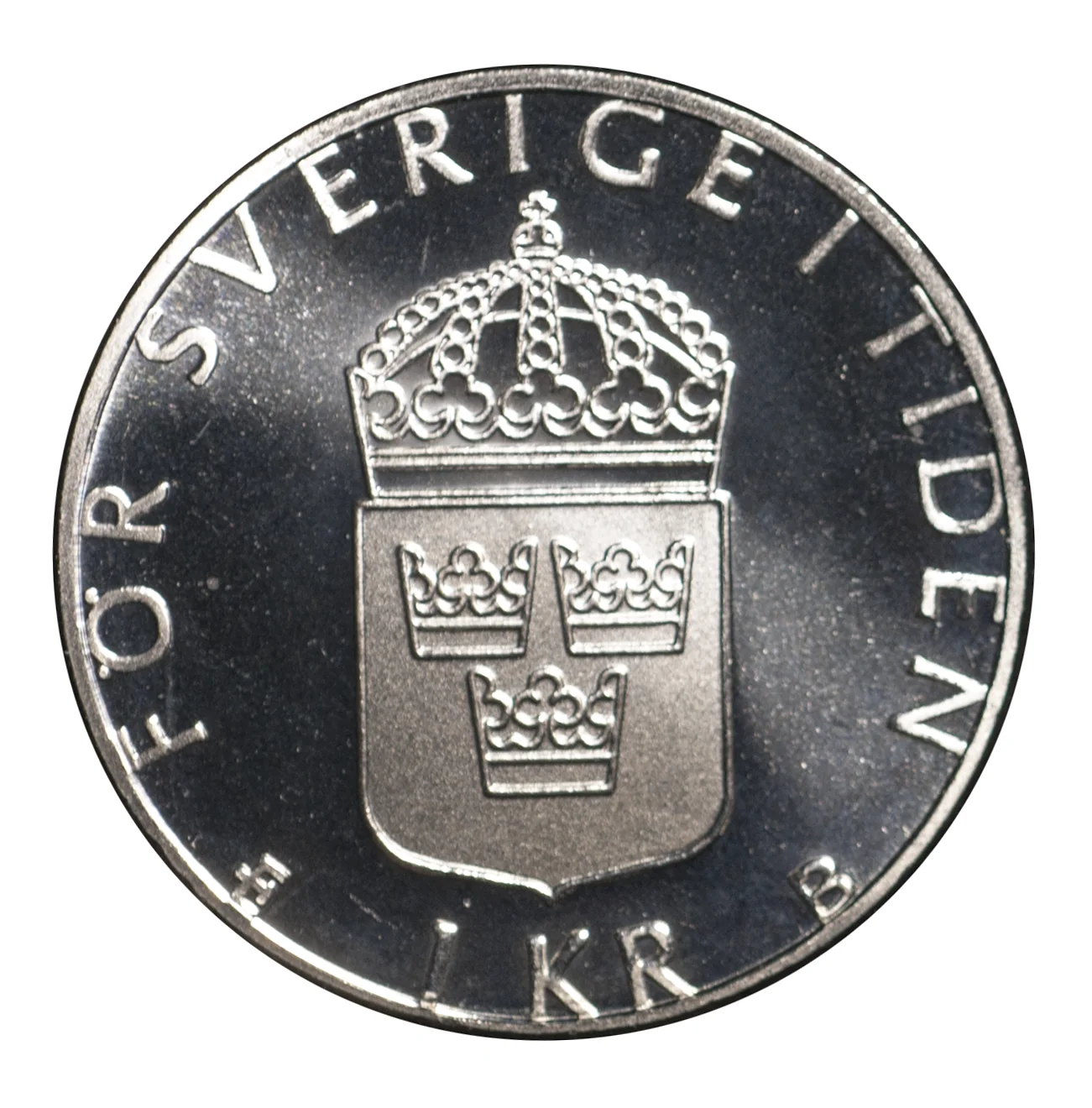
Swedish lesser coat-of-arms with motto above, denomination below, mintmark left, and governor's initial right.
Inscription:
FÖR SVERIGE I TIDEN
E 1 KR B
E 1 KR B
Translation:
For Sweden in time
E 1 KR B
E 1 KR B
Script: Latin
Language: Swedish
Engraver: Lars Englund
Edge
Reeded
Categories
| Person> Monarch |
| Symbols> Coat of Arms |
Mints
| Name | Mark |
|---|---|
| Myntverket | — |
Mintings
| Year | Mint Mark | Mintage | Quality | Collection |
|---|---|---|---|---|
| 1982 | — | 24,768,554 | ||
| 1983 | — | 23,462,717 | ||
| 1984 | — | 37,730,643 | ||
| 1985 | — | 4,848,817 | ||
| 1986 | — | 829,940 | ||
| 1987 | — | 21,467,657 | ||
| 1988 | — | 30,280,274 | ||
| 1989 | — | 55,899,083 | ||
| 1990 | — | 54,407,777 | ||
| 1991 | — | 34,179,398 | ||
| 1992 | — | — | ||
| 1993 | — | 339,768 | ||
| 1994 | — | 502,946 | ||
| 1995 | — | 433,572 | ||
| 1996 | — | 270,346 | ||
| 1997 | — | 24,992,874 | ||
| 1998 | — | 39,700,954 | ||
| 1999 | — | 54,972,649 | ||
| 2000 | — | 104,169,953 |
Historical background
In 1982, Sweden found itself in a severe economic crisis, marked by a phenomenon known as "the third devaluation wave." The Swedish krona, which had been pegged to a trade-weighted currency basket since the 1970s, was under intense speculative pressure. The country was grappling with a deep industrial recession, soaring inflation, large budget deficits, and a rapidly deteriorating current account balance. This toxic mix eroded international confidence in the krona, leading to massive capital flight as investors anticipated an inevitable devaluation.
The Social Democratic government, led by Prime Minister Olof Palme who had just returned to power, faced a critical decision. Previous devaluations in 1976 and 1981 had provided only temporary relief, and a policy of defending the peg with high interest rates was strangling the domestic economy. The core of the problem was a profound loss of competitiveness; Swedish industry's costs had risen far faster than those of its international competitors, making exports unprofitable and leading to widespread industrial job losses.
On October 8, 1982, the government executed a dramatic and decisive policy shift, devaluing the krona by an unprecedented 16%. This was not merely a currency adjustment but the centerpiece of a calculated economic strategy, later termed the "Third Way" or the "devaluation policy." The aim was to swiftly restore profitability to the export sector, boost industrial production, and create jobs, while using the regained economic breathing room to pursue disciplined fiscal policies and protect the welfare state. This devaluation became the pivotal foundation for Sweden's economic recovery and restructuring throughout the 1980s.
The Social Democratic government, led by Prime Minister Olof Palme who had just returned to power, faced a critical decision. Previous devaluations in 1976 and 1981 had provided only temporary relief, and a policy of defending the peg with high interest rates was strangling the domestic economy. The core of the problem was a profound loss of competitiveness; Swedish industry's costs had risen far faster than those of its international competitors, making exports unprofitable and leading to widespread industrial job losses.
On October 8, 1982, the government executed a dramatic and decisive policy shift, devaluing the krona by an unprecedented 16%. This was not merely a currency adjustment but the centerpiece of a calculated economic strategy, later termed the "Third Way" or the "devaluation policy." The aim was to swiftly restore profitability to the export sector, boost industrial production, and create jobs, while using the regained economic breathing room to pursue disciplined fiscal policies and protect the welfare state. This devaluation became the pivotal foundation for Sweden's economic recovery and restructuring throughout the 1980s.
🌱 Very Common