

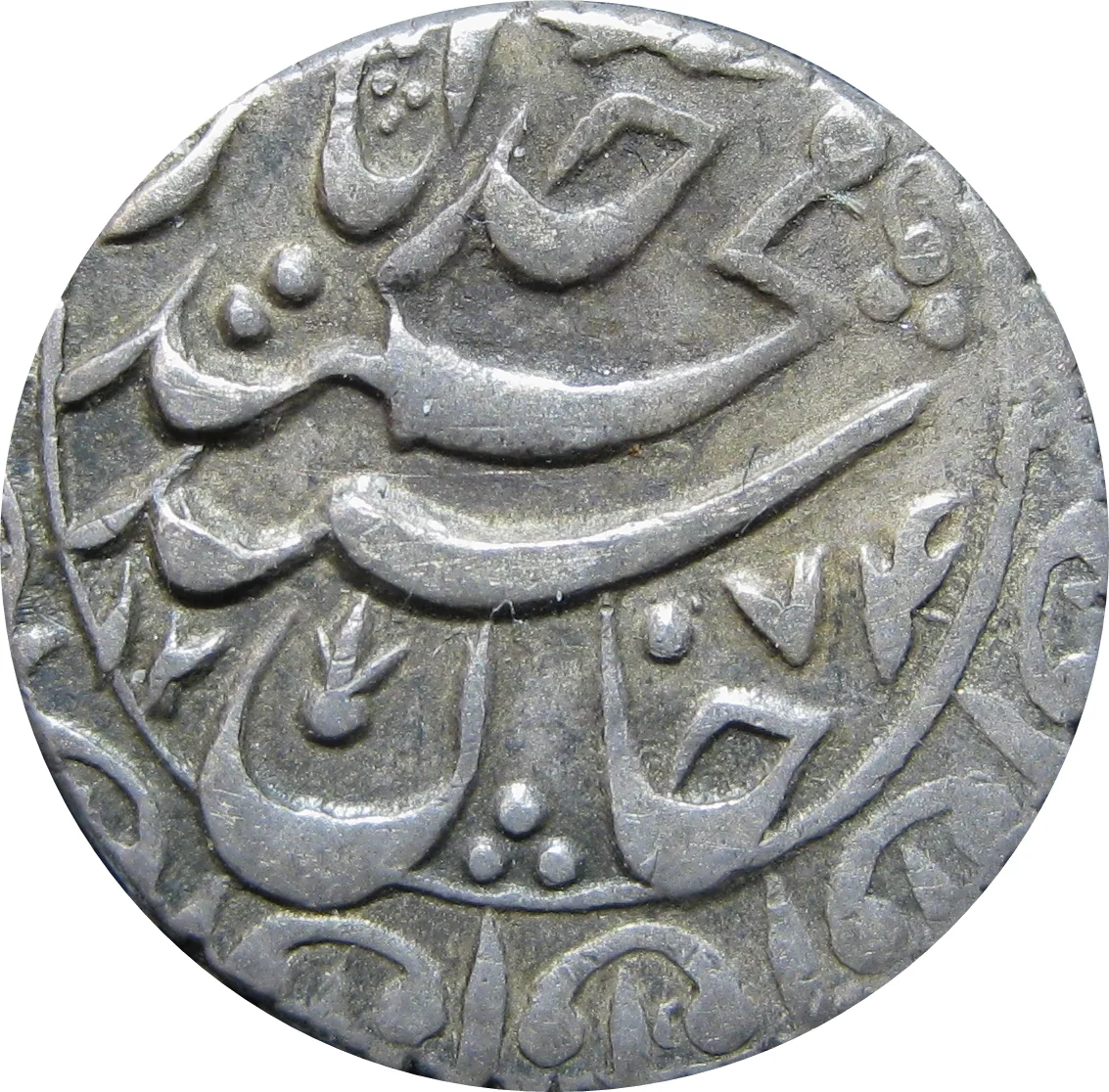
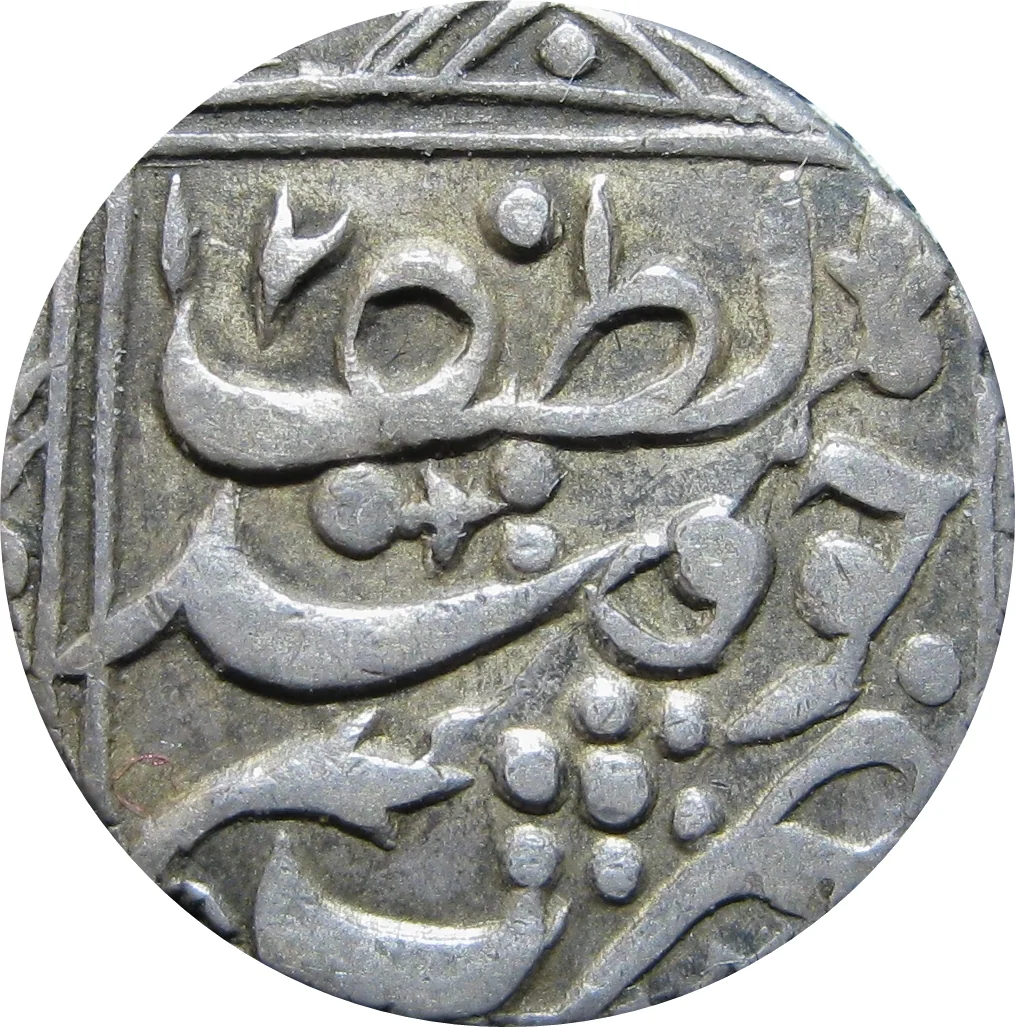
1 Tenga – Khoqand Khanate
Context
Years: 1853–1859
Country: Central Asia
Issuer: Khoqand Khanate
Ruler: Muhammad Khudayar Khan
Currency:
(1796—1876)
Demonetized: Yes
Material
Diameter: 17.3 mm
Weight: 3 g
Silver weight: 3.00 g
Thickness: 1.7 mm
Shape: Irregular round
Composition: Silver
Magnetic: No
References
Numista: #155579
Value
Bullion value: $8.49
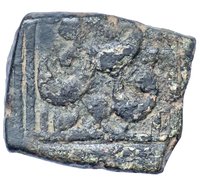
Obverse
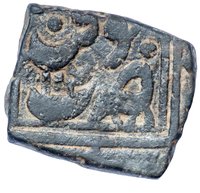
Reverse
Edge
Mintings
| Year | Mint Mark | Mintage | Quality | Collection |
|---|---|---|---|---|
| 1853 | — | — | ||
| 1854 | — | — | ||
| 1855 | — | — | ||
| 1856 | — | — | ||
| 1857 | — | — | ||
| 1858 | — | — | ||
| 1859 | — | — |
Historical background
By 1853, the currency system of the Khoqand Khanate was in a state of severe crisis, reflecting the broader political and economic instability of the state. For decades, the Khanate had financed its military expansion and administrative costs through the debasement of its primary silver coin, the tanga. Successive khans, particularly in the 1840s under Madali Khan, had progressively reduced the silver content, replacing it with copper and issuing vast quantities of nearly pure copper coins with a forced silver face value. This practice led to rampant inflation, a collapse in public trust, and the circulation of heavily discounted, poor-quality coins alongside older, full-value tangas, creating a chaotic multi-tiered monetary environment.
The situation was exacerbated by intense geopolitical pressure. The Khanate was engaged in a costly struggle with the Emirate of Bukhara and faced the advancing imperial forces of the Russian Empire, which had begun establishing forts in the Syr-Darya region. The need to fund armies and fortifications placed an unbearable strain on the treasury, making currency debasement the government's primary fiscal tool. By 1853, the silver tanga had effectively become a token coin, with its real value determined by its metal content rather than its denomination, causing hardship for the population and distorting trade.
This monetary collapse was both a symptom and a cause of the Khanate's weakening sovereignty. The devalued currency disrupted internal commerce and tax collection, while foreign merchants and neighboring states increasingly rejected Khoqand's coinage. The chaos provided a pretext for Russian criticism of Khoqand's governance and undermined the Khan's authority. Thus, in 1853, the faltering currency system mirrored the Khanate itself: superficially functioning but fundamentally eroded, heading toward the decisive conflicts and eventual Russian annexation that would follow within the next two decades.
The situation was exacerbated by intense geopolitical pressure. The Khanate was engaged in a costly struggle with the Emirate of Bukhara and faced the advancing imperial forces of the Russian Empire, which had begun establishing forts in the Syr-Darya region. The need to fund armies and fortifications placed an unbearable strain on the treasury, making currency debasement the government's primary fiscal tool. By 1853, the silver tanga had effectively become a token coin, with its real value determined by its metal content rather than its denomination, causing hardship for the population and distorting trade.
This monetary collapse was both a symptom and a cause of the Khanate's weakening sovereignty. The devalued currency disrupted internal commerce and tax collection, while foreign merchants and neighboring states increasingly rejected Khoqand's coinage. The chaos provided a pretext for Russian criticism of Khoqand's governance and undermined the Khan's authority. Thus, in 1853, the faltering currency system mirrored the Khanate itself: superficially functioning but fundamentally eroded, heading toward the decisive conflicts and eventual Russian annexation that would follow within the next two decades.
✨ Legendary