

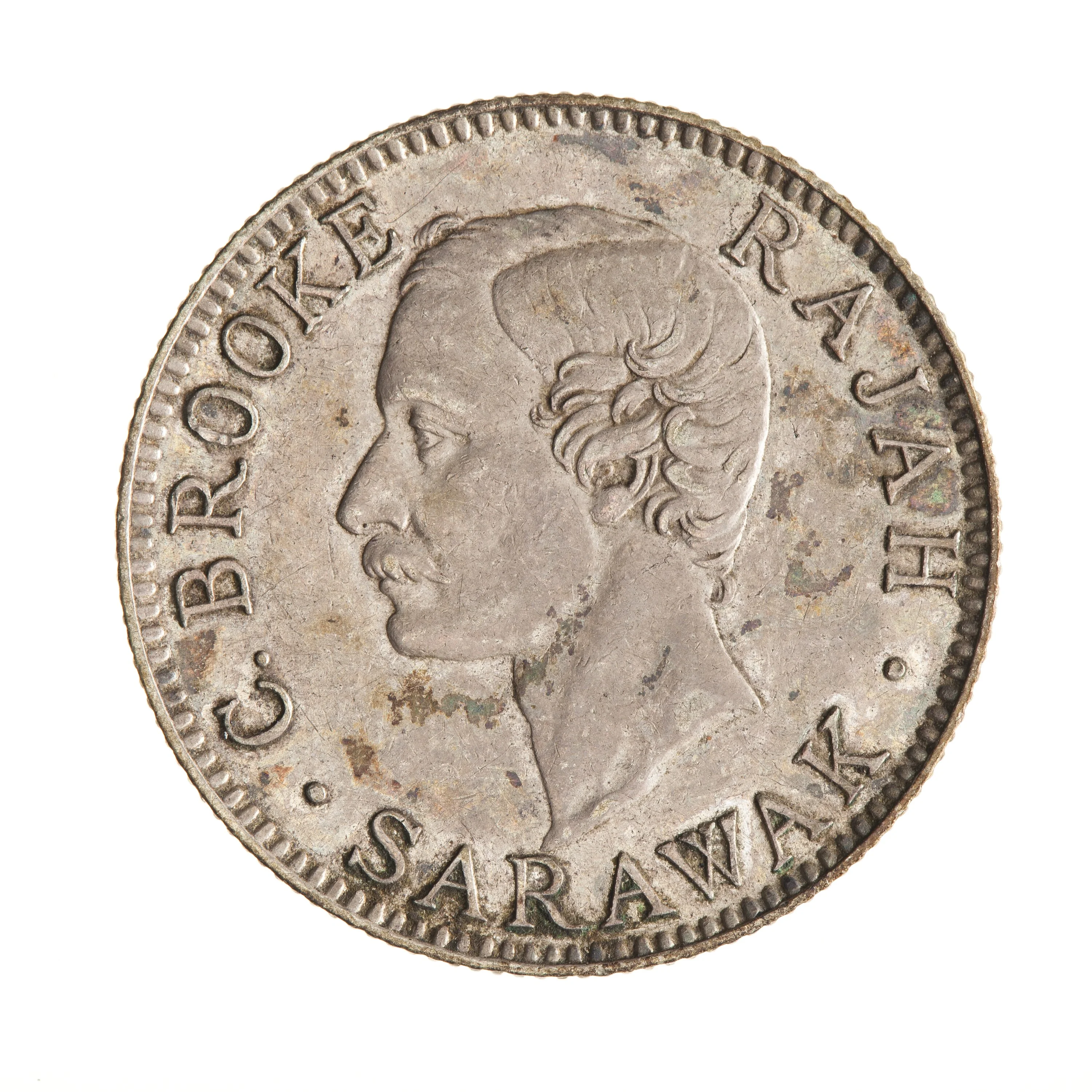
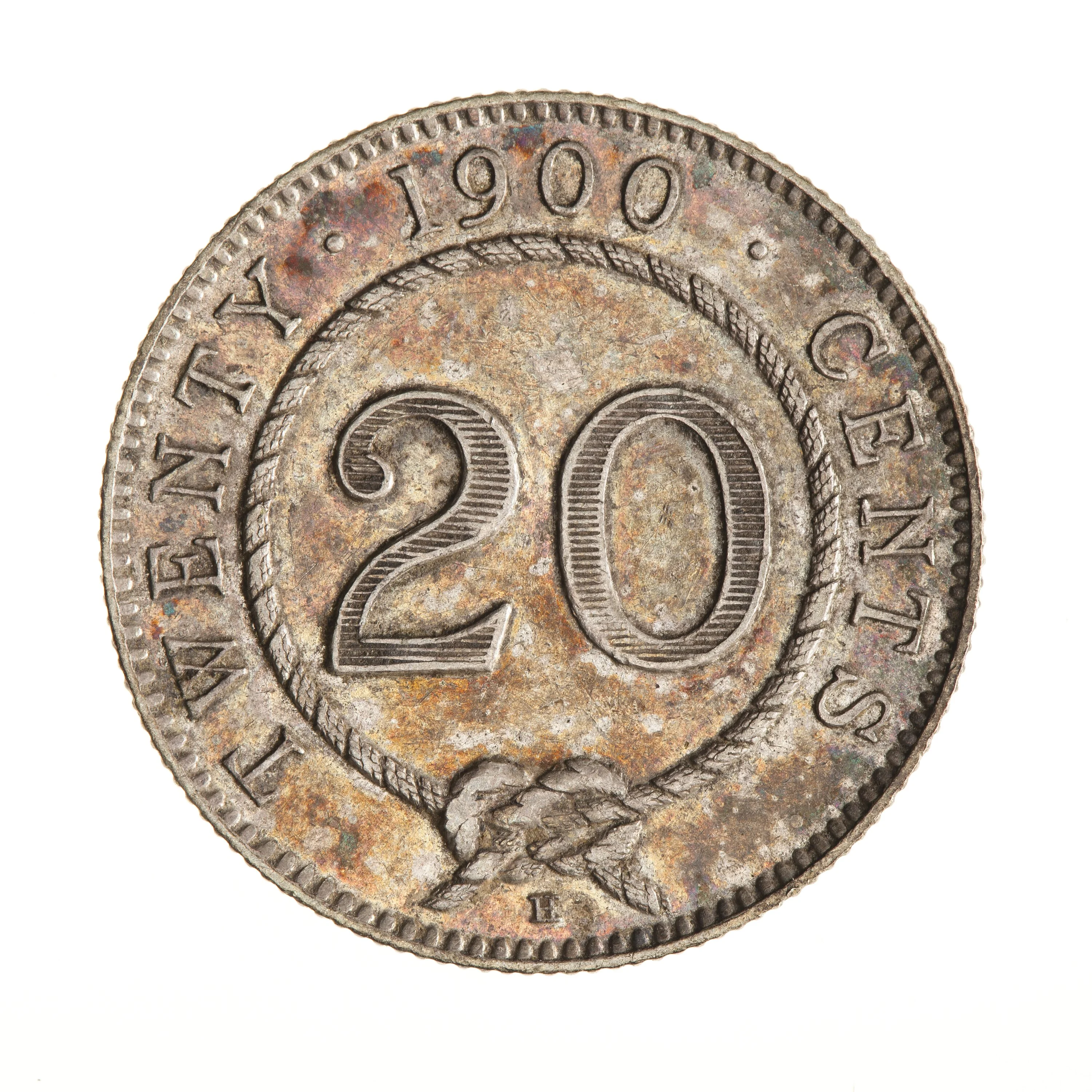
20 Cents – Sarawak
Malaysia
Context
Years: 1900–1915
Country: Malaysia 
Issuer: Sarawak
Ruler: Charles Brooke
Currency:
(1868—1946)
Demonetized: Yes
Total mintage: 190,000
Material
References
KM: #Click to copy to clipboard10
Numista: #15547
Value
Bullion value: $12.56
Obverse
Reverse
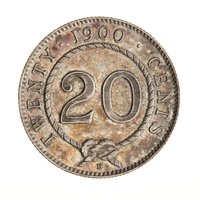
Description:
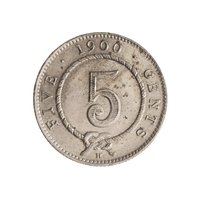
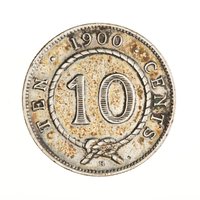
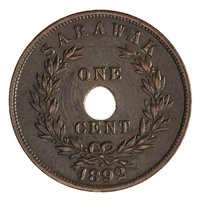
Rope value, date top, left and right values.
Inscription:
TWENTY · 1915 · CENTS
20
20
Script: Latin
Edge
Reeded
Mints
| Name | Mark |
|---|---|
| Heaton and Sons / The Mint Birmingham | H |
Mintings
Historical background
In 1900, Sarawak was an independent state under the rule of the White Rajahs, the Brooke family, but its monetary system was a complex and informal patchwork dominated by foreign coinage. The official currency, as declared by Rajah Charles Brooke, was the Straits Settlements dollar, issued by the British in Singapore. However, this coin was often in short supply for local transactions, leading to a reliance on more accessible alternatives.
The everyday economy was saturated with a variety of subsidiary coins. The most ubiquitous was the British North Borneo Company's one-cent coin, known locally as the "keping," which formed the backbone of small-scale trade. Alongside these, Dutch guilders and cents, Spanish and Mexican silver dollars (carried over from older regional trade), and even Chinese copper cash coins circulated freely. This created a confusing system where merchants and villagers had to be adept at calculating exchange rates between multiple currencies.
This monetary heterogeneity reflected Sarawak's economic reality: it was a cash-poor territory with a small export economy (primarily rubber, pepper, and sago) and a large subsistence sector. The government's limited capacity to impose a uniform currency meant that practical necessity dictated acceptance of whatever coins were available. Consequently, the 1900 currency situation was one of de facto pluralism, with the Rajah's official standard existing alongside a deeply entrenched and necessary circulation of foreign and private token coinage that kept the local markets functioning.
The everyday economy was saturated with a variety of subsidiary coins. The most ubiquitous was the British North Borneo Company's one-cent coin, known locally as the "keping," which formed the backbone of small-scale trade. Alongside these, Dutch guilders and cents, Spanish and Mexican silver dollars (carried over from older regional trade), and even Chinese copper cash coins circulated freely. This created a confusing system where merchants and villagers had to be adept at calculating exchange rates between multiple currencies.
This monetary heterogeneity reflected Sarawak's economic reality: it was a cash-poor territory with a small export economy (primarily rubber, pepper, and sago) and a large subsistence sector. The government's limited capacity to impose a uniform currency meant that practical necessity dictated acceptance of whatever coins were available. Consequently, the 1900 currency situation was one of de facto pluralism, with the Rajah's official standard existing alongside a deeply entrenched and necessary circulation of foreign and private token coinage that kept the local markets functioning.
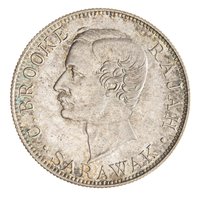
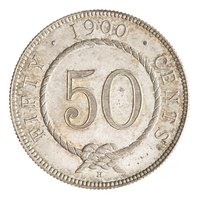
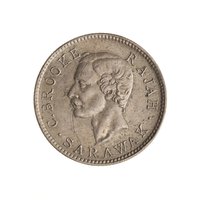
Series: 1900 Sarawak circulation coins
💎 Very Rare