

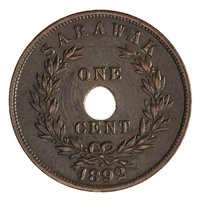
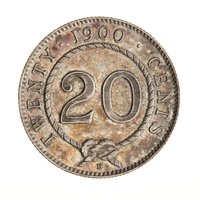
1 Cent – Sarawak
Malaysia
Context
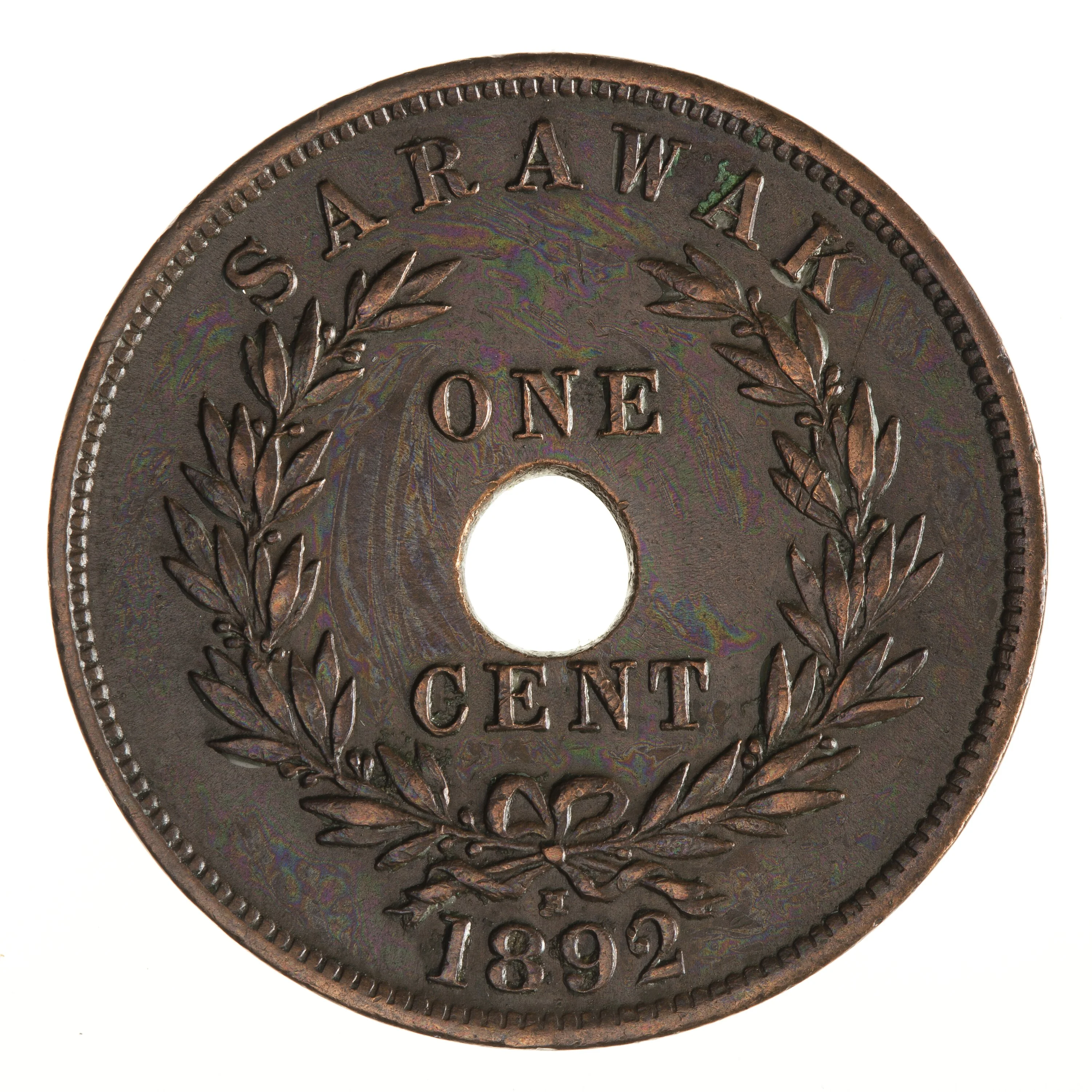
Years: 1892–1897
Country: Malaysia 
Issuer: Sarawak
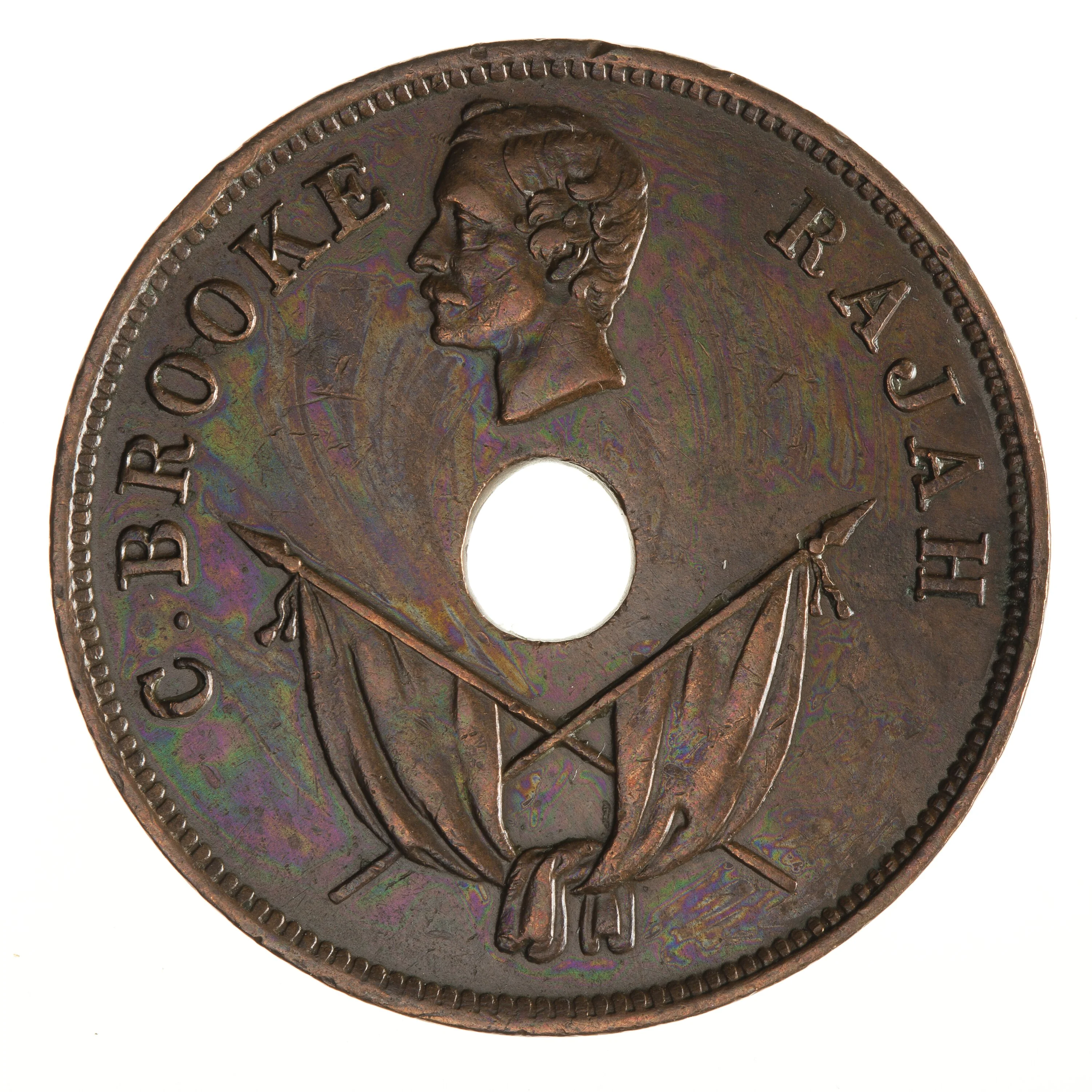
Ruler: Charles Brooke
Currency:
(1868—1946)
Demonetized: Yes
Total mintage: 8,712,000
Material
Diameter: 29.4 mm
Weight: 9.1 g
Thickness: 1.9 mm
Shape: Round with a round hole
Composition: Copper
Magnetic: No
Technique: Milled
Alignment: Medal alignment
flip
References
KM: #Click to copy to clipboard7
Numista: #15542
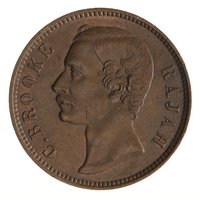
Obverse
Reverse
Edge
Plain
Mints
| Name | Mark |
|---|---|
| Heaton and Sons / The Mint Birmingham | H |
Mintings
Historical background
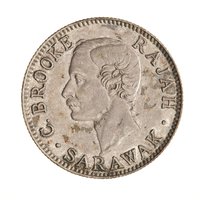
In 1892, Sarawak's currency situation was a complex tapestry of multiple systems, reflecting its unique political status and its position within regional trade networks. As the independent Raj of Sarawak, ruled by the White Rajah Charles Brooke, the state was not yet part of the British colonial monetary system. The primary official currency was the Sarawak dollar, first issued by Rajah Charles in 1863. These silver coins, minted in Birmingham and bearing his profile, were valued at par with the Spanish dollar and the later British trade dollar, establishing a local standard intended to unify commerce.
However, the official coinage circulated alongside a plethora of other currencies, creating a practical bazaar economy. Spanish and Mexican silver dollars, Dutch guilders from the neighbouring Netherlands East Indies, and even the British Straits Settlements dollar were all commonly used in daily transactions, particularly in coastal trading centres. This multiplicity was driven by Sarawak's vibrant trade in jungle produce (like gutta-percha and rattan) and the movement of Chinese, Malay, and Dayak traders. The value of these coins was determined by their intrinsic silver weight and their condition, leading to constant assay and discounting.
This fragmented system presented challenges for administration and business, prompting the Brooke government to take firmer control. The 1890s saw a push to formalise the Sarawak dollar as the sole legal tender, a policy aimed at strengthening the Raj's sovereignty and economic integration. By 1892, the government was increasingly insisting on tax payments and official business being conducted in its own coinage, setting the stage for the more unified currency system that would be fully realised under the Coinage Ordinance of 1906.
However, the official coinage circulated alongside a plethora of other currencies, creating a practical bazaar economy. Spanish and Mexican silver dollars, Dutch guilders from the neighbouring Netherlands East Indies, and even the British Straits Settlements dollar were all commonly used in daily transactions, particularly in coastal trading centres. This multiplicity was driven by Sarawak's vibrant trade in jungle produce (like gutta-percha and rattan) and the movement of Chinese, Malay, and Dayak traders. The value of these coins was determined by their intrinsic silver weight and their condition, leading to constant assay and discounting.
This fragmented system presented challenges for administration and business, prompting the Brooke government to take firmer control. The 1890s saw a push to formalise the Sarawak dollar as the sole legal tender, a policy aimed at strengthening the Raj's sovereignty and economic integration. By 1892, the government was increasingly insisting on tax payments and official business being conducted in its own coinage, setting the stage for the more unified currency system that would be fully realised under the Coinage Ordinance of 1906.
🌱 Fairly Common