

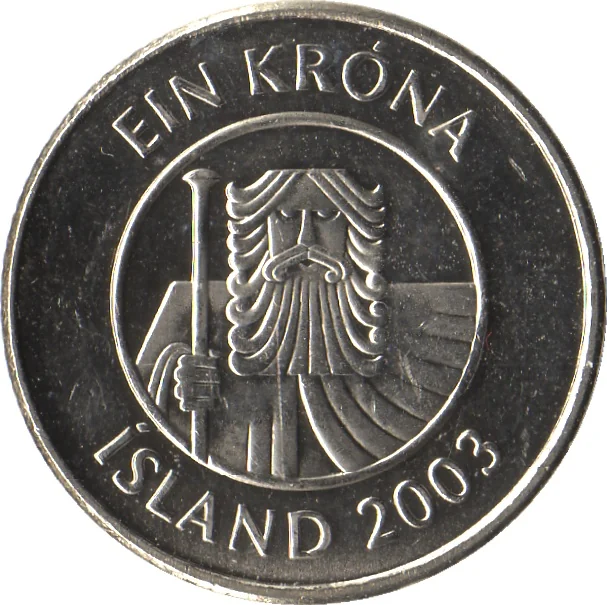
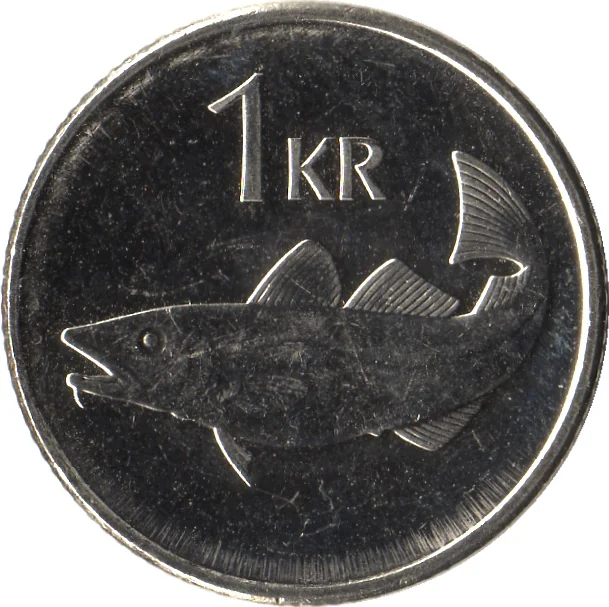
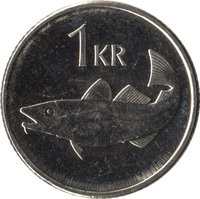
Obverse
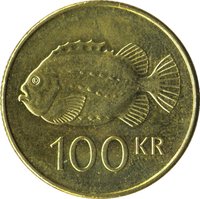
Reverse
Edge
Reeded
Mints
| Name | Mark |
|---|---|
| Royal Mint | — |
Mintings
| Year | Mint Mark | Mintage | Quality | Collection |
|---|---|---|---|---|
| 1989 | — | 5,000,000 | ||
| 1991 | — | 5,180,000 | ||
| 1992 | — | 5,000,000 | ||
| 1994 | — | 5,000,000 | ||
| 1996 | — | 6,000,000 | ||
| 1999 | — | 10,000,000 | ||
| 2000 | — | 10,000 | BU | |
| 2000 | — | 10,000 | In sets | |
| 2003 | — | 5,144,000 | ||
| 2005 | — | 5,000,000 | ||
| 2006 | — | 10,000,000 | ||
| 2007 | — | 10,000,000 | ||
| 2011 | — | 5,000,000 |
Historical background
In 1989, Iceland’s currency situation was characterized by a tightly controlled and unstable króna, operating within a complex system of exchange restrictions. Following decades of high inflation, the currency was subject to a dual exchange rate regime: an official rate used for essential imports and a much less favorable "airport rate" for most other transactions, including tourism and capital flows. This system, managed by the Central Bank of Iceland, was designed to conserve foreign currency reserves and shield the domestic economy, but it created significant distortions, a thriving black market, and major inconveniences for both citizens and foreign businesses.
The underlying pressure on the króna stemmed from Iceland's severe economic imbalances. The country was grappling with persistent inflation—often exceeding 20% annually in the early 1980s—which eroded the króna's domestic value. To combat this, authorities maintained extremely high interest rates, which in turn encouraged heavy borrowing in foreign currencies by Icelandic firms and banks, accumulating substantial external debt. This combination of high inflation, negative real interest rates, and a pegged but unsustainable exchange rate created a volatile and artificial environment for the currency.
By the close of the 1980s, it was widely recognized that this system was untenable. The strict controls stifled international trade and investment, while the overvalued official rate hurt export competitiveness. Consequently, 1989 stood as the final year before a decisive shift; in 1990, the government initiated a series of liberalization reforms, beginning with the unification of the exchange rates. Thus, the currency situation in 1989 represented the strained culmination of an outdated control regime, setting the stage for the financial liberalization that would profoundly reshape Iceland's economy in the following decade.
The underlying pressure on the króna stemmed from Iceland's severe economic imbalances. The country was grappling with persistent inflation—often exceeding 20% annually in the early 1980s—which eroded the króna's domestic value. To combat this, authorities maintained extremely high interest rates, which in turn encouraged heavy borrowing in foreign currencies by Icelandic firms and banks, accumulating substantial external debt. This combination of high inflation, negative real interest rates, and a pegged but unsustainable exchange rate created a volatile and artificial environment for the currency.
By the close of the 1980s, it was widely recognized that this system was untenable. The strict controls stifled international trade and investment, while the overvalued official rate hurt export competitiveness. Consequently, 1989 stood as the final year before a decisive shift; in 1990, the government initiated a series of liberalization reforms, beginning with the unification of the exchange rates. Thus, the currency situation in 1989 represented the strained culmination of an outdated control regime, setting the stage for the financial liberalization that would profoundly reshape Iceland's economy in the following decade.
🌱 Very Common