

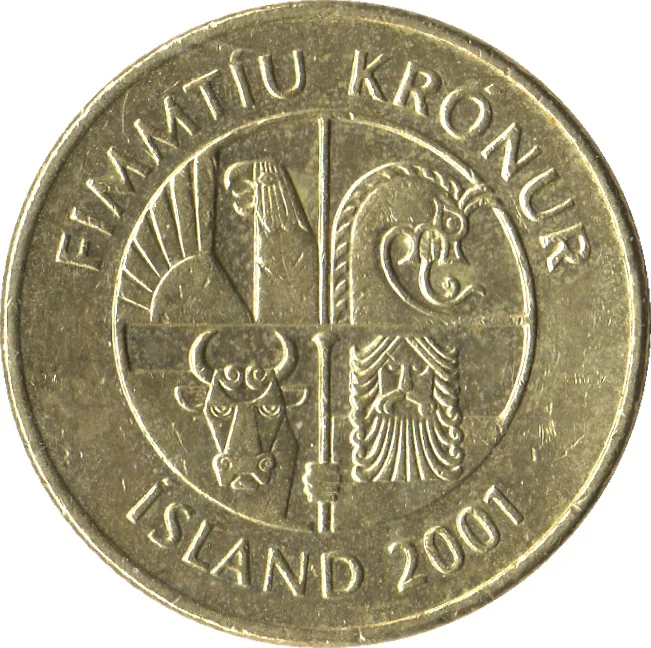
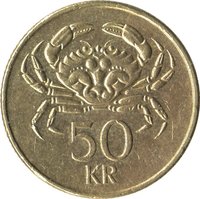
Obverse
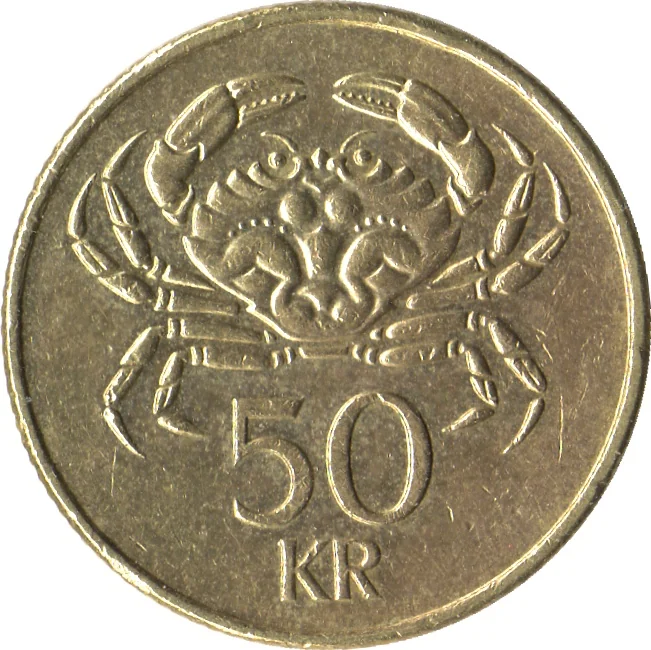
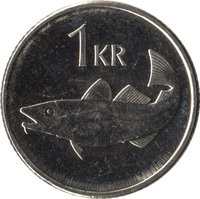
Reverse
Edge
Reeded
Categories
| Animal> Bird |
| Animal> Crustacean |
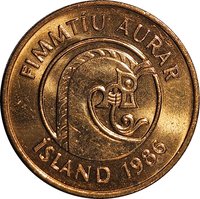
| Mythology> Fantastic animal |
| Animal> Cow |
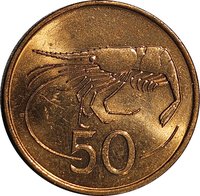
| Animal> Marine invertebrate |
Mints
| Name | Mark |
|---|---|
| Royal Mint | — |
Mintings
| Year | Mint Mark | Mintage | Quality | Collection |
|---|---|---|---|---|
| 1987 | — | 4,000,000 | ||
| 1992 | — | 2,000,000 | ||
| 2000 | — | 10,000 | BU | |
| 2000 | — | 10,000 | In sets | |
| 2001 | — | 2,000,000 | ||
| 2005 | — | 2,000,000 |
Historical background
In 1987, Iceland was in the midst of a profound and precarious financial transformation, characterized by aggressive deregulation and a rapid credit expansion that would ultimately lead to crisis. Following the liberalization of financial markets in the early 1980s, the country's previously tightly controlled banks were freed to pursue risky lending and speculative investments, both domestically and internationally. This period saw the creation of new investment banks and a dramatic surge in stock market and real estate values, fueled by easy credit and an atmosphere of financial euphoria. However, this boom was built on unstable foundations, with inflation remaining stubbornly high and the Icelandic króna under persistent pressure.
The currency situation itself was a central vulnerability. Iceland operated a fixed exchange rate regime, pegging the króna to a basket of currencies. To maintain this peg and attract foreign capital to fund the booming economy, the Central Bank of Iceland was forced to set interest rates at extraordinarily high levels—often exceeding 20% and at times even reaching 50% for key certificates of deposit. This created a punishing environment for traditional export industries like fisheries, while simultaneously making it cheap for newly liberalized banks and large firms to borrow in foreign currencies, leading to a dangerous accumulation of private sector debt denominated in dollars and yen.
By the end of 1987, the strains were becoming undeniable. The global stock market crash in October sent shockwaves through Iceland's overheated financial system, exposing the fragility of its banks and the unsustainability of its asset prices. While the full-scale banking collapse was still two decades away, the events of 1987 marked a critical inflection point, revealing the severe imbalances created by financial liberalization. The high-interest-rate policy defending the króna's peg could not be sustained, setting the stage for the devaluations, economic instability, and eventual move to inflation targeting that would define the following years.
The currency situation itself was a central vulnerability. Iceland operated a fixed exchange rate regime, pegging the króna to a basket of currencies. To maintain this peg and attract foreign capital to fund the booming economy, the Central Bank of Iceland was forced to set interest rates at extraordinarily high levels—often exceeding 20% and at times even reaching 50% for key certificates of deposit. This created a punishing environment for traditional export industries like fisheries, while simultaneously making it cheap for newly liberalized banks and large firms to borrow in foreign currencies, leading to a dangerous accumulation of private sector debt denominated in dollars and yen.
By the end of 1987, the strains were becoming undeniable. The global stock market crash in October sent shockwaves through Iceland's overheated financial system, exposing the fragility of its banks and the unsustainability of its asset prices. While the full-scale banking collapse was still two decades away, the events of 1987 marked a critical inflection point, revealing the severe imbalances created by financial liberalization. The high-interest-rate policy defending the króna's peg could not be sustained, setting the stage for the devaluations, economic instability, and eventual move to inflation targeting that would define the following years.
🌱 Very Common