

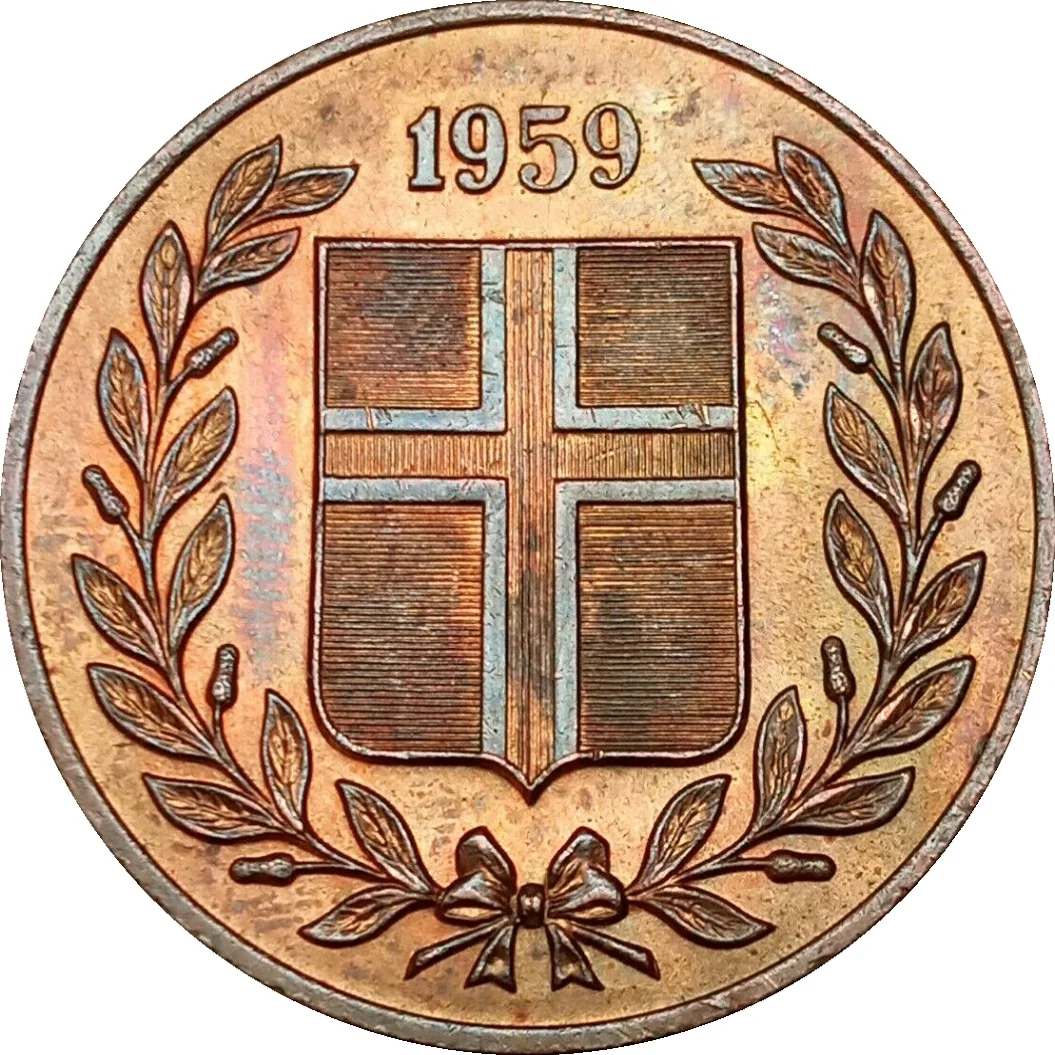
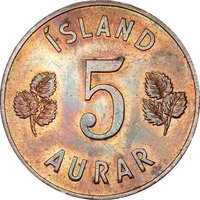
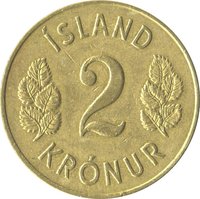
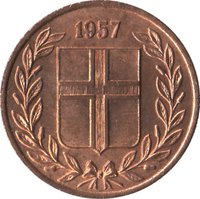
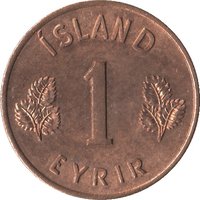
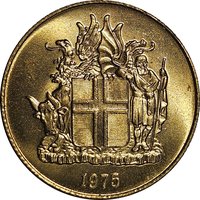
Obverse
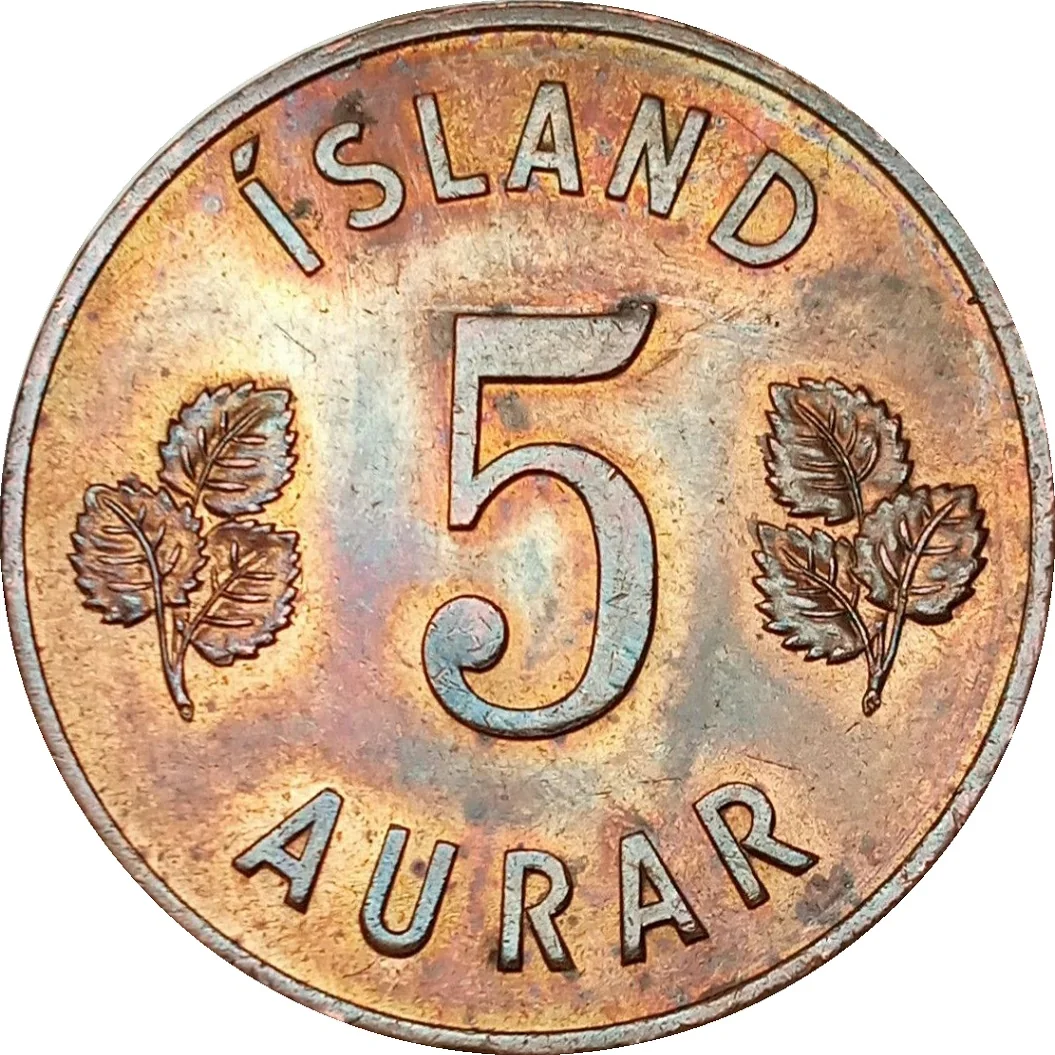
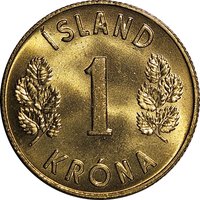
Reverse
Edge
Plain
Categories
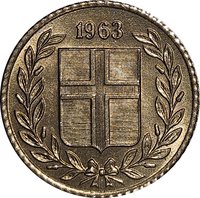
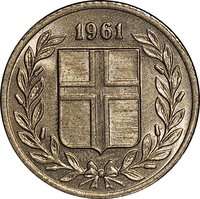
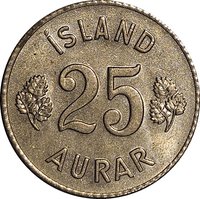
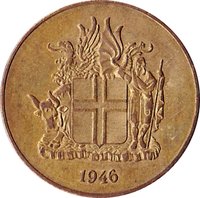
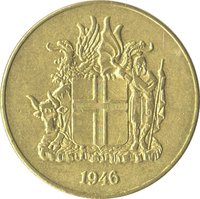
| Symbols> Coat of Arms |
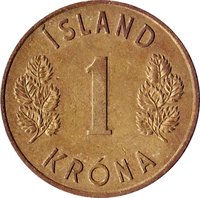
| Symbol> Wreath |
Mints
| Name | Mark |
|---|---|
| Royal Mint (Tower Hill) | — |
Mintings
| Year | Mint Mark | Mintage | Quality | Collection |
|---|---|---|---|---|
| 1946 | — | 4,000,000 | ||
| 1946 | — | — | Proof | |
| 1958 | — | 400,000 | ||
| 1958 | — | — | Proof | |
| 1959 | — | 600,000 | ||
| 1959 | — | — | Proof | |
| 1960 | — | 1,200,000 | ||
| 1960 | — | — | Proof | |
| 1961 | — | 1,200,000 | ||
| 1961 | — | — | Proof | |
| 1963 | — | 1,200,000 | ||
| 1963 | — | — | Proof | |
| 1965 | — | 800,000 | ||
| 1966 | — | 1,000,000 | ||
| 1966 | — | — | Proof |
Historical background
In 1946, Iceland’s currency situation was defined by its post-war economic transition and its continued reliance on a controlled, fixed exchange rate system. The Icelandic króna, which had been pegged to the British pound sterling since 1925, remained under strict foreign exchange controls implemented during World War II. These controls were maintained to manage severe balance of payments pressures, conserve scarce foreign reserves, and direct limited hard currency toward essential imports for reconstruction and basic goods, as Iceland's economy was heavily dependent on trade.
The domestic economy faced significant inflationary pressures, a legacy of wartime spending and supply constraints. This created a growing disparity between the official exchange rate and the currency's real purchasing power, leading to periodic devaluations to correct imbalances. The first major post-war adjustment had already occurred in 1946, when the króna was devalued, reflecting the economic realities of high inflation and the need to boost the competitiveness of Iceland's vital fish exports, particularly in recovering European markets.
Looking forward, the currency regime of 1946 was a temporary, managed system awaiting broader international settlement. Iceland was not yet a member of the International Monetary Fund (IMF), which had been established in 1944, but would join in 1945. The situation in 1946 thus represented a holding pattern, with monetary authorities navigating inflation and trade deficits while preparing for eventual integration into the new Bretton Woods system of fixed but adjustable exchange rates that would shape the country's financial policy in the coming decades.
The domestic economy faced significant inflationary pressures, a legacy of wartime spending and supply constraints. This created a growing disparity between the official exchange rate and the currency's real purchasing power, leading to periodic devaluations to correct imbalances. The first major post-war adjustment had already occurred in 1946, when the króna was devalued, reflecting the economic realities of high inflation and the need to boost the competitiveness of Iceland's vital fish exports, particularly in recovering European markets.
Looking forward, the currency regime of 1946 was a temporary, managed system awaiting broader international settlement. Iceland was not yet a member of the International Monetary Fund (IMF), which had been established in 1944, but would join in 1945. The situation in 1946 thus represented a holding pattern, with monetary authorities navigating inflation and trade deficits while preparing for eventual integration into the new Bretton Woods system of fixed but adjustable exchange rates that would shape the country's financial policy in the coming decades.
Series: 1946 Iceland circulation coins
🌱 Very Common