

4 Mon – Japan
Japan
Context
Material
Diameter: 27 mm
Weight: 3.84 g
Thickness: 1.2 mm
Shape: Round with a square hole
Composition: Copper
Magnetic: No
Technique: Cast
Alignment: Medal alignment
flip
References
Numista: #15395
Obverse
Description:
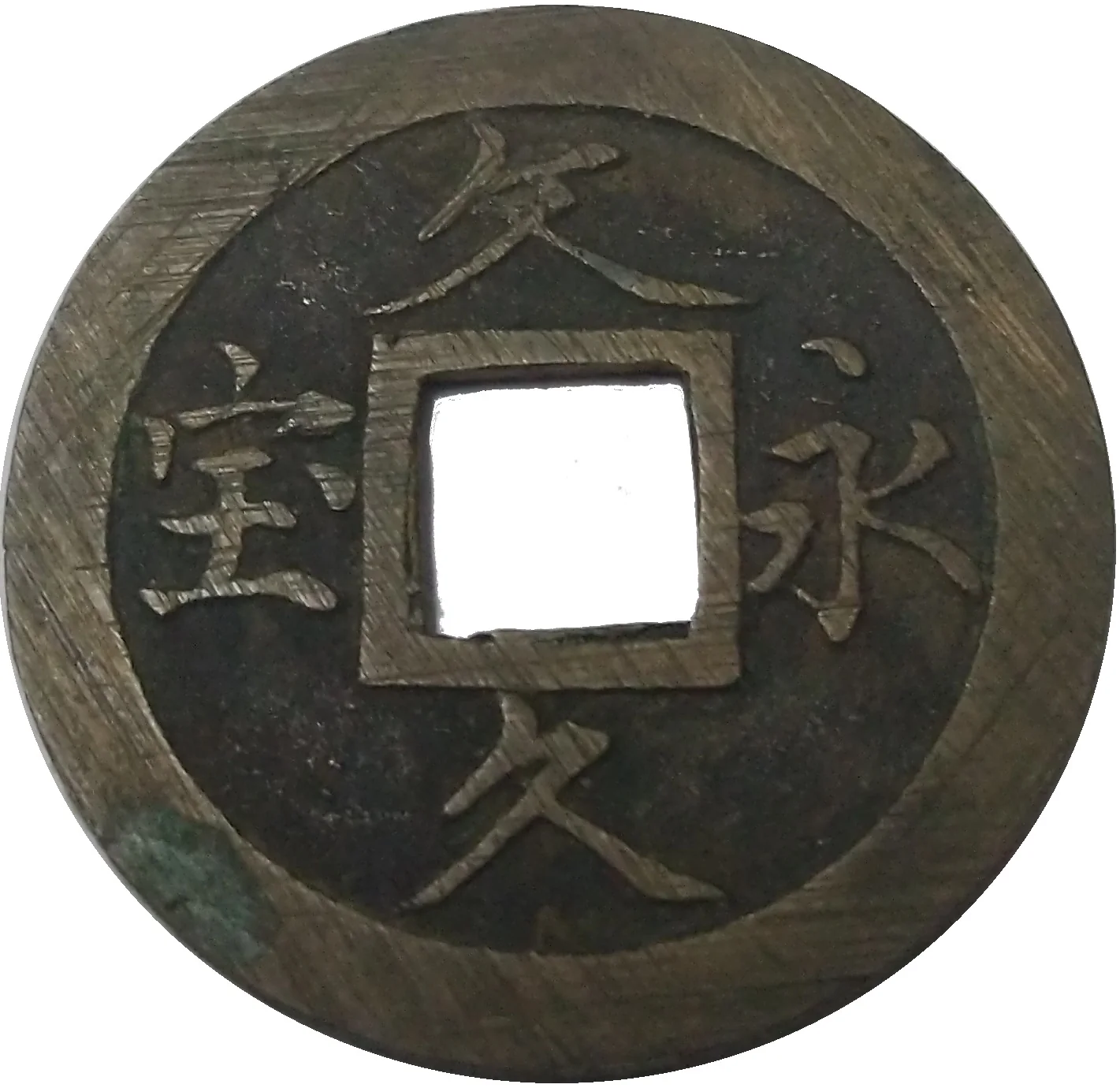
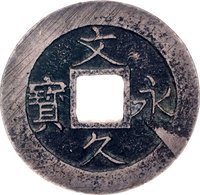
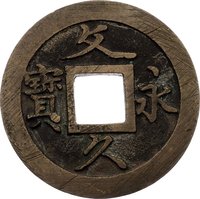
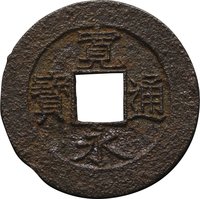
Four-character inscription around center hole: 攵久永宝, read as Bunkyūeihō. Original calligraphy by Matsudaira Yoshinaga.
Inscription:
文
宝 永
久
宝 永
久
Translation:
Treasure Eternal Longevity
Language: Japanese
Reverse
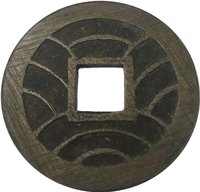
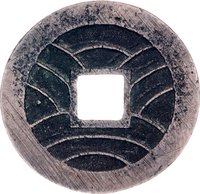
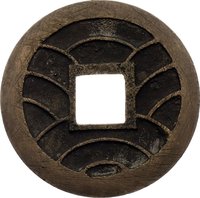
Description:
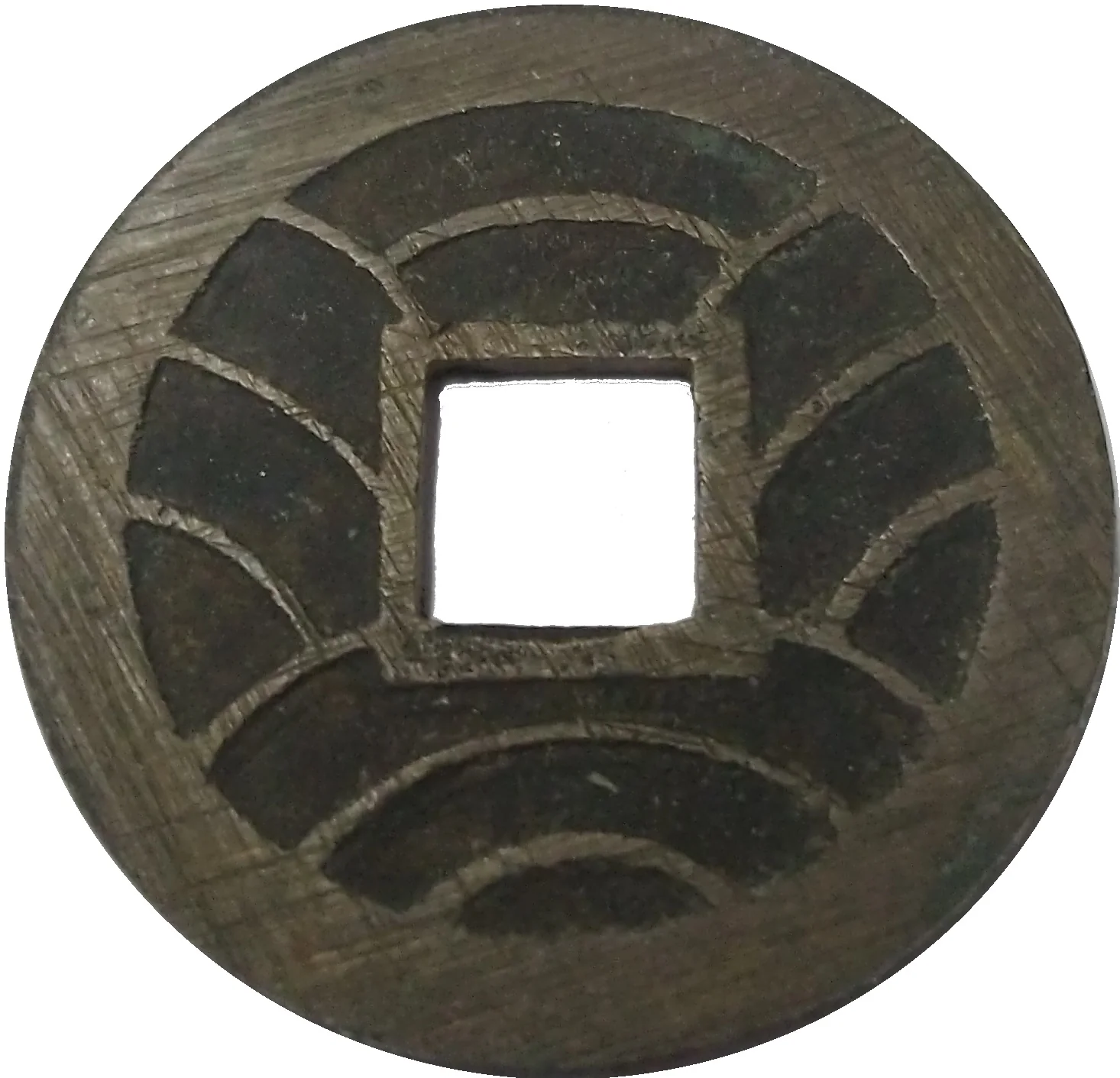
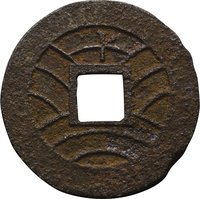
Eleven waves
Edge
Mintings
| Year | Mint Mark | Mintage | Quality | Collection |
|---|---|---|---|---|
| — | — | — | ||
| — | — | — | BU |
Historical background
In 1863, Japan's currency system was in a state of profound crisis and complexity, a direct reflection of the country's political turmoil during the final years of the Tokugawa shogunate. The monetary landscape was a fragmented patchwork, with the shogunate minting its own gold, silver, and copper coins (such as the koban, ichibu-gin, and mon), while over 200 semi-autonomous feudal domains (han) issued their own often low-quality, non-convertible paper scrip known as hansatsu. This proliferation of currencies, combined with widespread counterfeiting, created chaotic exchange rates and severely hampered national trade and economic cohesion.
The situation was critically exacerbated by the forced opening of the country following the 1850s treaties with Western powers. The fixed exchange rates imposed by these treaties, which valued Japanese gold coins far below their intrinsic worth relative to silver on the international market, triggered a massive and rapid outflow of gold bullion. This "gold drain" depleted the shogunate's reserves and caused severe inflation, as the domestic money supply was flooded with depreciated hansatsu and debased coinage issued by a desperate government. The resulting economic instability fueled social unrest and became a powerful point of contention for anti-shogunate forces, who blamed the Tokugawa for both national weakness and financial hardship.
Thus, in 1863, the currency chaos was not merely an economic issue but a central facet of the political crisis. The shogunate's inability to control its monetary sovereignty underscored its failing authority, while rival domains, particularly the southwestern han like Satsuma and Chōshū, increasingly operated with their own financial systems. This monetary disintegration mirrored the breakdown of centralized power, setting the stage for the financial reforms that would be a top priority for the Meiji government following the Restoration just five years later.
The situation was critically exacerbated by the forced opening of the country following the 1850s treaties with Western powers. The fixed exchange rates imposed by these treaties, which valued Japanese gold coins far below their intrinsic worth relative to silver on the international market, triggered a massive and rapid outflow of gold bullion. This "gold drain" depleted the shogunate's reserves and caused severe inflation, as the domestic money supply was flooded with depreciated hansatsu and debased coinage issued by a desperate government. The resulting economic instability fueled social unrest and became a powerful point of contention for anti-shogunate forces, who blamed the Tokugawa for both national weakness and financial hardship.
Thus, in 1863, the currency chaos was not merely an economic issue but a central facet of the political crisis. The shogunate's inability to control its monetary sovereignty underscored its failing authority, while rival domains, particularly the southwestern han like Satsuma and Chōshū, increasingly operated with their own financial systems. This monetary disintegration mirrored the breakdown of centralized power, setting the stage for the financial reforms that would be a top priority for the Meiji government following the Restoration just five years later.
🌟 Limited