

4 Mon – Japan
Japan
Context

Material
Shape: Round with a square hole
Composition: Iron
Technique: Cast
Alignment: Medal alignment
flip
References
Numista: #291352
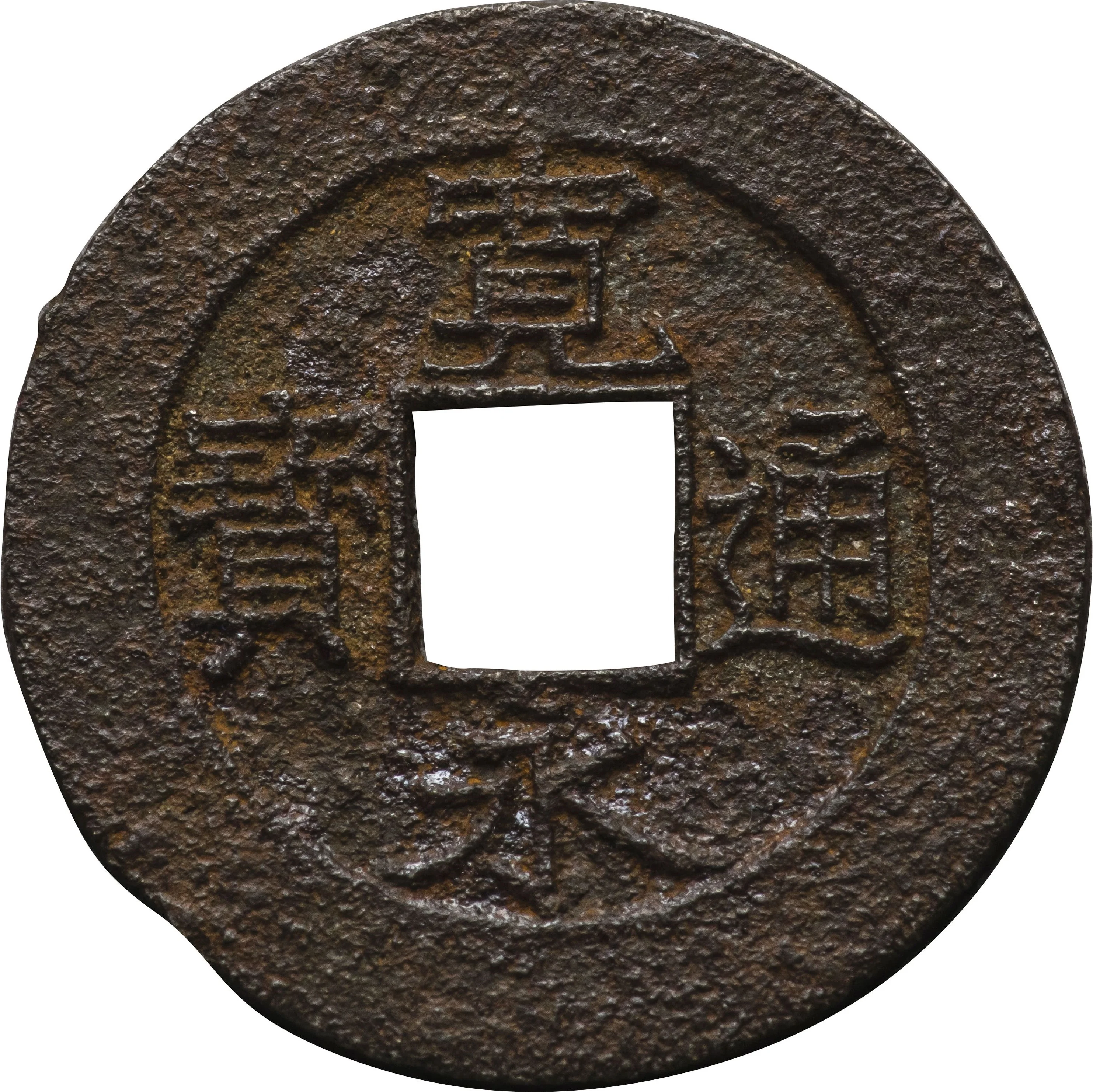
Obverse
Description:
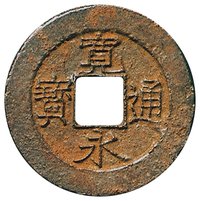
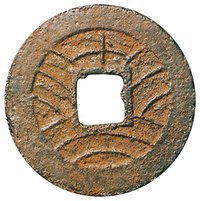
Four around a center hole.
Inscription:
寛
寶 通
永
寶 通
永
Translation:
Eternal Coins
Circulate Treasure
Kuan
Circulate Treasure
Kuan
Language: Chinese
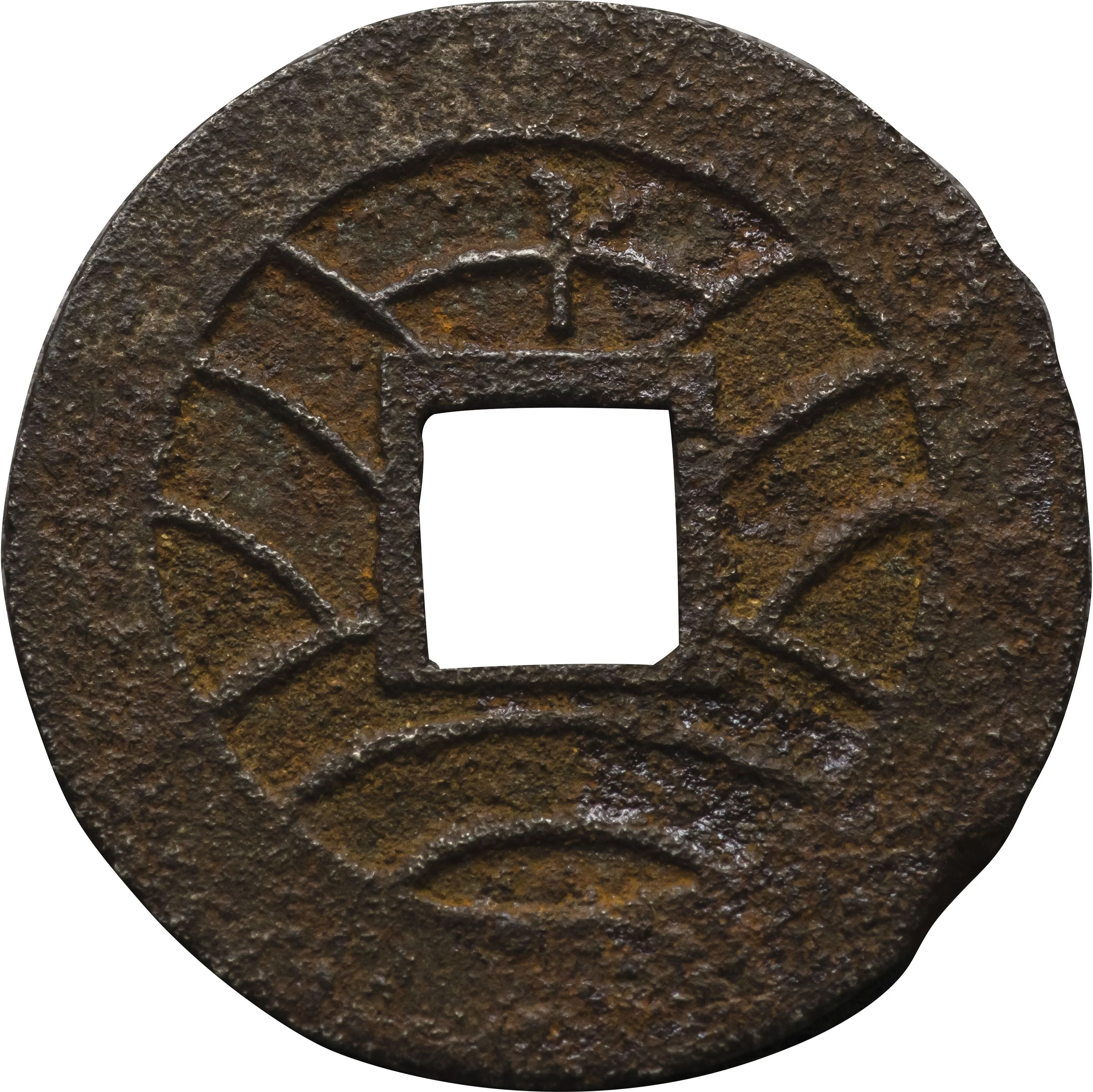
Reverse
Edge
Mintings
| Year | Mint Mark | Mintage | Quality | Collection |
|---|---|---|---|---|
| 1865 | ト | — |
Historical background
In 1865, Japan’s currency system was in a state of profound crisis and complexity, reflecting the broader political disintegration of the late Tokugawa shogunate. The country operated on a tri-metallic system of gold, silver, and copper coins, but authority over currency issuance was fragmented. The Tokugawa bakufu (shogunate) minted its own coins, while approximately 250 semi-autonomous feudal domains (han) issued their own often non-convertible paper scrip, known as hansatsu. This created a chaotic patchwork of currencies of wildly varying quality and value, severely hampering nationwide trade and commerce.
The situation was exacerbated by the shogunate's desperate financial straits. To fund military modernization and cover massive deficits in the face of foreign pressure and rising domestic unrest, the bakufu repeatedly debased its coinage, notably with the 1860 Man'en recoinage which drastically reduced the gold content. This led to severe inflation, loss of public confidence, and rampant counterfeiting. Simultaneously, the influx of foreign traders after the forced opening of ports in the 1850s introduced Mexican silver dollars, creating a disruptive dual exchange market where the gold-to-silver exchange rate in Japan differed vastly from the global standard, leading to a rapid outflow of gold.
This monetary chaos was both a symptom and a catalyst of the shogunate's failing authority. The inability to control the currency underscored its weakness, while the economic instability fueled discontent among samurai, merchants, and peasants alike, strengthening the cause of the imperial restoration movement. The currency disarray of 1865 thus set the stage for the comprehensive monetary reforms that would become an urgent priority for the Meiji government after 1868, which moved swiftly to abolish the han system, centralize minting authority, and establish a unified, modern yen-based currency.
The situation was exacerbated by the shogunate's desperate financial straits. To fund military modernization and cover massive deficits in the face of foreign pressure and rising domestic unrest, the bakufu repeatedly debased its coinage, notably with the 1860 Man'en recoinage which drastically reduced the gold content. This led to severe inflation, loss of public confidence, and rampant counterfeiting. Simultaneously, the influx of foreign traders after the forced opening of ports in the 1850s introduced Mexican silver dollars, creating a disruptive dual exchange market where the gold-to-silver exchange rate in Japan differed vastly from the global standard, leading to a rapid outflow of gold.
This monetary chaos was both a symptom and a catalyst of the shogunate's failing authority. The inability to control the currency underscored its weakness, while the economic instability fueled discontent among samurai, merchants, and peasants alike, strengthening the cause of the imperial restoration movement. The currency disarray of 1865 thus set the stage for the comprehensive monetary reforms that would become an urgent priority for the Meiji government after 1868, which moved swiftly to abolish the han system, centralize minting authority, and establish a unified, modern yen-based currency.
✨ Legendary