

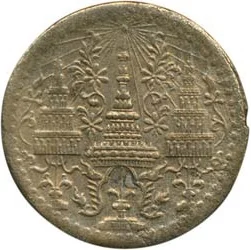
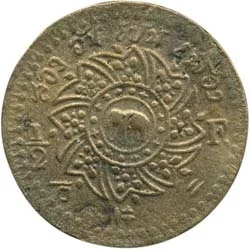
1 Sik – Thailand
Thailand
Context
Years: 1865–1866
Issuer: Thailand 
Ruler: Phra Chom Klao
Currency:
(1869—1897)
Subdivision: 1 Sik = ½ Fuang = 1⁄16 Baht
Demonetized: Yes
Material
References
Y: #Click to copy to clipboard4
Numista: #15251
Obverse
Description:
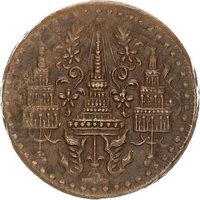
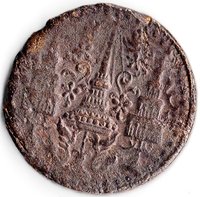
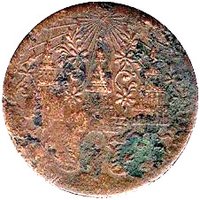
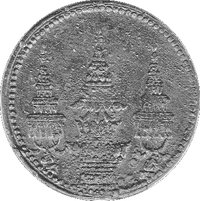
The Crown of Rama IV.
Reverse
Edge
Plain
Mintings
| Year | Mint Mark | Mintage | Quality | Collection |
|---|---|---|---|---|
| — | — | — |
Historical background
In 1865, Thailand, then known as Siam, operated under a complex and fragmented monetary system characteristic of a pre-modern economy. The primary currency was the baht, which was not a coin but a unit of weight for silver bullion (approximately 15 grams). Commerce was conducted using a variety of physical media: bullet-shaped silver tical coins, cowrie shells in rural areas, and a multitude of foreign coins from neighboring regions and colonial powers, including Mexican and Spanish dollars, Indian rupees, and Straits Settlements currency. This lack of standardization created significant hurdles for both domestic trade and international commerce, as exchange rates fluctuated constantly.
The reign of King Mongkut (Rama IV, 1851-1868) was a period of intense Western pressure and modernization, making monetary reform a pressing concern. The Bowring Treaty of 1855 had forced Siam into free trade, dramatically increasing foreign trade volumes and exposing the inefficiencies of the old system. While King Mongkut had taken initial steps by authorizing the minting of more uniform flat silver coins in the 1860s to gradually replace the bullet coins, the system in 1865 remained in transition. The government lacked a central mint, and the circulation of foreign silver remained dominant in port cities like Bangkok.
Therefore, 1865 represents a critical juncture—the tail end of the traditional system and the precipice of comprehensive reform. The inherent instability and inefficiency of the multi-currency landscape underscored the urgent need for a centralized, decimalized, and sovereign coinage system. This need would be decisively addressed by King Mongkut's successor, King Chulalongkorn (Rama V), who, beginning in the late 1860s, would establish a royal mint and ultimately introduce the decimal tical (baht) as the sole national currency, laying the foundation for Thailand's modern financial system.
The reign of King Mongkut (Rama IV, 1851-1868) was a period of intense Western pressure and modernization, making monetary reform a pressing concern. The Bowring Treaty of 1855 had forced Siam into free trade, dramatically increasing foreign trade volumes and exposing the inefficiencies of the old system. While King Mongkut had taken initial steps by authorizing the minting of more uniform flat silver coins in the 1860s to gradually replace the bullet coins, the system in 1865 remained in transition. The government lacked a central mint, and the circulation of foreign silver remained dominant in port cities like Bangkok.
Therefore, 1865 represents a critical juncture—the tail end of the traditional system and the precipice of comprehensive reform. The inherent instability and inefficiency of the multi-currency landscape underscored the urgent need for a centralized, decimalized, and sovereign coinage system. This need would be decisively addressed by King Mongkut's successor, King Chulalongkorn (Rama V), who, beginning in the late 1860s, would establish a royal mint and ultimately introduce the decimal tical (baht) as the sole national currency, laying the foundation for Thailand's modern financial system.
💎 Extremely Rare