

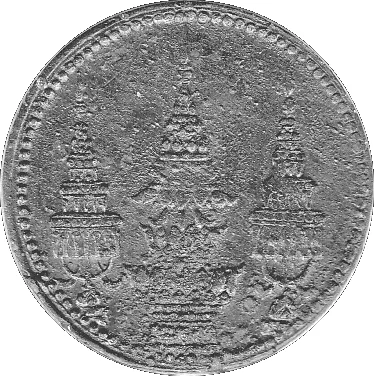
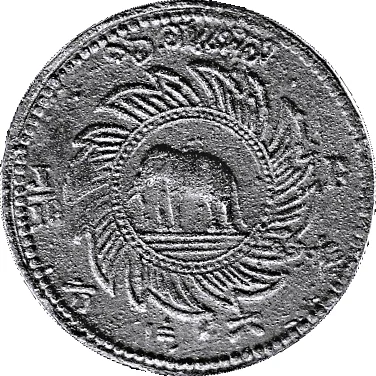
1 Solot – Thailand
Thailand
Context
Year: 1868
Issuer: Thailand 
Ruler: Phra Chula Chom Klao
Currency:
(1869—1897)
Subdivision: 1 Solot = 1⁄16 Fuang = 1⁄128 Baht
Demonetized: Yes
Material
References
Y: #Click to copy to clipboard16
Numista: #84255
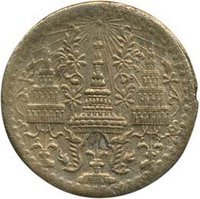
Obverse
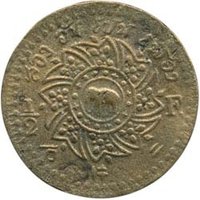
Reverse
Edge
Plain
Mintings
| Year | Mint Mark | Mintage | Quality | Collection |
|---|---|---|---|---|
| 1868 | — | — |
Historical background
In 1868, Thailand, then known as Siam, operated under a complex and fragmented monetary system characteristic of a pre-modern economy. The primary unit was the baht, which was not a coin but a unit of weight for silver (approximately 15 grams). The actual circulating media included bullet-shaped silver coins known as pod duang or "bullet money," which were hand-struck and valued by their weight and purity. Alongside this, a variety of foreign silver coins, particularly Mexican Dollars and Indian Rupees, circulated widely for regional trade, while copper coins (soldi and fuang) handled smaller, everyday transactions. This system was cumbersome, requiring constant weighing and assaying, and it lacked a standardized national currency issued by a central authority.
This monetary fragmentation was a significant obstacle to the modernization efforts of King Mongkut (Rama IV, reigned 1851-1868) and his successor, the young King Chulalongkorn (Rama V, who ascended in late 1868). The Bowring Treaty of 1855 had forcibly integrated Siam into the global economy, increasing trade volumes and exposing the inefficiencies of the old system. The need for a uniform currency to simplify taxation, centralize royal revenue, and facilitate commerce with Western powers was acutely felt by the royal advisors and emerging bureaucratic class. However, 1868 itself was a year of transition rather than reform, marked by King Mongkut's death in October and the accession of the fifteen-year-old Chulalongkorn, with power residing in the hands of a regency.
Therefore, the currency situation in 1868 represented the final chapter of a traditional system under immense strain. While the pressing economic and administrative need for decimalized, machine-struck coinage was clearly understood by the ruling elite, the major reforms would materialize in the following decade. The first modern, flat coinage was introduced experimentally in 1860, but it was not until the 1870s and the Royal Minting Act of 1874 that King Chulalongkorn's government would systematically phase out bullet money and establish a standardized decimal system, laying the foundation for the modern Thai baht.
This monetary fragmentation was a significant obstacle to the modernization efforts of King Mongkut (Rama IV, reigned 1851-1868) and his successor, the young King Chulalongkorn (Rama V, who ascended in late 1868). The Bowring Treaty of 1855 had forcibly integrated Siam into the global economy, increasing trade volumes and exposing the inefficiencies of the old system. The need for a uniform currency to simplify taxation, centralize royal revenue, and facilitate commerce with Western powers was acutely felt by the royal advisors and emerging bureaucratic class. However, 1868 itself was a year of transition rather than reform, marked by King Mongkut's death in October and the accession of the fifteen-year-old Chulalongkorn, with power residing in the hands of a regency.
Therefore, the currency situation in 1868 represented the final chapter of a traditional system under immense strain. While the pressing economic and administrative need for decimalized, machine-struck coinage was clearly understood by the ruling elite, the major reforms would materialize in the following decade. The first modern, flat coinage was introduced experimentally in 1860, but it was not until the 1870s and the Royal Minting Act of 1874 that King Chulalongkorn's government would systematically phase out bullet money and establish a standardized decimal system, laying the foundation for the modern Thai baht.
💎 Extremely Rare