

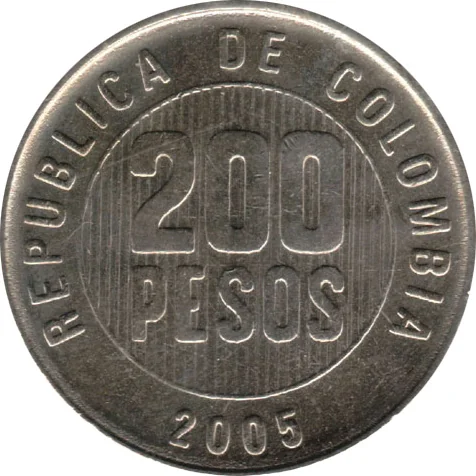
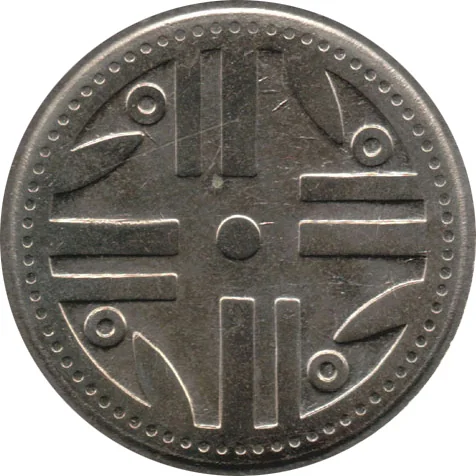
Obverse
Description:
State, denomination, issue year.
Inscription:
REPUBLICA DE COLOMBIA
200
PESOS
2005
200
PESOS
2005
Translation:
REPUBLIC OF COLOMBIA
200
PESOS
2005
200
PESOS
2005
Script: Latin
Language: Spanish
Designer: Dicken Castro
Reverse
Description:
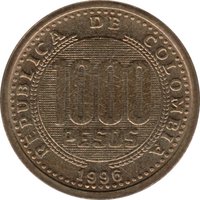
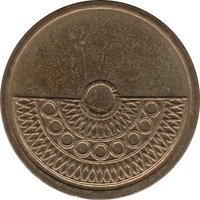
Quimbaya spindle whorl with stylized bird heads.
Designer: Dicken Castro
Edge
Smooth with inscription
Legend:
MOTIVO QUIMBAYA ★★★ 200 PESOS ★★★
Translation:
MOTIVO QUIMBAYA ★★★ 200 PESOS ★★★
Language: Spanish
Mints
| Name | Mark |
|---|---|
| Fábrica de Moneda de Ibagué | — |
Mintings
| Year | Mint Mark | Mintage | Quality | Collection |
|---|---|---|---|---|
| 1994 | — | 115,000,000 | ||
| 1995 | — | 150,000,000 | ||
| 1996 | — | 80,000,000 | ||
| 1997 | — | 37,000,000 | ||
| 2004 | — | 31,200,000 | ||
| 2005 | — | 49,700,000 | ||
| 2006 | — | 75,462,500 | ||
| 2007 | — | 85,000,000 | ||
| 2008 | — | 110,400,000 | ||
| 2009 | — | 42,200,000 | ||
| 2010 | — | 85,600,000 | ||
| 2011 | — | 104,000,000 | ||
| 2012 | — | 45,000,000 |
Historical background
In 1994, Colombia's currency situation was characterized by a managed exchange rate regime within a broader context of significant economic liberalization and mounting external pressures. The country operated under a crawling peg system, where the Colombian peso was allowed to depreciate at a pre-announced, gradual rate against the US dollar. This policy, managed by the Banco de la República, aimed to provide stability for trade and investment while controlling inflation, which remained a persistent concern. The economy was still adapting to the profound reforms of the early 1990s, including trade opening, financial deregulation, and a new constitution that granted the central bank greater autonomy in 1991.
However, the year was marked by substantial strain. A large and growing current account deficit, fueled by surging imports following trade liberalization, put downward pressure on the peso. Simultaneously, capital inflows were volatile, influenced by global interest rate trends and domestic political uncertainty ahead of a presidential election. To defend the crawling band, the central bank utilized its international reserves, leading to concerns about their depletion. These external imbalances were exacerbated by relatively high domestic inflation, which eroded the peso's competitiveness and created tension between the exchange rate target and monetary policy.
The situation in 4 set the stage for a major crisis later in the decade. The managed system required increasingly strenuous intervention to maintain, and the underlying pressures proved unsustainable. Within a few years, the cumulative imbalances would force a decisive shift in policy. In 1999, after a severe recession and banking crisis, Colombia was compelled to abandon the crawling peg altogether and adopt a free-floating exchange rate regime, marking the end of the managed currency framework that was under such duress in 1994.
However, the year was marked by substantial strain. A large and growing current account deficit, fueled by surging imports following trade liberalization, put downward pressure on the peso. Simultaneously, capital inflows were volatile, influenced by global interest rate trends and domestic political uncertainty ahead of a presidential election. To defend the crawling band, the central bank utilized its international reserves, leading to concerns about their depletion. These external imbalances were exacerbated by relatively high domestic inflation, which eroded the peso's competitiveness and created tension between the exchange rate target and monetary policy.
The situation in 4 set the stage for a major crisis later in the decade. The managed system required increasingly strenuous intervention to maintain, and the underlying pressures proved unsustainable. Within a few years, the cumulative imbalances would force a decisive shift in policy. In 1999, after a severe recession and banking crisis, Colombia was compelled to abandon the crawling peg altogether and adopt a free-floating exchange rate regime, marking the end of the managed currency framework that was under such duress in 1994.
🌱 Very Common