

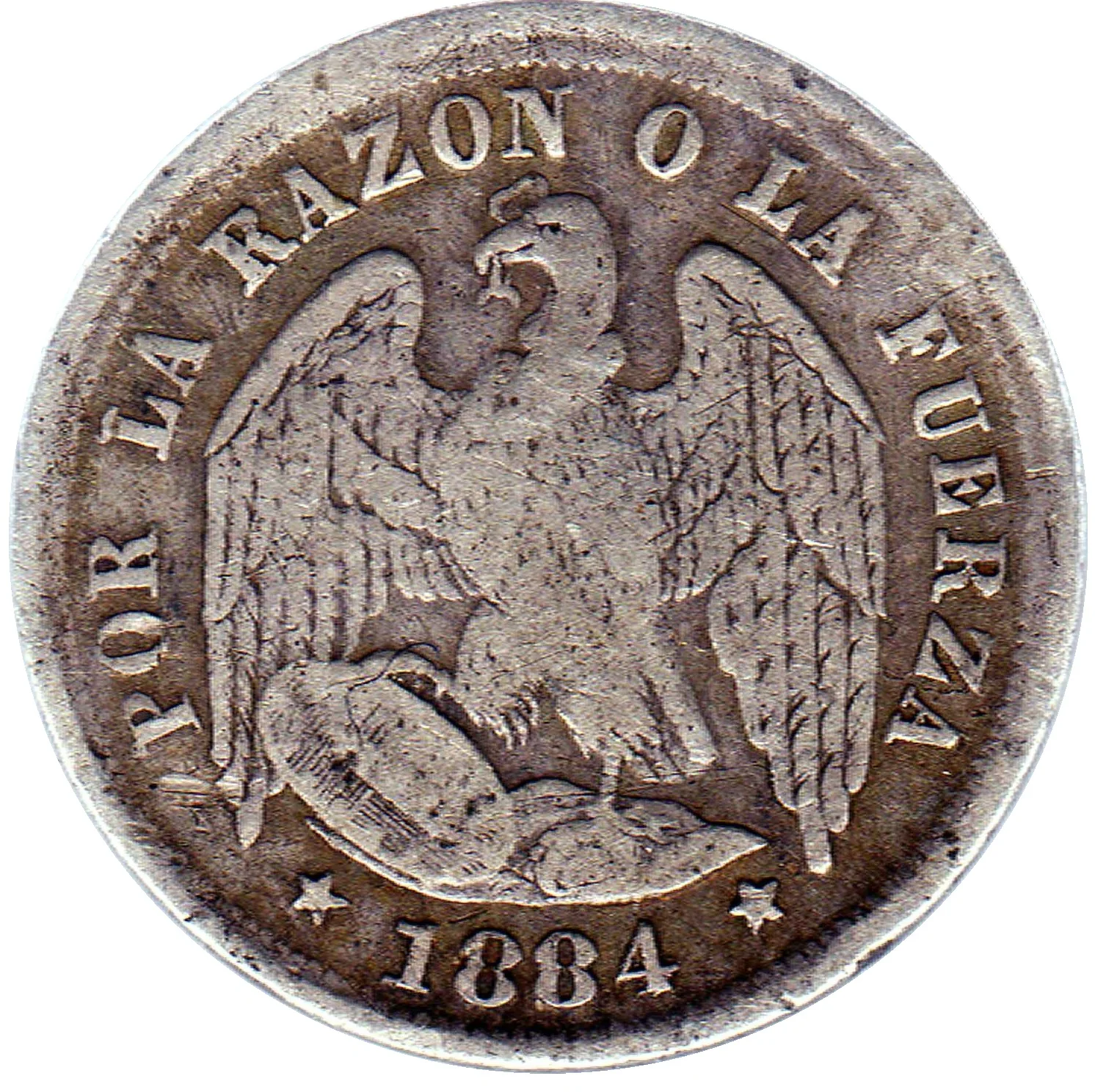

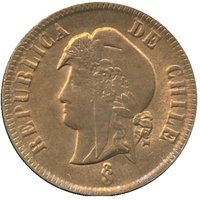
Obverse
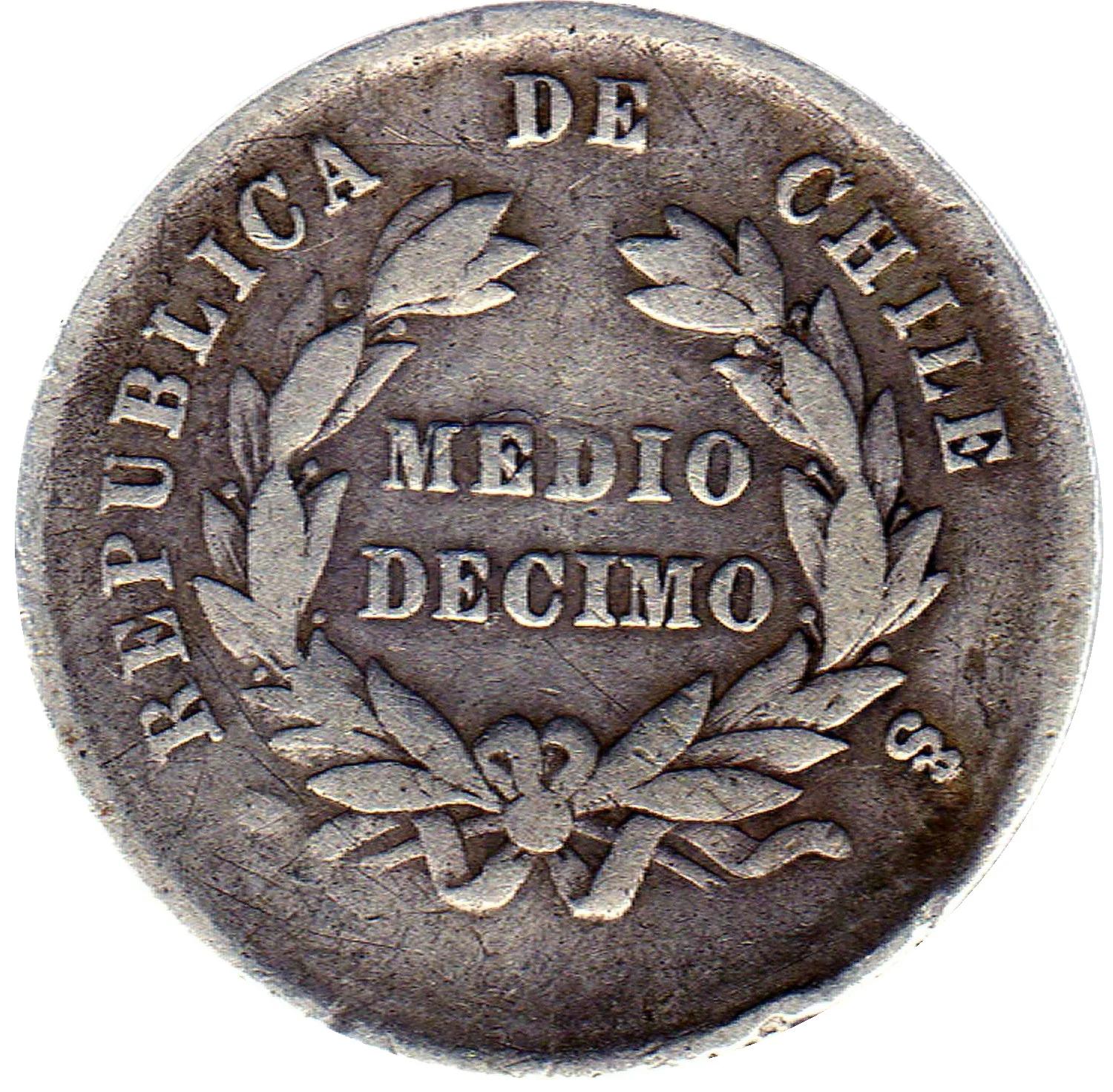
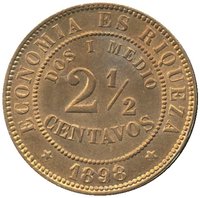
Reverse
Edge
Reeded
Mintings
| Year | Mint Mark | Mintage | Quality | Collection |
|---|---|---|---|---|
| 1884 | So | — |
Historical background
By 1884, Chile’s currency situation was one of profound disorder and transition, emerging from the financial strains of the War of the Pacific (1879-1883). While victorious and having acquired significant nitrate and guano territories from Peru and Bolivia, the war had been financed through massive paper money emissions, leading to severe inflation and a deep devaluation of the Chilean peso. The country operated on a complex and unstable bimetallic system in theory, but in practice, the circulating medium was dominated by pesos fuertes (silver), gold coins, and, most problematically, large quantities of inconvertible banknote emissions from private banks and the government itself. The value of these paper pesos fluctuated wildly against gold and silver, creating commercial uncertainty.
Recognizing that this monetary anarchy hindered economic stability and the integration of the new nitrate wealth into the formal economy, the government of President Domingo Santa María enacted a decisive reform in 1884. The key legislation established a monometallic gold standard, making the gold condor (equivalent to 10 silver pesos or 100 centavos) the official unit of account. Crucially, the law aimed to retire the inflationary paper money from circulation, mandating that all banknotes be gradually redeemed in gold. This was a deflationary policy intended to restore the peso's value and instill fiscal discipline.
The immediate effects in 1884 were challenging, as the contraction of the money supply and the push for convertibility created a period of tight credit and economic adjustment. However, this painful reform laid the essential foundation for decades of future stability. By committing to hard currency, Chile attracted foreign investment, particularly into the nitrate sector, and facilitated its integration into global trade. The 1884 reforms are therefore seen as a pivotal turning point, ending the inflationary chaos of the war years and establishing the monetary framework that would underpin Chile's export-led economic boom during the "Republican" period.
Recognizing that this monetary anarchy hindered economic stability and the integration of the new nitrate wealth into the formal economy, the government of President Domingo Santa María enacted a decisive reform in 1884. The key legislation established a monometallic gold standard, making the gold condor (equivalent to 10 silver pesos or 100 centavos) the official unit of account. Crucially, the law aimed to retire the inflationary paper money from circulation, mandating that all banknotes be gradually redeemed in gold. This was a deflationary policy intended to restore the peso's value and instill fiscal discipline.
The immediate effects in 1884 were challenging, as the contraction of the money supply and the push for convertibility created a period of tight credit and economic adjustment. However, this painful reform laid the essential foundation for decades of future stability. By committing to hard currency, Chile attracted foreign investment, particularly into the nitrate sector, and facilitated its integration into global trade. The 1884 reforms are therefore seen as a pivotal turning point, ending the inflationary chaos of the war years and establishing the monetary framework that would underpin Chile's export-led economic boom during the "Republican" period.
✨ Legendary