

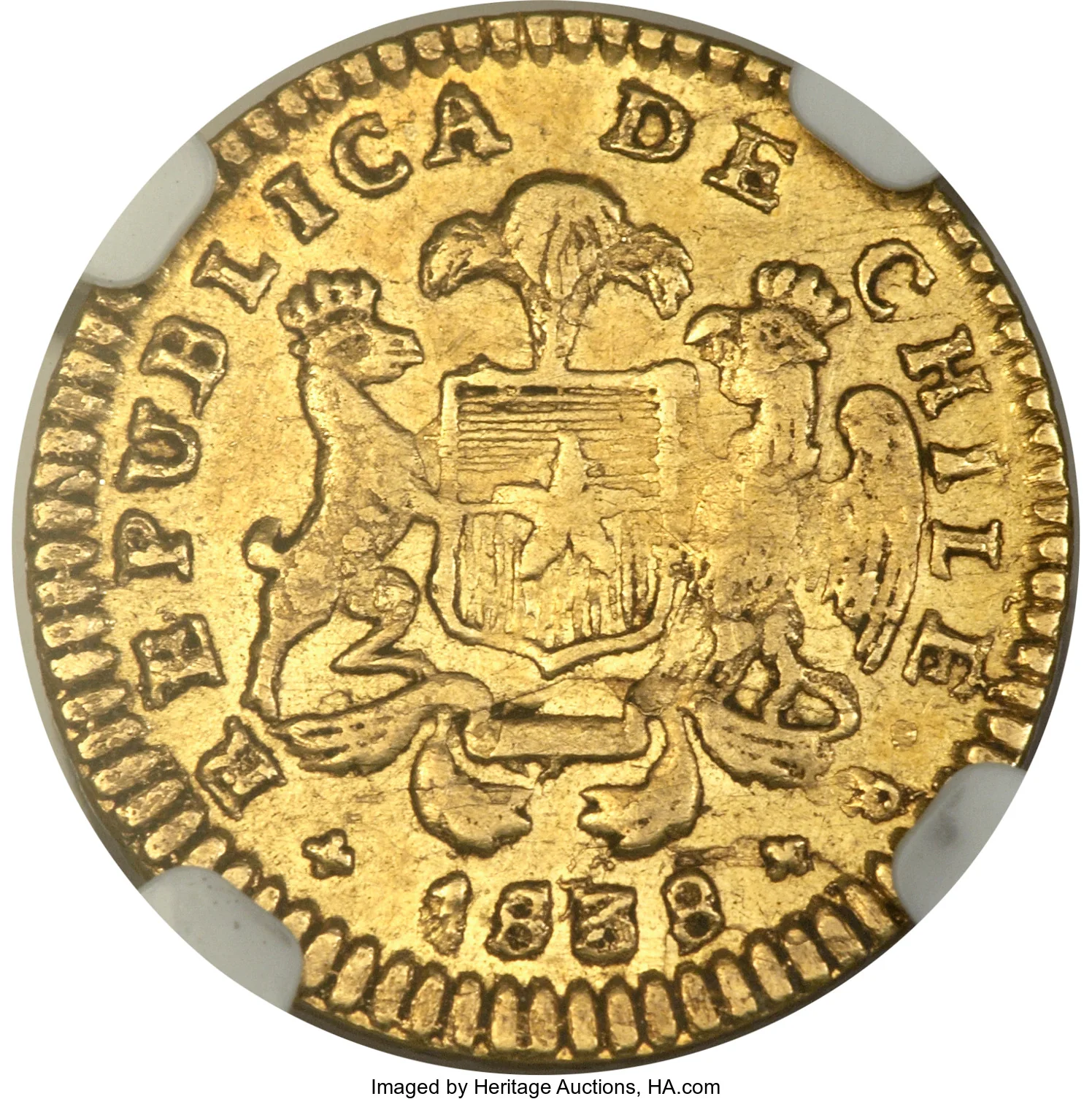
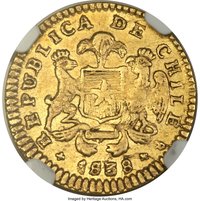
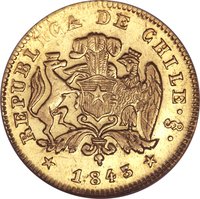
Obverse
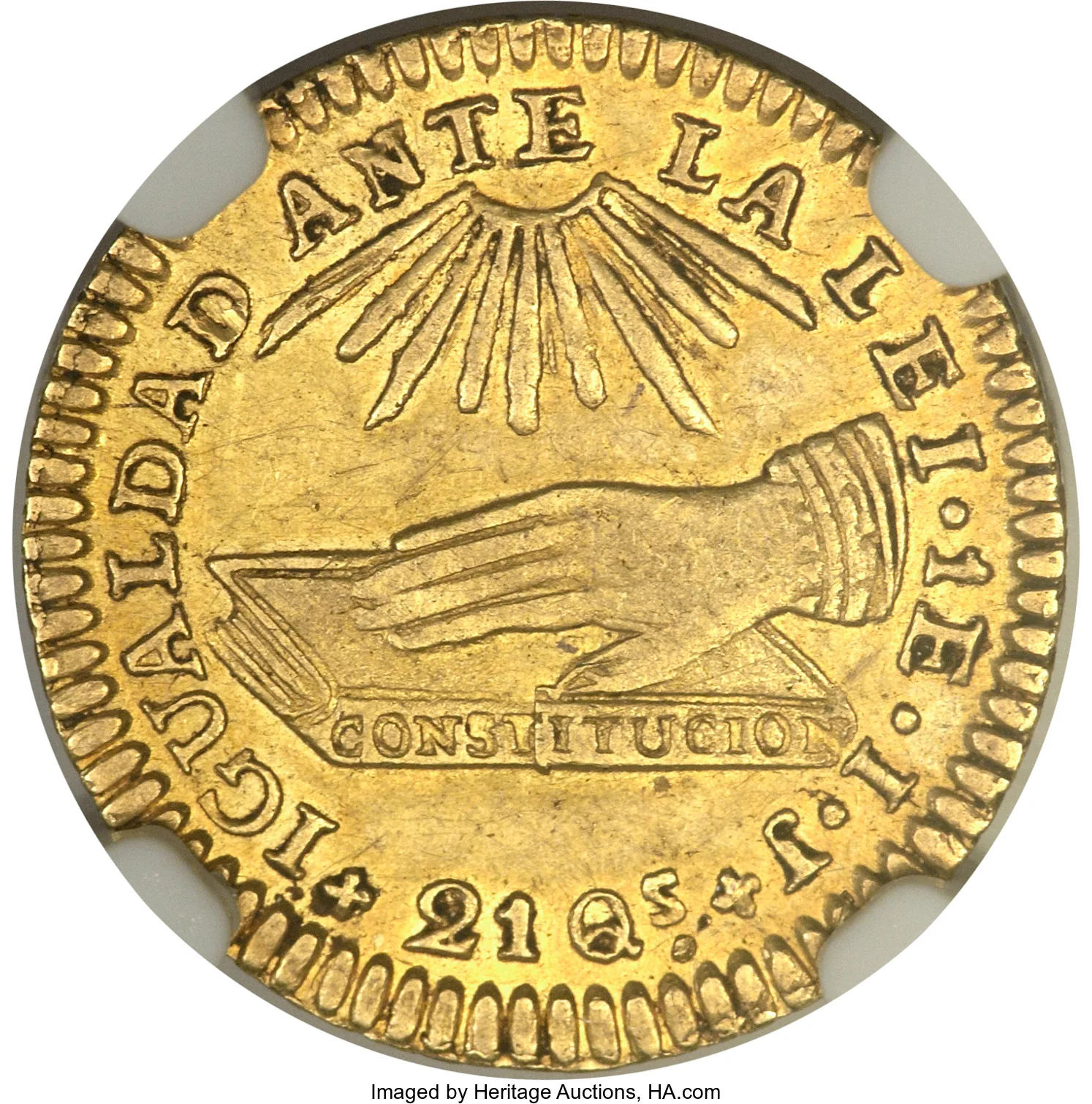
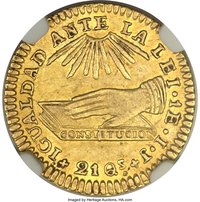
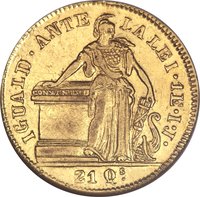
Reverse
Description:
Hand on book in sunlight.
Inscription:
IGUALDAD ANTE LA LEI · 1E · I · J
* 21 Qs *
CONSTITUCION
* 21 Qs *
CONSTITUCION
Script: Latin
Edge
Mints
| Name | Mark |
|---|---|
| Casa de Moneda de Chile | (So) |
Mintings
| Year | Mint Mark | Mintage | Quality | Collection |
|---|---|---|---|---|
| 1838 | So | 6,122 |
Historical background
In 1838, Chile’s currency situation was characterized by significant disorder and a severe shortage of circulating specie (coinage). Following independence, the country had inherited a chaotic monetary system with a mix of Spanish, Peruvian, and other foreign coins, alongside issues of paper money and crude local tokens. The wars of independence and subsequent conflicts, including the ongoing war against the Peru-Bolivia Confederation (1836-1839), had drained the state's silver and gold reserves. This fiscal strain led the government to repeatedly issue unbacked paper money, which rapidly depreciated and was widely distrusted by the public, causing inflation and hampering commerce.
The primary circulating coin was the silver peso, but its scarcity was acute. To address the shortage, private merchants, mining companies, and even municipalities began issuing their own copper tokens and paper notes, known as billetes de comercio and fichas, for local use. This created a fragmented and unreliable monetary environment where the value and acceptability of money varied greatly by region and issuer. The state’s own paper pesos traded at a steep discount to silver, undermining government finances and creating a dual system where hard currency commanded a significant premium.
Recognizing the crisis, the conservative government of President Joaquín Prieto and his minister Manuel Rengifo was actively seeking long-term solutions. Their efforts would culminate in the pivotal Coinage Law of 1839, which aimed to restore monetary order by formally decimalizing the currency (introducing the centavo), establishing a national mint (Casa de Moneda), and defining a new silver peso as the official standard. Thus, the situation in 1838 represents the final year of a protracted monetary crisis, immediately preceding the decisive reforms that would bring stability and a unified national currency to Chile.
The primary circulating coin was the silver peso, but its scarcity was acute. To address the shortage, private merchants, mining companies, and even municipalities began issuing their own copper tokens and paper notes, known as billetes de comercio and fichas, for local use. This created a fragmented and unreliable monetary environment where the value and acceptability of money varied greatly by region and issuer. The state’s own paper pesos traded at a steep discount to silver, undermining government finances and creating a dual system where hard currency commanded a significant premium.
Recognizing the crisis, the conservative government of President Joaquín Prieto and his minister Manuel Rengifo was actively seeking long-term solutions. Their efforts would culminate in the pivotal Coinage Law of 1839, which aimed to restore monetary order by formally decimalizing the currency (introducing the centavo), establishing a national mint (Casa de Moneda), and defining a new silver peso as the official standard. Thus, the situation in 1838 represents the final year of a protracted monetary crisis, immediately preceding the decisive reforms that would bring stability and a unified national currency to Chile.
💎 Extremely Rare